




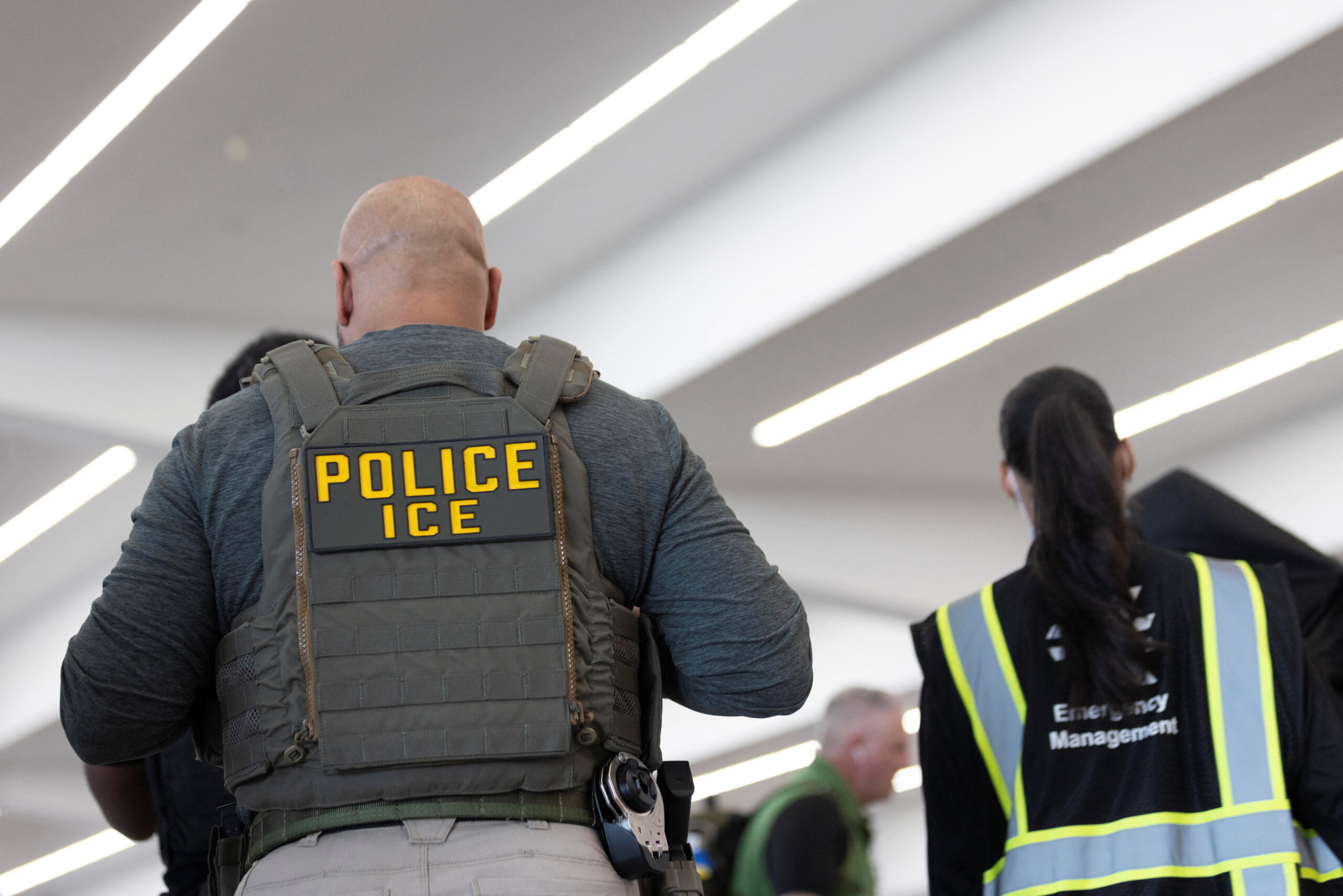
The killing of Loyola University Chicago freshman Sheridan Gorman by a Venezuelan national with prior arrests and an ignored ICE detainer has renewed scrutiny of Illinois sanctuary policies, and a leading immigration law scholar says understanding why those policies persist requires looking beyond politics to the ideological framework driving them. Andrew Arthur, resident fellow in law and policy at the Center for Immigration Studies, joined Dan Proft on Chicago’s Morning Answer to explain why compromise with sanctuary jurisdictions has proven essentially impossible.
Arthur drew a historical parallel to the Spanish Civil War of the 1930s, where socialist republican forces rallied around the slogan “No pasarán” — they shall not pass — as a declaration that surrendering a single inch of ground to the nationalist opposition would spell the movement’s total defeat. He argued that sanctuary city advocates have internalized precisely that logic, operating from the conviction that allowing even the most dangerous criminal alien to be handed over to ICE represents an unacceptable concession that would ultimately unravel the broader vision of open borders and universal human dignity that animates their movement.
That framework, Arthur contended, explains why a letter from Border Czar Tom Homan offering limited concessions on ICE operational procedures generated no response whatsoever from sanctuary advocates. There is no negotiating position to engage because the other side has foreclosed the possibility of any agreement short of full capitulation. He noted that Illinois alone has rejected 1,768 ICE detainer requests over the past year, each representing a request to take a criminal alien into custody, and that state and local officials have shown no inclination to draw any distinction between dangerous repeat offenders and other undocumented residents.
Proft highlighted remarks from Governor JB Pritzker, who vowed that anyone coming for his people — meaning those in the country illegally — would have to go through him first, without qualification or exception, and from Chicago Mayor Brandon Johnson, who has compared ICE to slave patrols. Arthur said this kind of rhetoric reflects the Biden-era philosophy that deporting any criminal alien is an act of racial injustice, a view he described as completely backwards and one that has proliferated among Democratic executives from Chicago to Minneapolis to Maryland.
Arthur pointed to Bureau of Justice Statistics research tracking 400,000 people released from criminal incarceration over nine years. Forty-four percent were rearrested within the first year, sixty-eight percent by year three, and five out of six within the full nine-year period, generating two million additional arrests collectively. His point was straightforward: criminal aliens who are removed from the country cannot reoffend here, and the failure to remove them carries a predictable and measurable human cost, as the Gorman case illustrates.
On the question of federal leverage, Arthur said the Trump administration has not gone nearly far enough and that Congress needs to act. He drew a comparison to the federal government’s successful use of highway funding to compel states to raise the drinking age to twenty-one, arguing that the same mechanism could and should be applied to sanctuary jurisdictions that refuse ICE cooperation. Federal dollars flowing to local policing and public services should be conditioned on compliance, he said, because financial pressure is ultimately the most effective tool available short of criminal prosecution.
On the prosecution question, Arthur acknowledged that simply declining to cooperate with ICE falls short of an overt federal crime, pointing to the Milwaukee judge who was successfully prosecuted after physically helping an undocumented immigrant escape federal custody as an example of where the line gets crossed. He did argue, however, that a legitimate legal case could be constructed that some sanctuary policies amount to sheltering criminal aliens in violation of federal law, even if finding a federal judge in Illinois willing to entertain such a theory or a grand jury willing to indict remains unlikely.
Arthur closed by framing the debate in terms he said are frequently distorted by sanctuary advocates. The push to remove criminal aliens from the country is not an anti-immigrant position, he said. It is a pro-safety position, one that every functioning civil society either practices or should practice, and one that the residents of Chicago, Baltimore, and cities like them have a fundamental right to demand.