




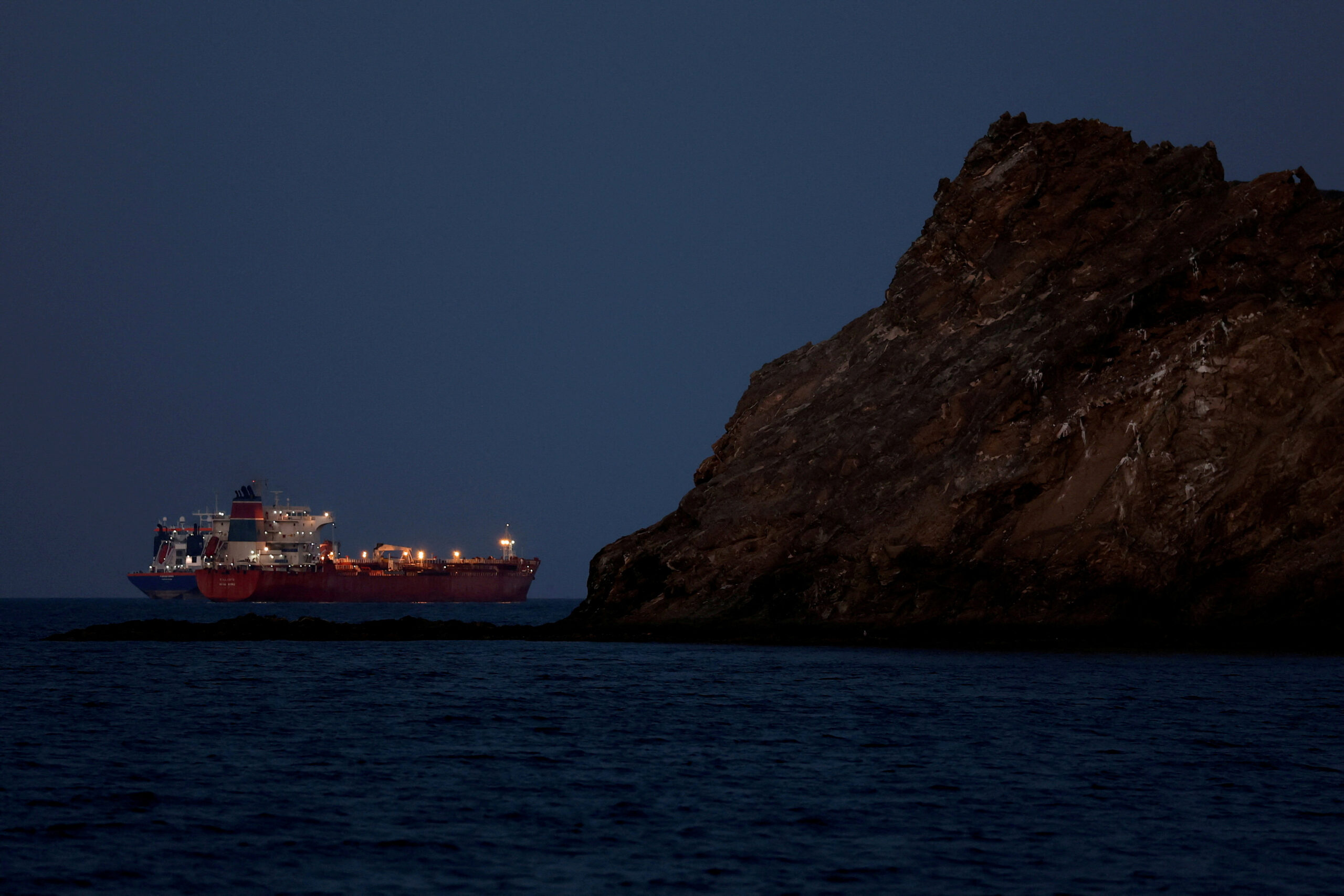
Twenty-two days into the American military campaign against Iran, Central Command’s latest operational update described significant progress in degrading Iran’s ability to threaten commercial shipping through the Strait of Hormuz, including the destruction of an underground coastal facility used to store anti-ship cruise missiles, mobile launchers, and radar relay systems. But the strait remains contested, and opening it to free navigation is now a central element of the five-day negotiating clock President Trump has placed on Tehran.
Steven Wills, a navalist at the Navy League Center for Maritime Strategy and former chief engineer and executive officer of the USS Patriot, joined Dan Proft on Chicago’s Morning Answer to assess what remains to be done and whether a viable path to reopening the strait exists.
Wills said the challenge is real but manageable, noting that Iran has had more than four decades to build layered coastal defenses along its side of the strait, including anti-ship cruise missiles, ballistic missiles, coastal radar networks, and a mine stockpile estimated in the thousands. The mines range from classic contact-detonation designs to more sophisticated bottom mines triggered by a vessel’s magnetic or acoustic signature. He said Central Command’s priority before any escort operation could begin would be gaining sufficient confidence that those capabilities have been degraded to an acceptable level, and that the mine threat in particular would need to be either neutralized or verified as minimal before the Navy could credibly escort commercial shipping through.
On the mine question specifically, Wills said he is inclined to discount the threat more than some analysts have, for a combination of practical reasons. The fact that some vessel traffic has continued moving through the strait suggests that mines have not been laid in any significant numbers, since even a modest minefield would cause shipping companies to halt all transits entirely, including Russian and Chinese operators who have no interest in absorbing that kind of risk. He also noted that the United States has reportedly destroyed most of Iran’s mine-laying vessels, limiting their capacity to deploy additional mines even if they wanted to. Perhaps most importantly, he argued that a rational Iranian leadership would avoid laying mines it would then have to painstakingly sweep after any ceasefire agreement, since restoring oil revenue as quickly as possible will be a survival imperative for whatever government emerges from the current conflict.
Wills said the historical precedent for escorting commercial shipping through the strait is well established, pointing to the tanker war of the late 1980s when the United States Navy conducted precisely such operations under considerably more constrained circumstances and with far less capability to suppress Iranian shore-based threats. Today’s operational environment, he argued, is more favorable in key respects. A sustained strike campaign has been systematically working through Iran’s missile batteries, drone facilities, and radar infrastructure. The USS America amphibious ready group, carrying F-35B aircraft, is positioned in the theater and could contribute directly to escort operations. And Navy surface crews have accumulated significant recent experience shooting down missiles and drones at short notice during the Red Sea campaign against the Houthis, giving them a level of proficiency in that mission set that did not previously exist.
He acknowledged the operation would carry real risk but described it as entirely executable provided Central Command reaches a reasonable level of confidence in the degradation of shore-based threats. He also noted that the ever-present American threat to strike Iranian power infrastructure if harassment of the strait continues serves as a powerful deterrent against any Iranian attempt to engage escorted vessels, even if residual capability to do so remains.
The conversation closed on the broader question of where the Iran campaign fits into the evolving character of modern warfare. Wills said the maritime domain is already moving rapidly toward what the Navy calls manned and unmanned teaming, in which every warship, submarine, and aircraft operates alongside a constellation of drone platforms serving as additional sensors, weapon carriers, and electronic warfare assets. He said he expects no future warship to sail into a contested environment without a flotilla of unmanned systems around it, though he noted that the Navy remains committed to keeping a human being in the decision loop for any offensive use of lethal force. Defensive automation, he said, has been a reality for years, describing Aegis cruisers in automatic mode as capable of continuously launching missiles and firing guns to defend the ship until ammunition is exhausted, with no human input required. The offensive equivalent of that capability, he said, is where the force is headed next.