




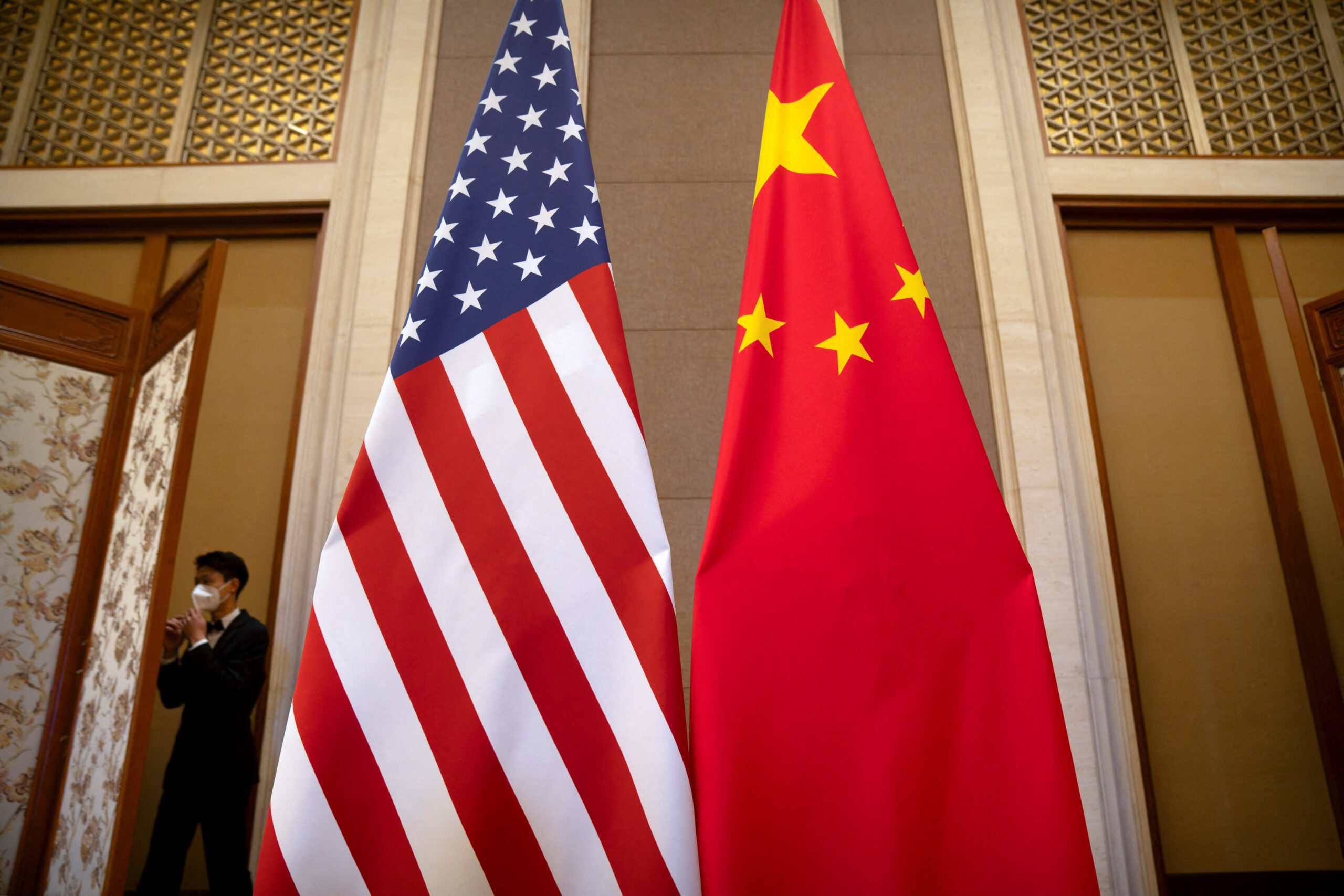
Four weeks into the American and Israeli military campaign against Iran, the strategic implications for China are becoming clearer, and they are more significant than the public debate over the conflict has generally acknowledged.
Gordon Chang, author of Plan Red: China’s Project to Destroy America and The Great US-China Tech War, joined Dan Proft on Chicago’s Morning Answer to assess how the degradation of the Iranian regime affects Beijing’s broader strategic position and what President Trump should do with the leverage he has accumulated before his anticipated May meeting with Chinese President Xi Jinping.
Proft set the stage by referencing a piece written at the outset of the campaign by Hudson Institute Middle East studies scholar Zinab Rabba in The Free Press, which argued that the Iran strikes are fundamentally about China. Rabba’s piece documented the depth of Chinese technical and economic penetration of Iran, including Huawei and ZTE building significant portions of Iran’s telecom infrastructure, Chinese AI-enabled facial recognition cameras deployed throughout the country, deep packet inspection tools, and Iran’s national information network, a state-controlled domestic internet modeled on China’s Great Firewall and built with Chinese technical assistance. China purchases more than eighty percent of Iran’s crude oil exports at steep discounts through a ghost fleet of tankers that disable their transponders and relabel cargo as Malaysian or Indonesian to evade American sanctions. Since 2021, the cumulative value of those purchases has exceeded one hundred and forty billion dollars, making China the primary financial reason the Islamic Republic did not go bankrupt years ago. A twenty-five-year comprehensive strategic partnership signed in 2021 committed China to invest an estimated four hundred billion dollars across Iran’s energy, banking, telecom, and infrastructure sectors.
Chang said the campaign has meaningfully eroded that relationship by degrading the Iranian proxy China relied upon to project influence in the Gulf region. Iran, he argued, is more accurately understood as a Chinese proxy than the reverse, because without China’s across-the-board diplomatic, propaganda, weapons, and intelligence support, Iran could not have sustained its troublemaking in the Gulf. China has been an active participant in the conflict in everything except the provision of combat soldiers, and Chang said Trump should recognize Beijing as an enemy combatant in the current situation rather than a neutral bystander. The complication is that China is currently allowed to transit the Strait of Hormuz while American commercial interests are not, a disparity Chang described as indefensible and strategically self-defeating.
He said Trump has an opportunity before his May meeting with Xi to seize Chinese tankers transiting the strait or close it entirely to Chinese shipping, which would give the United States concrete leverage to demand Chinese cooperation on Iran rather than simply hoping Beijing will voluntarily reduce its support for what remains of the Iranian regime. Without that pressure, Chang argued, China has no incentive to cooperate and every incentive to continue extracting maximum benefit from the situation while publicly posturing as a neutral party. Six Chinese tankers are currently stuck in the Persian Gulf unable to exit through the strait, but Chang noted that three Chinese container ships that were turned back last Friday were allowed through on Monday of the current week, suggesting some arrangement between Washington and Beijing may already be taking shape, the terms of which have not been made public.
On the question of what Iran’s diminishment means for China’s broader strategic picture, Chang said the loss of Iran follows the loss of Venezuela under Maduro and the precarious position of Cuba, removing multiple chess pieces from Beijing’s board simultaneously. He pushed back on the idea that this represents merely a manageable hiccup for China, arguing that Xi has staked the Chinese economy almost entirely on export growth at a moment when the world is deglobalizing due to conflicts. That export dependency makes China more vulnerable to American economic pressure than it has ever been, and the removal of energy suppliers in its proxy network compounds that vulnerability. He said Trump holds substantial leverage going into May and the question is whether he chooses to use it.
Chang addressed the Taiwan dimension directly, saying he believes Xi looks at Trump as genuinely unpredictable and therefore does not want to test American resolve over Taiwan or the Philippines in the near term. The more immediate concern, he said, is not a deliberate Chinese decision to go to war but the possibility of China blundering into one through increasingly aggressive harassment operations in the South China Sea, particularly around Scarborough Shoal, where incidents of the type currently occurring could escalate into direct conflict through miscalculation rather than intention.
On birthright citizenship, which Trump’s executive order challenging the current interpretation of the Fourteenth Amendment has sent toward the Supreme Court, Chang said Chinese exploitation of the practice represents a genuine national security concern. He described surrogate operations run by wealthy Chinese nationals with Communist Party connections producing dozens or even hundreds of American-born children to secure citizenship, and said those operations exist alongside coordinated efforts to infiltrate American universities and fund domestic protest movements. He said the No Kings rallies that have accompanied opposition to the Iran campaign have received Chinese financial and logistical support, and specifically named Neville Roy Singham, a billionaire who relocated to China, as coordinating his financing of protest organizations with the Communist Party’s United Front Work Department, the division of the party responsible for subverting foreign governments, alongside his wife Jody Evans of Code Pink.
Chang closed by responding to Tucker Carlson’s recent comments suggesting the United States must accept a multipolar world and share power with China going forward. He called the position absolutely wrong and noted that Carlson’s views on China have shifted one hundred and eighty degrees from his earlier positions, a change Chang said is itself cause for concern. China, he argued, is not a rising colossus that must be accommodated but a fragile regime facing acute internal vulnerabilities, and the appropriate American response to that fragility is pressure rather than accommodation.