




The rescue of two American airmen shot down over Iranian territory, completed over the Easter weekend, drew a text message from President Trump to NBC News’s Kristen Welker describing it as an Easter miracle executed by rescuers who were brilliant, strong, decisive, and as cool as anyone can be.
Steven Bucci, a thirty-year Army Special Forces veteran and visiting fellow at the Heritage Foundation’s Allison Center for Foreign Policy Studies, joined Chicago’s Morning Answer to walk through what happened and explain why the operation, as extraordinary as it appeared to outside observers, represents the American military executing a system it has refined over decades.
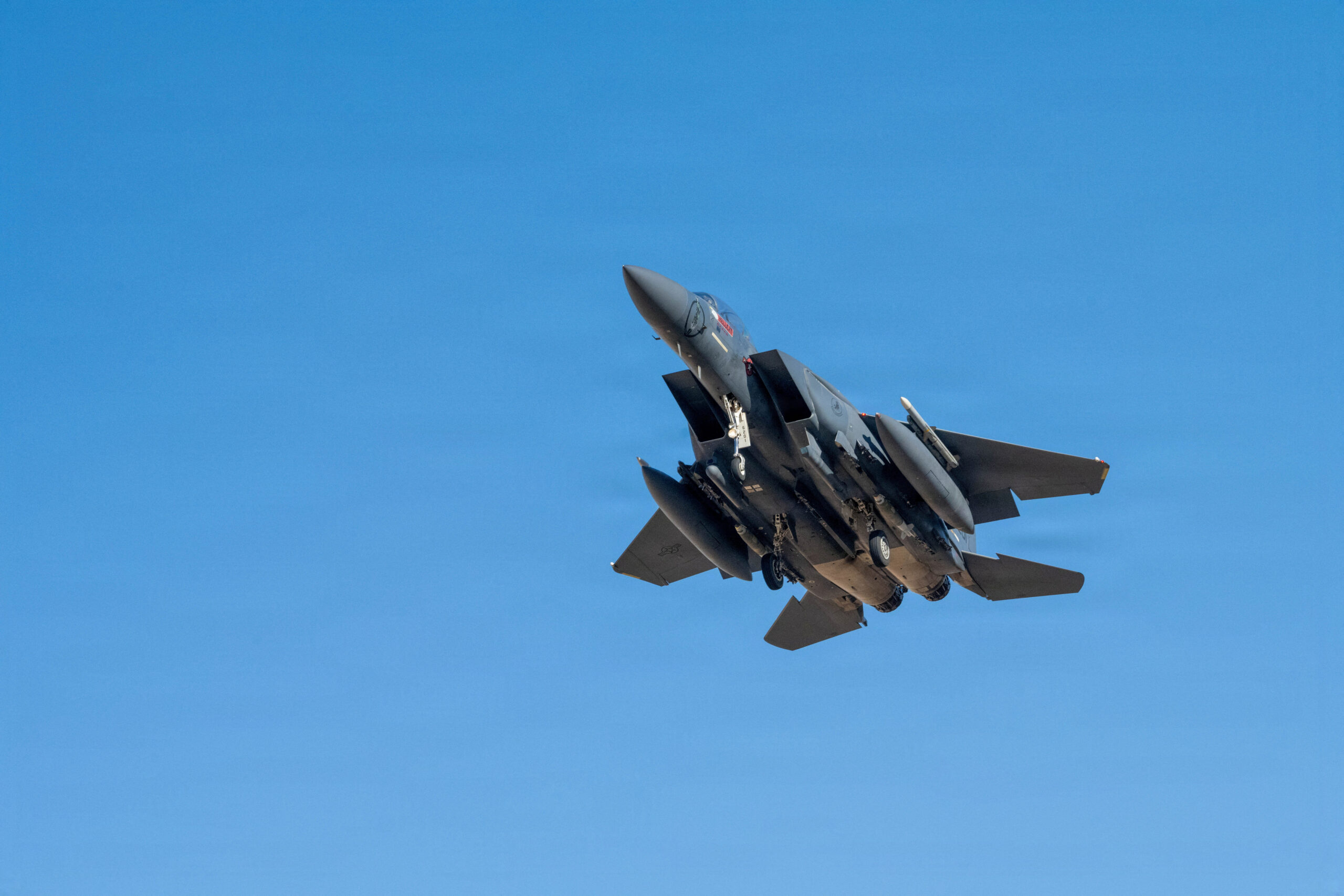
An F-15E Strike Eagle, a two-seat aircraft carrying a pilot and a weapons officer, was shot down over Iran, with both crew members ejecting. The pilot was recovered relatively quickly after the ejection. The weapons officer, a full colonel, began evading capture as he was trained to do, moving away from the crash site, climbing several miles up mountainous terrain despite being wounded, and getting into a concealed position from which he could transmit rescue signals. Axios reported he hiked up approximately a seven thousand foot ridgeline while injured. Bucci said fighter pilots are not trained for extended ground movement, making the colonel’s conduct all the more remarkable, and that he executed the survival and evasion protocols with the discipline expected of a senior officer.
Once the ejection was detected, Bucci explained, an automatic national-level notification system activates immediately, mobilizing assets across the entire American military and intelligence community regardless of who is in the White House or what political pressures may exist. The National Security Agency, signals intelligence assets, Reaper drones, Air Force combat controllers, pararescue jumpers, and ultimately what reporting identified as elements of SEAL Team Six all converged on the operation. A temporary forward air base was constructed by Air Force special operations forces in a site selected by the intelligence community inside Iranian territory, providing a staging point for the rescue forces. Intelligence assets simultaneously ran a deception operation, releasing false information that the second airman had already been recovered, in an attempt to redirect Iranian search efforts. Any Iranian personnel who approached the rescue perimeter were eliminated by drone.
Two C-130 infiltration aircraft were lost during the operation when their nose gear became stuck in sand, though both planes were destroyed in a controlled manner by American forces during extraction rather than captured, and all personnel were evacuated without additional casualties. Bucci said the loss of the aircraft was operationally unfortunate but strategically irrelevant given the success of the mission and the safety of everyone involved.
He pushed back on commentary suggesting the rescue was undertaken primarily because Trump feared the political embarrassment of leaving a downed pilot behind, calling that characterization nonsense. The system that mobilized to recover these airmen has been in place and continuously improved since at least 1977 when Bucci entered the military, he said, and it operates the same way regardless of which administration is in power or what the political optics might be.
He also responded to a social media post from a French general who suggested that the United States was wasting aircraft and resources to recover a single individual, calling the sentiment reflective of a leadership culture that handcuffs an otherwise capable fighting force. He noted that his experience working alongside French special operators at the tactical level was consistently positive, and that the frustration is with political leadership in Paris rather than the soldiers themselves.
On Trump’s Easter Sunday Truth Social post warning Iran that Tuesday would bring simultaneous strikes on power plants and bridges, accompanied by an expletive-laden demand to open the Strait of Hormuz, Bucci said the shifting deadlines that critics characterize as moving the goalposts are substantively different from the kind of empty red line rhetoric associated with the Obama administration. Trump’s adjustments, he said, reflect an effort to maintain maximum pressure while leaving room for the Iranians to make a rational decision to stand down, and anyone who doubts that he will follow through when that patience runs out is either naive or deliberately misleading the public.
Asked by co-host Jim Iuorio whether the crude oil futures market’s implication that the conflict would resolve within a couple of months is realistic, Bucci said he believes the operation will conclude at the shorter end of any projected timeline, and that characterizations of this as a potential long-term quagmire reflect what he called an anti-American fever dream rather than an honest assessment. He said Trump has no interest in nation-building, social engineering, or the kind of open-ended commitments that defined American involvement in Iraq and Afghanistan, and that the mission is specifically scoped to eliminate the Iranian threat, prevent its reconstitution, and exit. His personal view, offered as an individual rather than as Heritage Foundation policy, is that the current Iranian regime must be removed entirely for any of those objectives to stick.