




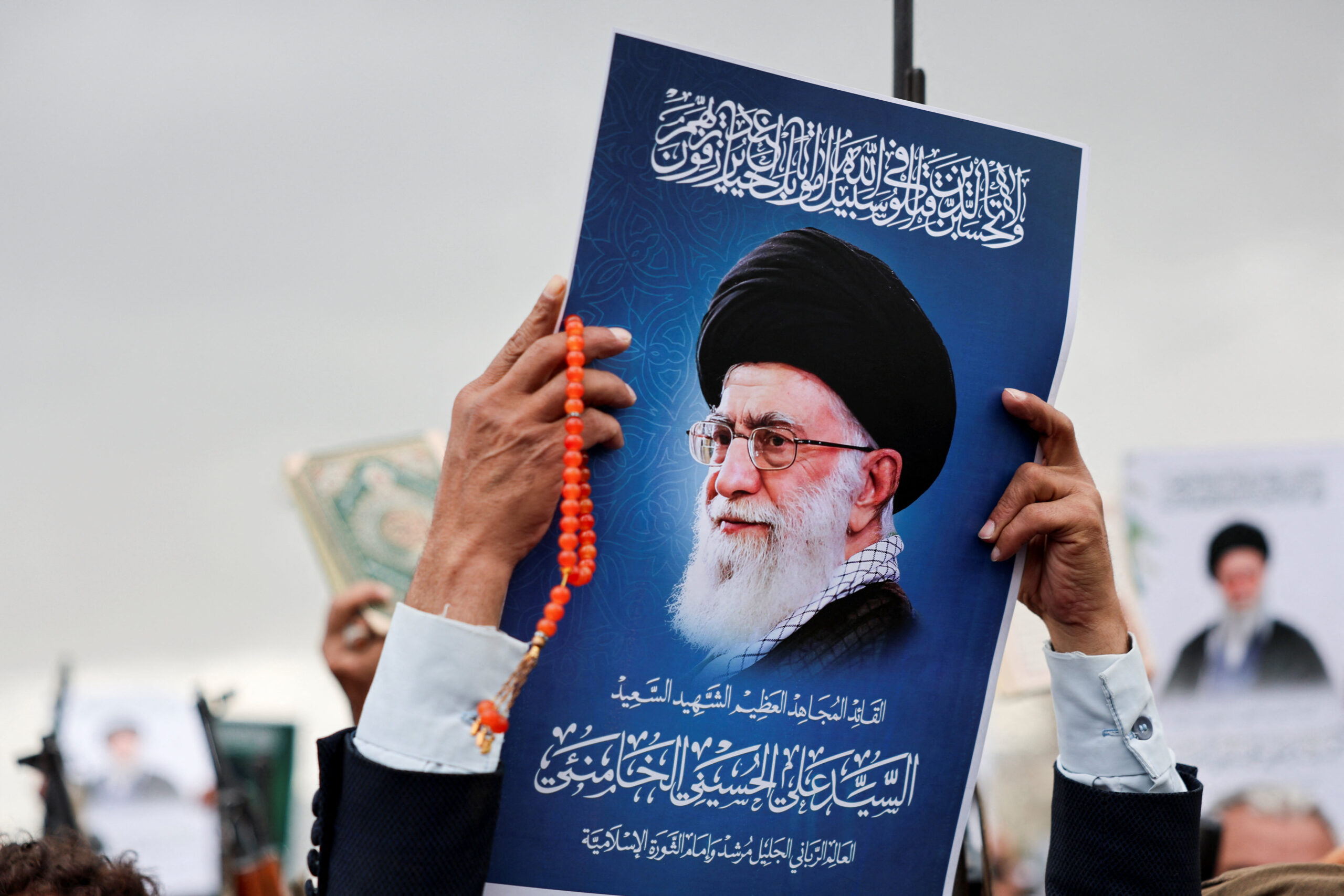
President Trump announced a two-week ceasefire with Iran Tuesday, posting on Truth Social that all military objectives had been met or exceeded and that a ten-point Iranian proposal represented a workable basis for negotiating a definitive agreement.
Dr. Zuhdi Jasser, president of the American Islamic Forum for Democracy, co-founder of the Muslim Reform Movement, former United States Navy Lieutenant Commander, and Republican candidate for Arizona’s fourth congressional district, joined Dan Proft on Chicago’s Morning Answer to assess what the ceasefire means and whether the Iranian proposal is as promising as Trump’s characterization suggests.
Jasser’s read on the ceasefire was cautiously supportive but clear-eyed about the gap between Trump’s optimism and the actual terms Iran put forward. The ten points include a United States guarantee of non-aggression, continuation of Iranian control over the Strait of Hormuz, acceptance of Iranian uranium enrichment for its nuclear program, removal of all primary and secondary sanctions, elimination of all United Nations Security Council and International Atomic Energy Agency resolutions targeting Iran, compensation payments to Iran for war damage, withdrawal of American combat forces from the region, and a comprehensive ceasefire covering Israel’s conflict with Hezbollah in Lebanon. Proft noted that Trump described this as a basis for substantial agreement, while the document as written reads closer to a demand that the United States undo the entire premise of the campaign. Jasser agreed that the ten points essentially constitute a demand for surrender, and that the Iranian regime will not accept the actual terms Trump has stated, including no missile program, no uranium enrichment, and no proxy financing, because doing so would represent the regime’s own capitulation.
He framed the ceasefire not as a diplomatic victory but as a tactical pause that serves the longer strategic objective of giving oxygen to the organic Iranian revolution that has been building since at least 2009 and gained renewed momentum with the Women, Life, Liberty protests beginning in 2019. He said the Iranian people have long since shed their fear of the regime, and that executions have been ramping up in recent weeks precisely because the leadership understands it is losing its grip. The regime’s survival depends not on popular legitimacy, which it has not had for years, but on the financial sustenance of the deep state apparatus, which is why Trump’s threats to attack energy infrastructure and financial chokepoints represented the most existential threat the regime faced. Strip away those financial flows, Jasser argued, and the revolution takes over on its own.
He drew an analogy to the Syrian revolution, noting that it took fifteen years and that what ultimately broke Bashar al-Assad’s back was Israel’s operations in December 2024 and January 2025 severing the flow of weapons and money into Syria. Iran’s trajectory, he said, is pointing in the same direction, and the question is not whether the regime falls but how long the dying takes. He said he hopes Trump does not withdraw from a war footing entirely, because the Iranian people need to know that the West will re-engage if the regime begins conducting mass executions of street protesters through the Basij and other internal repression forces.
Jasser pushed back on the suggestion coming from Trump and others that the figures now nominally running Iran represent a meaningfully different or more moderate leadership than those killed during the campaign. He cited the regime’s ongoing threats that ships passing through the strait during the ceasefire will require Iranian approval, and that Tehran retains the right to attack vessels that transit without permission. He said the executions continuing to accelerate inside Iran tell the same story: whatever names are attached to whatever titles, the deep state is the deep state and it is executing the same program it always has while using different language at the negotiating table to buy time and oxygen.
On the strategic debate Proft raised through Taki Theodoracopulos’s recent Spectator piece comparing Trump’s Iran campaign to Athenian overreach in the Peloponnesian War, Jasser called the analogy both ahistorical and hysterical. He said the relevant history is not Athens versus Sparta but five consecutive American presidents playing pure defense against a regime that has been playing offense for forty-seven years, from the hostage crisis through the founding of suicide bombing tactics against American troops in Lebanon, through thousands of attacks against American forces in Iraq, through the Houthis, Hamas, and a global network of Sunni and Shia proxy radicalization. Finally going on offense against that network, he said, is not overreach. It is the application of the only strategic logic that has ever worked against suicidal ideological movements, which is decisive defeat rather than managed containment.
He drew on a framework from Lee Smith’s analysis in Tablet tracing to the fourteenth-century Arab historian Ibn Khaldun, which argues that group solidarity, what Khaldun called asabiya, is the defining engine of tribal movements and that it can only be broken by a resounding demonstration of superior force rather than by diplomatic accommodation or financial incentives. That is why the JCPOA and its successors failed, Jasser said, and why handing the regime billions in sanctions relief produced more Iranian aggression rather than less. The regime interpreted accommodation as weakness, which in the logic of asabiya it was, and responded accordingly.
The crucial difference between Iran and Afghanistan, he argued, is precisely the one that makes the current moment potentially historic. Nation-building in Afghanistan failed in part because the Taliban possessed genuine tribal group solidarity and the population had no pre-existing movement of modernization or liberalism to anchor a successor government. Iran is different. The Iranian people are post-theocracy and post-monarchy simultaneously, with an organic revolution that includes women’s movements, workers movements, university students, trade unions, and shopkeepers across the country. The goal is not to impose a civilization from outside but to give sufficient oxygen to a civilization that is already trying to emerge from within, and that, Jasser said, is why the current campaign, whatever its tactical complications, represents a fundamentally different and more promising strategic situation than any previous American military intervention in the Middle East.