




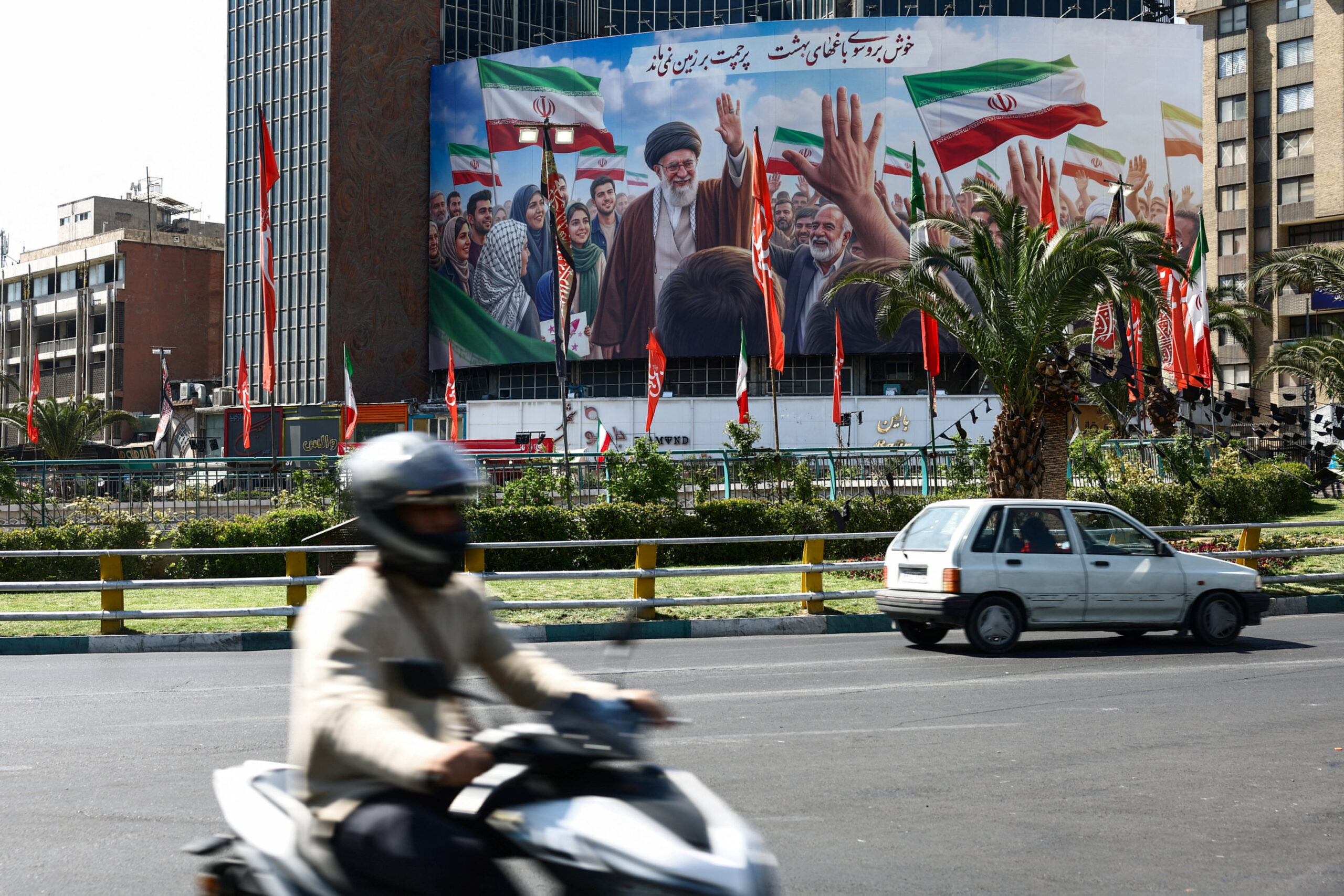
The Wall Street Journal editorial board’s suggestion that the Iran campaign may have ended with a whimper drew a public response from President Trump this week dismissing the board as one of the worst and most inaccurate in the world and insisting that because of him Iran will never have a nuclear weapon. But the underlying question the Journal raised, whether Trump is genuinely prepared to resume the military campaign if Iran strings out negotiations without delivering on his stated objectives, remains unanswered.
Josh Hammer, Newsweek senior editor at large, host of the Josh Hammer Show, and senior counsel for the Article III Project, joined Dan Proft on Chicago’s Morning Answer to offer his assessment.
Hammer said it is far too early to conclude that Trump has lost his appetite for resuming hostilities if the Iranians prove recalcitrant. The ceasefire is only days old and already looks shaky. Iran allowed exactly one oil tanker to pass through the Strait of Hormuz in the days following the announcement, against a normal flow of roughly one hundred and fifty vessels. The regime is reportedly attempting to charge transit fees in cryptocurrency, which is not what any agreement contemplated. And critically, the United States has not moved a single military asset out of the region. Every vessel, helicopter, cargo plane, and troop deployment is still sitting in place, essentially waiting for a command to resume operations. That posture, Hammer said, is the most honest signal available about how the administration actually reads the situation.
He offered his own prediction directly: he does not think the ceasefire will last long and would wager on some resumption of hostilities within a week to ten days, depending on what comes out of the weekend talks in Islamabad involving Vice President Vance, Steve Witkoff, and Jared Kushner. His reasoning is that the stated objectives of the campaign have been substantially but not fully achieved. Iran’s navy and air force are effectively gone. Its military and industrial base has absorbed devastating damage. The nuclear enrichment infrastructure has been severely degraded. But the regime still possesses a residual missile and drone arsenal, still holds enriched uranium that needs to be accounted for, and still retains sufficient capacity to threaten the strait. Declaring complete victory in those circumstances, he said, would be dramatically overstating what has actually been accomplished, however impressive the operational results have been.
On Trump’s public optimism about the prospects for cooperation with Iran to secure the nuclear material from last June’s strikes, Hammer said the president is doing what he often does, projecting onto the other side the outcome he wants to see while the other side has not agreed to anything of the kind. He said Trump’s signals are less confusing than the Wall Street Journal suggests if you read them with an understanding of how the president communicates, watching what he does rather than parsing every public statement literally. The bottom line is that Marco Rubio said two weeks ago that the strait is getting opened one way or the other, and nothing since then has changed that fundamental commitment.
Hammer addressed at some length the recurring claim from Tucker Carlson and others that Israel manipulated Trump into the Iran campaign and is effectively running American Middle Eastern policy. He said the theory requires believing that the president of the world’s most powerful military is a puppet controllable by a nation of nine to ten million people, which tells you more about the claimants’ contempt for Trump than about the actual relationship. He noted that Trump’s hostility to the Iranian regime and his desire to confront it militarily goes back nearly fifty years, with documented evidence including his criticism of Jimmy Carter during the 1979 hostage crisis, a 1988 Guardian interview in which he threatened to seize Kharg Island, his withdrawal from the Iran nuclear deal in his first term, and the assassination attempt against him with Iranian involvement. Israel, he said, has been a genuinely effective military ally in the campaign, with the two forces operating at times as a combined unit, which is what an actual ally looks like in contrast to NATO members who remained on the sidelines despite being within Iranian missile range and more dependent on Gulf oil than the United States. When the senior partner decides to pause for any reason, the junior partner listens and waits for orders, which is what Israel has been doing, and the willingness to suspend Lebanon strikes at American request is evidence of that relationship working as it should rather than evidence of Israeli control.
On NATO, Hammer said the alliance has been in search of a purpose since it achieved its founding objective with the fall of the Soviet Union in 1989 and 1991. For thirty-five years it has operated with an amorphous, ill-defined mission that works reasonably well under administrations inclined toward humanitarian interventionism but has no coherent meaning within Trump’s harder-edged nationalist realist framework. He said Trump is fundamentally correct in his critique of the alliance’s free-rider problem, noting that even NATO Secretary General Mark Rutte appeared on CNN acknowledging that Trump has legitimate grievances about the alliance’s performance, which is a remarkable admission from the head of the organization. Hammer said he would not support withdrawal from NATO, agreeing that it would hand Putin and Xi a major strategic gift and potentially drag the United States back into European security commitments under worse conditions than exist now. But he argued that the bilateral and trilateral alliance model the Iran campaign has demonstrated is a better template for twenty-first-century geopolitics than large multilateral structures built for Cold War conditions that no longer exist.
His central strategic argument is about threat prioritization. Russia, he said, has revealed itself in four years of grinding warfare in Ukraine to be something of a military paper tiger, one of the least efficient fighting forces currently visible on the world stage. The primary threat to American interests and the American-led international order is China, which he described as the first through fifth largest threats America faces, with Russia, Iran, Venezuela, and Cuba all functioning as components of the Chinese Communist Party’s project to make the twenty-first century a Chinese century rather than an American one. To the extent the United States should invest in alliance structures going forward, his preference is an Indo-Pacific framework centered on India, Japan, South Korea, the Philippines, and potentially Vietnam, designed specifically to contain Chinese regional ambitions, with American participation contingent on genuine burden-sharing rather than the subsidy model that has characterized NATO for decades.