




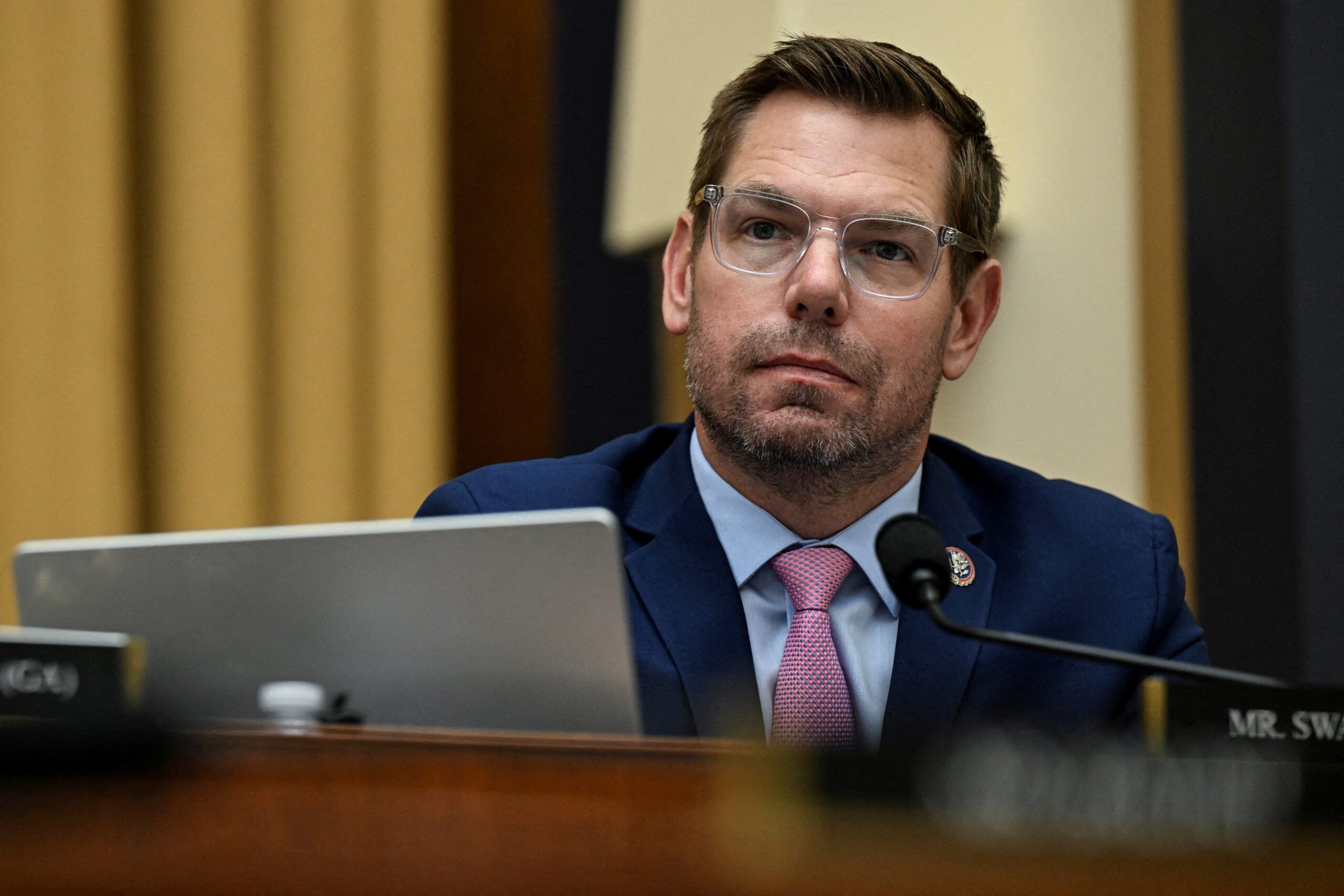
As new allegations and political tensions continue to unfold in California, journalist Susan Crabtree offered insight during an appearance on Chicago’s Morning Answer, where the conversation focused on claims involving Representative Eric Swalwell and the broader implications for state and national politics.
The discussion comes amid renewed scrutiny of Swalwell, who has faced past controversy over his association with a suspected Chinese intelligence operative as well as more recent and serious allegations of misconduct. During the interview, attention centered on a woman who publicly accused Swalwell of sexual assault in 2018, along with reports that additional individuals have come forward with claims of inappropriate behavior. Crabtree noted that while rumors about Swalwell had circulated in political circles for some time, such allegations often remain unreported until a named accuser steps forward.
The conversation also examined responses from political allies, including Representative Ruben Gallego, who has denied prior knowledge of the allegations. Crabtree suggested that scrutiny could expand beyond Swalwell, pointing to unverified claims and political tensions that may draw additional figures into the controversy. She emphasized that the situation reflects a pattern in which political relationships and personal conduct intersect, often complicating public accountability.
Broader questions were raised about whether Democratic leadership, including figures such as Nancy Pelosi, had prior awareness of concerns surrounding Swalwell. Crabtree indicated that while definitive evidence of such knowledge remains unclear, the persistence of rumors highlights the challenges of separating private conduct from public responsibility in high-profile political environments.
The interview also placed the controversy within the larger context of California politics, where Crabtree described longstanding concerns about institutional responses to misconduct allegations. She referenced past cases involving prominent political and entertainment figures, arguing that power dynamics and political considerations have historically influenced how such claims are handled.
In addition to the allegations themselves, the discussion touched on the timing of the reports, with Crabtree noting that the emergence of accusations shortly before key election milestones raises questions about political motivations. While she acknowledged that such timing can appear strategic, she stressed that the substance of the claims ultimately requires careful examination regardless of when they surface.
The conversation expanded further to include California’s political landscape more broadly, including policy debates, union influence, and ongoing disputes over transparency and oversight. Crabtree pointed to proposed legislation related to nonprofit activity and immigration policy as examples of how political power structures continue to shape public policy debates in the state.
As the situation develops, Crabtree suggested that additional reporting and potential legal proceedings will be critical in determining the credibility and impact of the allegations. The unfolding controversy, she indicated, underscores the complex intersection of media coverage, political accountability, and public trust at a time when scrutiny of elected officials remains high.