




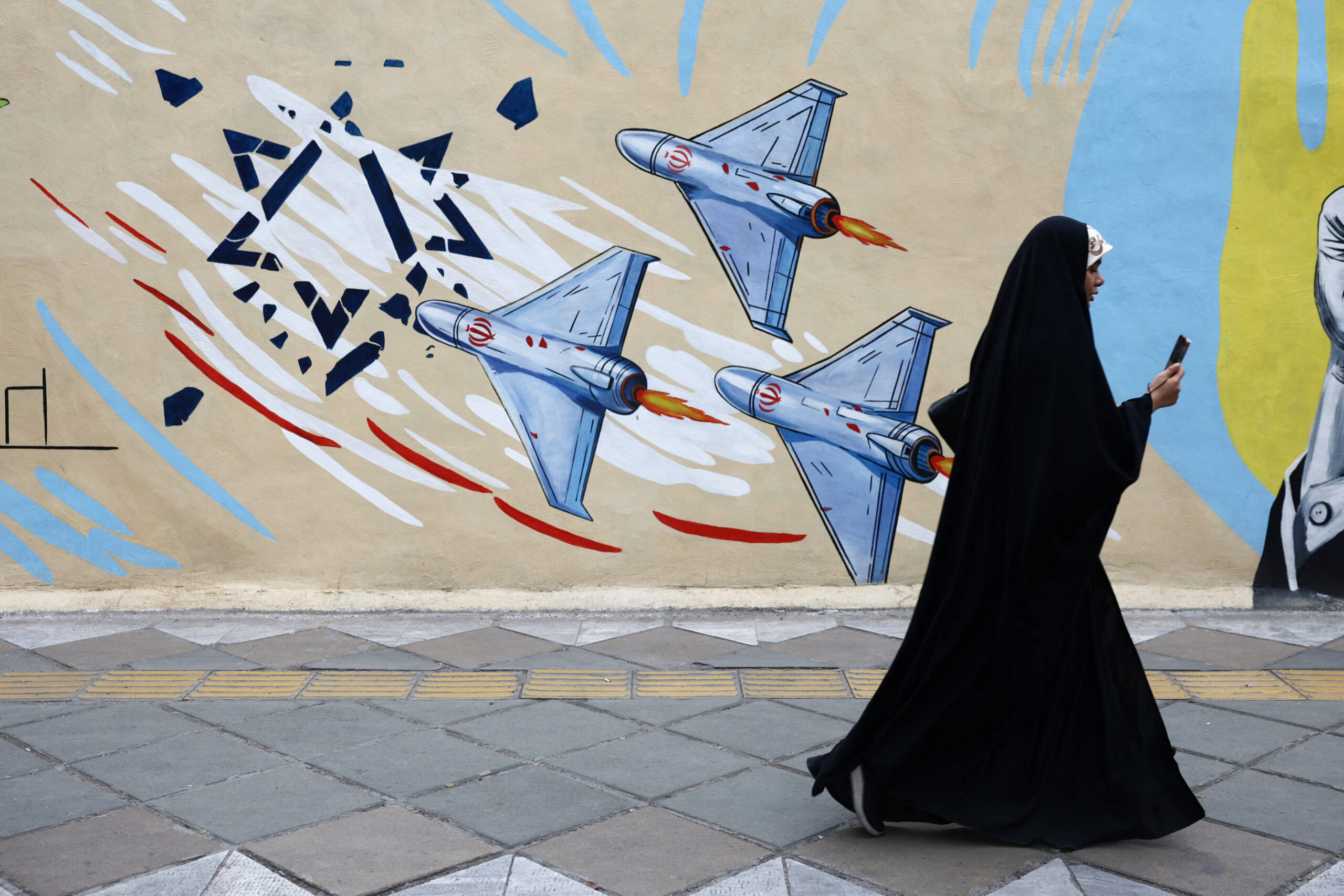
Foundation for Defense of Democracies CEO Mark Dubowitz provided a thirteen-point accounting of what the Iran campaign has accomplished, a list that Dan Proft read in full on Chicago’s Morning Answer before asking Gabriel Elefteriu, co-founder of Astro Analytica and senior fellow for space power at the Council on Geostrategy in London, whether the picture it paints is accurate and whether it constitutes victory. The short answer was: accurate in its facts, premature in its conclusions.
Dubowitz’s accounting describes a nuclear program set back years with enrichment and reprocessing gutted, weaponization sites destroyed, and a generation of senior nuclear scientists eliminated. It describes a ballistic missile program crippled, with monthly production down from one hundred to near zero, roughly half the regime’s missiles and launchers destroyed, and the IRGC aerospace force commander dead. Air defenses are devastated with American and Israeli aircraft operating over Iranian territory with near impunity. The naval blockade has driven oil exports to near zero, choked imports, wrecked the steel and petrochemical sectors, produced triple-digit inflation, and effectively destroyed the currency. Hundreds of senior IRGC, intelligence, and military commanders have been killed including the IRGC commander-in-chief, the armed forces chief of staff, and the aerospace force commander, leaving whatever constitutes the new leadership running a hollowed-out regime reportedly communicating through handwritten notes carried by couriers. Gulf states have shut down sanctions-busting financial escape routes. The proxy network has been shattered, with Hezbollah and Hamas heavily degraded, the Houthi political leadership taking direct strikes, and Syria’s new government actively blocking Iranian arms transfers and arresting smugglers. Lebanon has opened direct peace talks with Israel for the first time since 1983, with Beirut now asserting that the Lebanese armed forces alone are responsible for national defense, a direct repudiation of Hezbollah’s foundational claim. The Iranian economy is hollowed out from within with power shortages, water crises, factory shutdowns, pension unrest, and mass protests across all thirty-one provinces. A generation of irreplaceable scientific expertise in missile design, centrifuge engineering, and weapons development has been eliminated. The regular navy has been shattered.
Elefteriu said none of the specific facts in that list are really disputable, and that it represents a genuinely devastating blow to the Iranian regime. But he pushed back on translating tactical and operational destruction into strategic victory, and said the history of American military campaigns provides cautionary examples. The scale of bombing inflicted on North Vietnam did not produce strategic victory. The campaigns in Iraq, both in 1991 and 2003, achieved all the immediate military objectives that could be listed in a similar accounting, and so did the Afghanistan campaign, yet the strategic outcomes of all three are difficult to present as victories by any honest measure. He said you only determine whether you have won a war at the end, when all the outcomes you started the war to achieve are actually secured, and that point has not been reached with Iran.
He raised what he said is consistently underweighted in Western commentary on the conflict: the degree and nature of Chinese and Russian support to Iran. He said there are credible indications that Iran has been receiving targeting support through Chinese satellite systems, and that Russia, having received Iranian drone technology to use against Ukraine, has since built its own production facilities at scale, improved the original designs through combat experience in Ukraine, and is now passing improved drone models back to Iran. The seizure of an Iranian cargo ship carrying Chinese-sourced chemical components for ballistic missiles illustrates that material support has been flowing, and that Trump’s correspondence with Xi Jinping about weapons transfers may not have produced the compliance it was publicly portrayed as having achieved. Elefteriu said China, Russia, and Iran constitute a genuine axis of mutual support rather than an isolated Iranian regime, and that this political and material backing provides the regime with resilience that pure military assessments of the campaign’s damage tend to undercount.
On the question of internal regime chaos, Elefteriu said three things can be stated with reasonable confidence. First, it is in the American administration’s interest to promote the narrative of Iranian internal disarray because it reinforces the impression that the regime is near collapse and strengthens the negotiating posture. Second, no one in the public domain actually knows the internal dynamics with precision, and the intelligence picture available to the CIA, Mossad, or other services is not available for public assessment. Third, what can be observed publicly suggests the IRGC has been strengthened rather than weakened within the Iranian power structure, having effectively consolidated its position as the dominant institution in the regime regardless of the formal political leadership. He said that observable fact should temper optimism about imminent regime collapse driven by internal power struggles.
On China’s calculations specifically, Elefteriu said Beijing may be content to let the conflict continue for now precisely because it sees the war as consuming American ammunition stocks, distracting Washington from the Indo-Pacific theater, weakening American influence globally, and imposing economic costs on the global system that fall more heavily on American allies than on China itself. He acknowledged China has access to Russian oil as an alternative to disrupted Iranian supplies, and said Beijing may calculate that the situation will get worse for America before it gets meaningfully worse for China, making patience rather than pressure the rational Chinese posture regardless of what Xi says in correspondence with Trump.
The conversation closed with a discussion of Elefteriu’s piece comparing Trump to Henry VIII, which he said draws parallels on personal scale, appetite for expensive buildings and furnishings, creation of strongly centralized government, demanding treatment of subordinates including sudden dismissals, deep personal engagement with the sports world, and a governing style that is larger than life in ways that make conventional political analysis inadequate to describe either figure. He noted the Iran war has actually deepened the historical parallel in ways he had not fully anticipated when he first wrote the piece.