




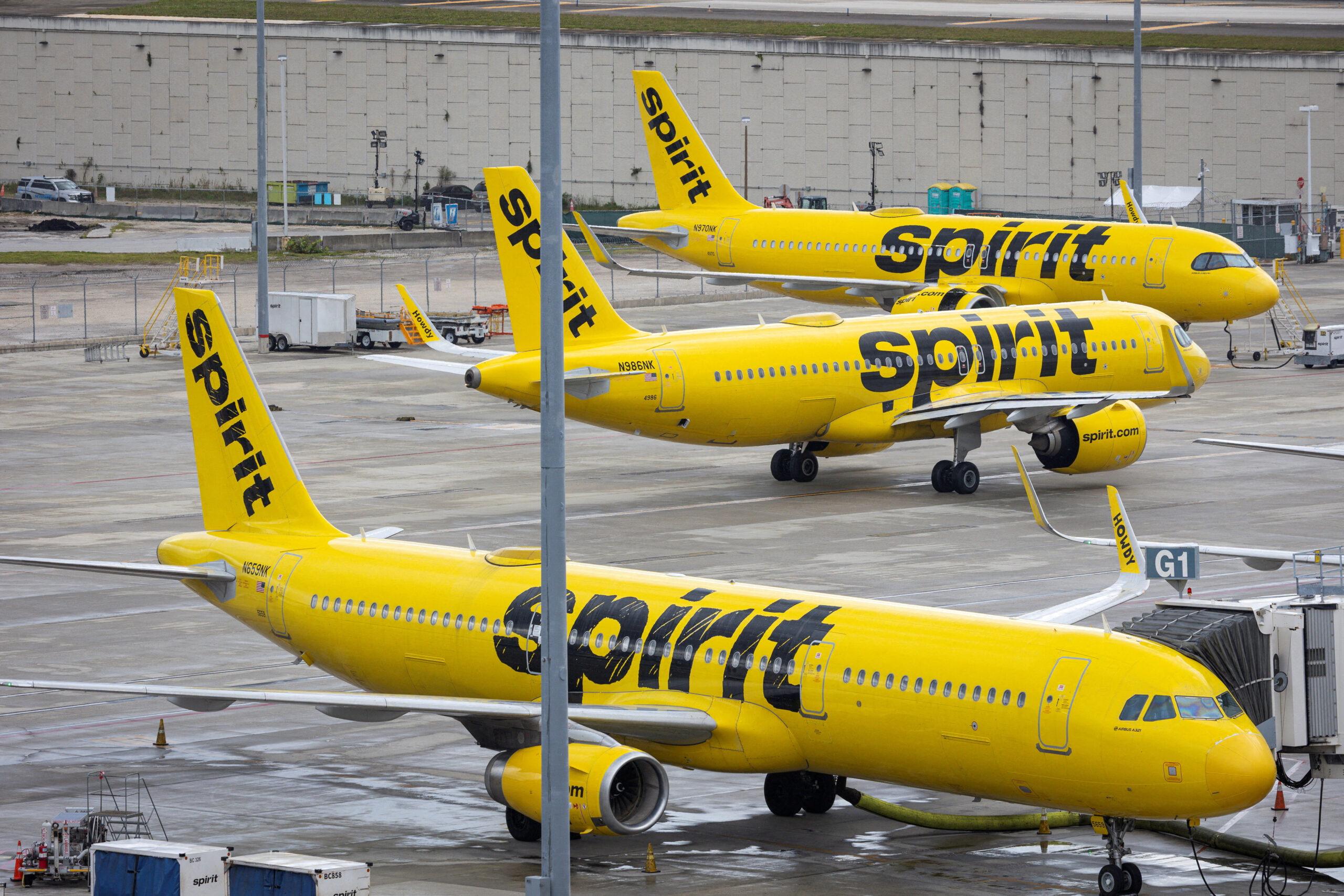
President Trump suggested this week that the federal government might purchase Spirit Airlines out of bankruptcy, citing the company’s eighteen thousand employees, its aircraft assets, and his belief that declining oil prices would allow the government to eventually sell the airline at a profit. Stephen Moore, economist and co-author with Art Laffer of The Trump Economic Miracle and the Plan to Unleash Prosperity Again, joined Dan Proft on Chicago’s Morning Answer to say that while Trump has correctly identified a genuine injustice done to Spirit’s workers and shareholders, buying the airline is the wrong response to a problem the government created in the first place.
Moore said the real villain in the Spirit story is the Biden administration, specifically Transportation Secretary Pete Buttigieg, whose department three years ago blocked Spirit’s proposed merger with JetBlue on antitrust grounds. At the time, JetBlue was the fifth largest domestic carrier and Spirit was the sixth, and combining them would have given the merged entity approximately nine percent of the American airline market. Moore called the antitrust rationale laughable, noting that the big four carriers, American, United, Delta, and Southwest, dominate the market so thoroughly that a nine percent combined competitor would have enhanced competition rather than diminished it. Instead of approving a merger that would have created a meaningful fifth competitor to the established carriers, the Biden administration blocked it, Spirit entered bankruptcy, and the practical beneficiaries are the four dominant airlines whose market position is now stronger than it would have been had the merger been allowed.
He said Spirit’s workers and shareholders have a legitimate grievance against the government that destroyed their company’s prospects, but that the appropriate remedy is not a federal takeover. He compared the Spirit bailout idea to Solyndra and other government industrial policy ventures that produced embarrassing losses, and noted with some sarcasm that the postal service stands as a vivid illustration of what government management of commercial operations tends to produce. His bottom line was that Trump had the diagnosis partly right but the prescribed remedy completely wrong.
The conversation moved to Illinois, where Moore said he had modestly good news to report: the millionaire surcharge that Illinois Democrats were pushing through the General Assembly, which would have added approximately three percent to the state’s existing income tax rate of four point ninety-five percent for high earners, has stalled in the House for now. He acknowledged the effort is not dead and that Illinois’s political dynamics make it likely to resurface, but said the temporary pause represents at least a momentary recognition of the political and economic costs. He noted the broader pattern of blue states racing to add surcharges on high earners despite overwhelming evidence that the primary effect is to accelerate the departure of the taxpayers being targeted, taking their income, their investment capital, their employment and their charitable giving with them.
New York Mayor Zohran Mamdani’s pied-à-terre tax video, in which he specifically named Ken Griffin’s two-hundred-and-thirty-eight-million-dollar Manhattan penthouse as a target and announced gleefully that this is how he planned to fund city services, drew Moore’s sharp reaction. Griffin’s team responded through chief operating officer Gerald Boen, announcing that their planned redevelopment of 350 Park Avenue, which would create six thousand construction jobs and support more than fifteen thousand permanent positions while generating over six billion dollars in construction spending, is now contingent on moving forward at all given the hostile political environment. Moore noted the familiar pattern from Chicago, where Griffin’s departure deprived the city not only of jobs and tax revenue but of the single largest individual charitable contributor in the state of Illinois, leaving organizations that relied on his philanthropy to discover what it means to have driven away the person most committed to their funding.
Both Proft and Moore reacted to clips from a new New York Times podcast featuring a commentator named Hasan Piker, who told his hosts that he supports piracy across the board, said he would steal a car if it were as easy as digital piracy, said he would enthusiastically cheer news reports of people stealing from the Louvre, and called bank robbery a cool crime. Moore said the clips illustrate a dangerous new moral framework taking hold among a portion of the left that moves from celebrating minor theft to eventually justifying physical violence against people decreed to be exploiters, and drew the parallel to the Batman film featuring Bane in which the city descends into mob justice against the wealthy. He noted that the women on the podcast were laughing along as their co-host endorsed stealing priceless public art, and that one of them had earlier said she would never steal a library book before acknowledging she regularly steals from Whole Foods because the corporate ownership makes it acceptable in her moral calculus. Moore said this represents a complete breakdown of any coherent ethical code, and that the only places in the world currently trending toward rather than away from this kind of thinking are the major blue cities of the United States.