




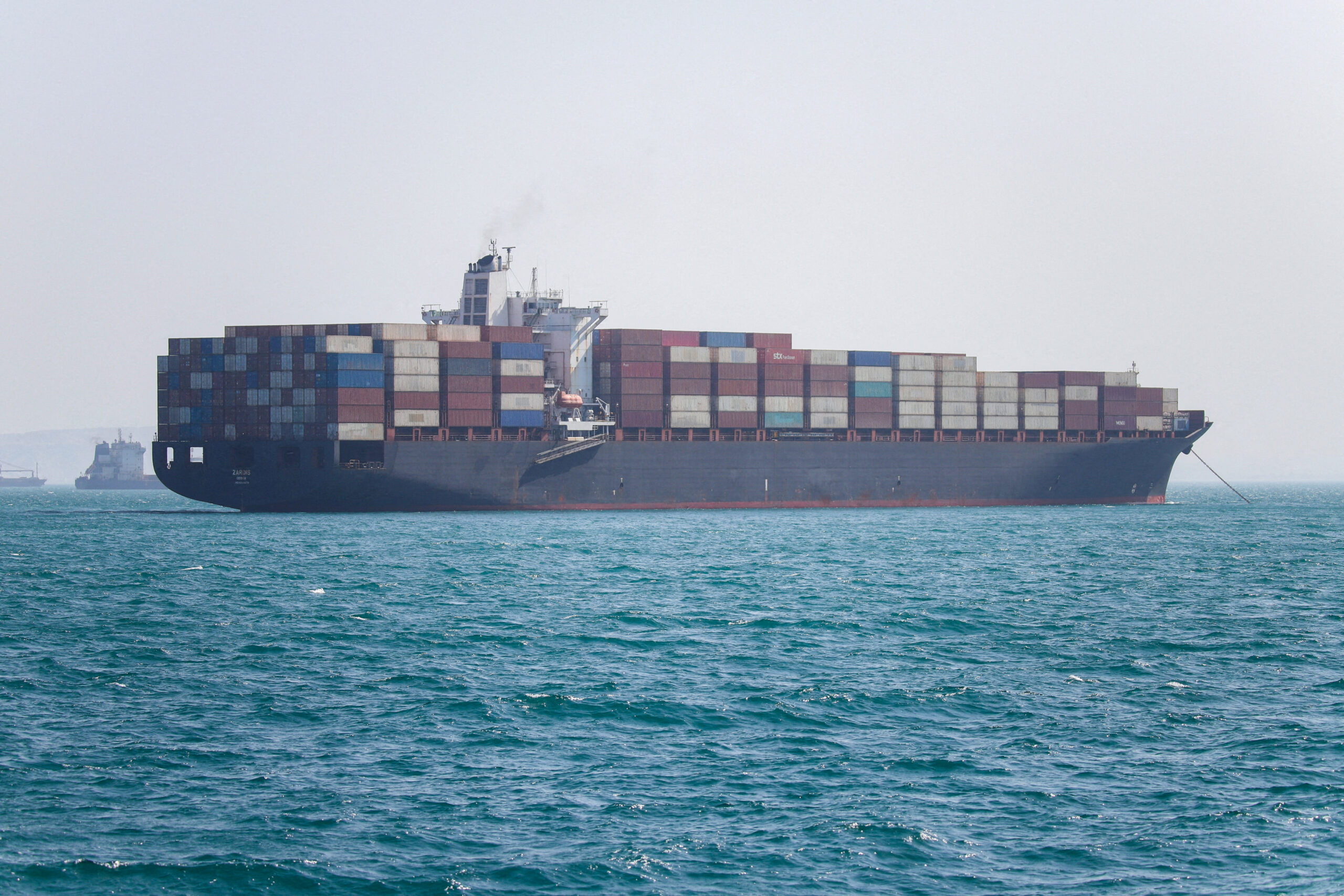
Iranian state media claimed over the weekend that the regime needs twenty-four billion dollars released in frozen assets before any deal with the United States can be finalized, a demand the Trump administration flatly rejected, saying financial relief will come only if Iran upholds its end of any bargain. With Iranian boats attempting to lay mines in the strait, the US responding to Iranian fire on American planes by hitting missile launch sites, and a commercial tanker struck by an explosion in the Gulf of Oman, Lieutenant Colonel Tony Shaffer, president of Project Sentinel and the London Center for Policy Research and author of Operation Dark Heart, joined Dan Proft on Chicago’s Morning Answer to assess the state of play and what he thinks needs to happen.
Shaffer said the Iran situation has to be understood as part of a larger strategic project Trump is pursuing, which is fundamentally about restructuring how global energy is distributed and breaking the century-long hold that entities like the World Economic Forum and Lloyd’s of London have had over world events through control of energy flows. He said this explains the sequential logic of Venezuela, then Iran, and the broader Abraham Accords architecture, which he sees as Trump’s attempt to destroy OPEC as a tool of foreign leverage against the United States, create new energy alliances favorable to American interests, and fundamentally change the way the world functions for generations rather than just administrations.
On the tactical situation in the strait, Shaffer said Defense Secretary Hegseth’s response to congressional questioning last week that the United States has options is best understood as meaning the military is holding back deliberately, in part to pressure European allies and others to recognize they need to act in their own interest. He said if directed, the United States Navy, Air Force, and Army could open the strait and keep it open, would likely seize Kharg Island, could take out another layer of Iranian leadership, and would probably see the military elements of the Abraham Accords coalition show up on the battlefield alongside American forces. The reason for the restraint is to give Gulf State allies and perhaps European partners one more opportunity to step up.
He said he is past the point of thinking that restraint is wise. He has been on record for the past week predicting Trump would give Iran another week, and he was right, but he now thinks it is time to stop giving additional windows. His prescription is direct: seize all Iranian vessels, sell their oil, take Kharg Island, physically seize and open the strait, and declare the United States is assuming control of the waterway. He said American forces in countries he cannot identify are already leaning forward, ready to strike on short notice, and that the interim ceasefire period has allowed the military to reassess and refine target sets so that when operations resume they will be executed more efficiently than the initial campaign.
He pushed back on the characterization of this period as a ceasefire in any meaningful sense, noting that since the Lebanon ceasefire that Trump effectively imposed on Israel, Hezbollah has fired roughly a thousand rockets and a thousand drones into Israel. He said calling what is happening a ceasefire is like calling the original operation a preemptive deescalatory retaliation, language that does not describe the reality on the ground. Iranian proxies are operating with relative freedom while the United States pursues negotiations with a regime it cannot trust through mediators, particularly Pakistan, whose reliability as honest brokers is also questionable.
He said he does believe the Pakistanis have their own self-interest in resolution and are functioning as something closer to genuine intermediaries than pure Iranian advocates, but maintained that the overall approach of deferring to Gulf States and extending diplomatic windows has gone on too long. He said he does not think it reflects Trump’s reluctance to accept casualties as the primary driver, which he knows Trump does take seriously, but rather a calculation about timing and giving Iran one final chance alongside a genuine interest in facilitating the conditions for the Persian people to rise up and produce regime change from within.
On what the Beijing summit might have produced with respect to China’s role, Shaffer said two things are critical: China needs to stop providing military intelligence to Iran, which he said has been driving a significant portion of Iranian strikes against American bases, and China needs to restructure its oil purchasing relationship with Iran in ways that stop financing the Iranian economy. He said approximately one-third of China’s oil imports have been disrupted by the war, which is something Beijing simply cannot sustain, and that Trump almost certainly wants China to start buying American oil as part of any long-term regional restructuring. He said the most likely scenario now is that Trump gives it perhaps one more week and then returns to military operations with a focus on seizing territory and the strait itself, at which point the Chinese would actually benefit because the United States could guarantee the oil supply they are currently losing, and the Arab allies who have been asked to try the diplomatic path would join the military effort they know is eventually necessary.