




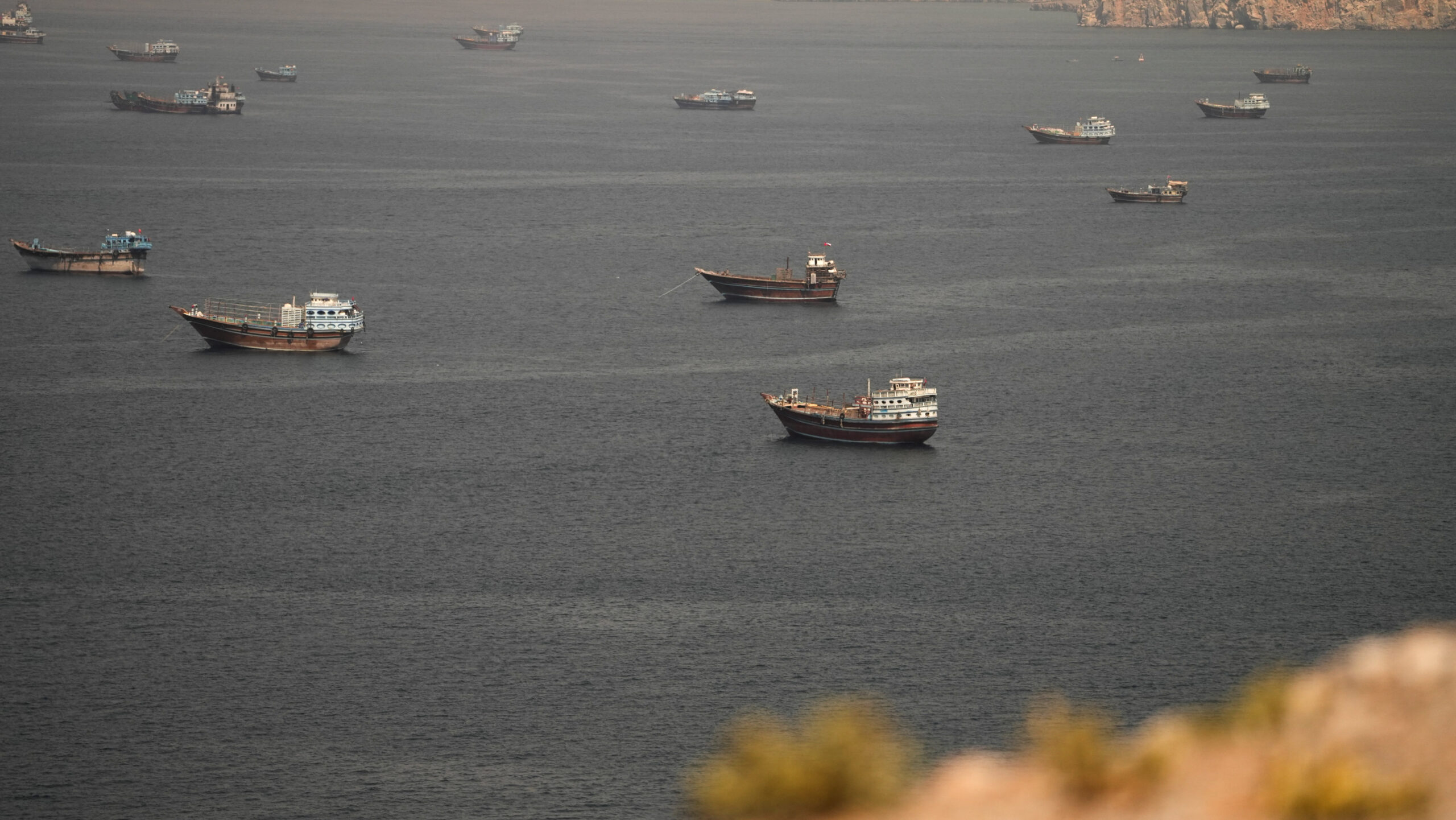
The IRGC fired missiles at two commercial ships in the Strait of Hormuz yesterday, including a Qatari vessel, while Iran’s ambassador to China declared in Beijing that his regime will definitely charge service fees for strait transit and that China and other Iranian friends may receive special considerations regarding fee levels, effectively announcing that Iranian foreign policy will determine global energy flows. President Trump responded that the United States can knock out Iran’s electricity and power generating plants in a small part of an afternoon, that the Iranians know this, and that America will either make a deal or finish the job.
William Thibeau, a veteran of the Army’s 75th Ranger Regiment and director of the American Military Project at the Claremont Institute, joined Dan Proft on Chicago’s Morning Answer to assess the state of negotiations, the Qatar relationship, F-35 sales to Turkey, and the autonomous weapons debate.
On the latest strait disruptions and the Khamenei funeral saber rattling, Thibeau said neither development is necessarily surprising during what he described as an emotional flash point for Iran occurring while US and Iranian negotiators are not in direct contact. He said disruptions to the framework should be expected throughout the sixty-day period and that the broader momentum of the conflict and what longer-term peace could look like is more important than any individual provocation. He made a point he said is often underappreciated: the United States now has a credible military deterrent on the table that Iran well knows can be deployed, which is fundamentally different from the posture of most previous American presidents. Trump is not just spouting rhetoric. He has a coin with diplomacy on one side and demonstrated military capability on the other, and that changes the negotiating dynamic regardless of day-to-day disruptions.
On the Qatar relationship and whether the United States is getting too close to mediators whose own interests may not align with American objectives, Thibeau acknowledged the concern as reasonable, particularly given the Foundation for Defense of Democracies’ recent report documenting Qatari money flowing into American institutions. But he argued that the Air Force One gift from Qatar was delivered well before Operation Epic Fury, and that if the most extreme concerns about the relationship were justified, Qatar would have done anything to prevent that operation. He said the Middle East is a complicated place where partnerships with countries not fully aligned with American values are inevitable, and the relevant question is whether the United States can stitch together a coalition that moves past three decades of chaos in the region so American national security resources can be redirected toward more proximate and existential threats, specifically defending the homeland, dominance in the Western Hemisphere, and countering China in the Pacific. He said the key difference from the Obama-era JCPOA is that Gulf Cooperation Council states are far more participatory in the current negotiations, replacing the European-centric verification and stakeholder model that failed, which he considers a genuine improvement regardless of the imperfections of individual partners.
On selling F-35s to Turkey, Thibeau said the question is more complicated than simply refusing because Erdogan is untrustworthy. He noted that Turkey is a NATO ally with significant American military assets based on its territory, including Incirlik Air Base and its considerable capabilities, and that maintaining the stability of the Western order the United States bankrolls may require some of these weapons deals. He said any sale would need to be conditioned on real concessions from Turkey regarding regional stability, serving as a check on migration from the Middle East into Europe, and finding a constructive path forward with Israel rather than the current trajectory of saber rattling between the two countries. He said a Turkish-Israeli war would be a disaster that would put the United States in an untenable position.
On autonomous weapons, which have generated fresh controversy following UN Secretary General Guterres’s comments and associated media coverage suggesting the United States faces novel ethical dilemmas, Thibeau said the consternation from bodies like the UN is primarily designed to throw sand in the gears of responsible American technology development. He said the ethical and operational framework for deploying autonomous weapons already exists within the American military’s rules of engagement structure. The United States has always differentiated between contested declared battlefields and populated urban environments, adjusting rules of engagement to win while protecting civilian life and infrastructure, and those same categories apply directly to autonomous systems.
On the specific state of the technology, he said the military is approximately twelve to eighteen months from the capability for autonomous drone swarms to move through battlefields without direct human control, and that when that capability arrives it will largely redefine modern warfare. He said the lessons from Ukraine and Russia are valuable but not directly portable to American military operations. Ukraine has demonstrated that cheap, expendable drone systems can hold off a massive conventional military through asymmetric capability, and that lesson applies to how Iran can continue to inflict pain on the strait, on Gulf allies, and on American military infrastructure using relatively inexpensive systems. But Ukraine and Russia are fighting what he candidly called a stale slaughterhouse, and the United States would never operate that way.
He closed with what he described as a potentially defining question for twenty-first century foreign policy: whether war itself is becoming a less effective instrument of political outcomes than it was in the twentieth century. The proliferation of cheap, attritional weapons systems means smaller state actors and even non-state actors can now participate meaningfully on the modern battlefield in ways that were previously impossible, which raises fundamental questions about the utility of military force as a tool of statecraft. Iran’s retained ability to disrupt the strait with ten-thousand-dollar jet skis and cheap drones even after its conventional military was largely destroyed illustrates the dynamic, and it is one that will shape American defense planning and foreign policy for the foreseeable future.