




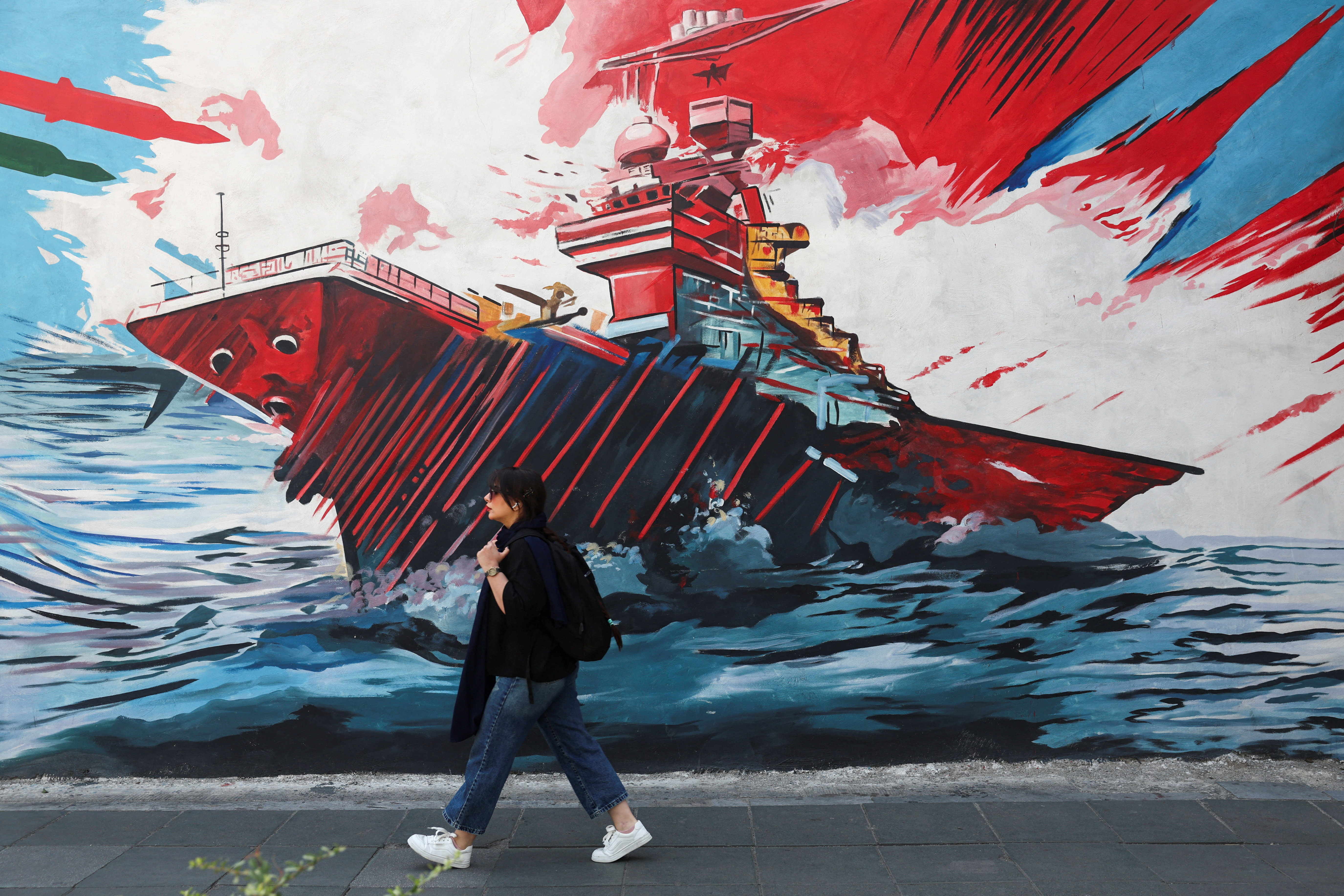
Chris Krok, filling in for Dan Proft, welcomed Chuck de Caro, CNN’s first special assignment correspondent and a former Pentagon consultant with the Office of Net Assessment, to discuss his recent column for The Blaze arguing that while the United States holds a decisive military advantage in the ongoing conflict with Iran, it is losing badly in the information and propaganda space. Krok opened by asking de Caro whether mere survival might itself constitute a form of victory for Iran’s regime, given the disparity in conventional military capability between the two countries.
De Caro said Iran has effectively adapted what he called “soft war,” a concept he originally developed decades ago while teaching at the U.S. war college, turning it into an effective propaganda tool despite lacking comparable military or intelligence resources. He specifically cited viral Iranian propaganda videos using Lego animation and hip-hop music with an urban American accent, arguing the content is deliberately crafted to appeal to specific demographic and political factions within the United States, including those aligned with recent anti-Trump protest movements, in an effort to deepen domestic political division ahead of the midterm elections.
Krok recounted a personal conversation with a CIA contact who expressed admiration for the effectiveness of Iran’s propaganda campaign despite being openly critical of President Trump, an interaction Krok said left him deeply frustrated given the individual’s government affiliation. De Caro agreed that Iran’s messaging strategy is calculated and effective, noting that Iranian counterattacks are frequently timed to occur during early morning hours in Iran, ensuring resulting footage airs during American primetime news coverage.
De Caro argued that America’s response has been hampered by fragmented information warfare efforts spread across multiple agencies, including the CIA, the Department of War, the State Department, and the U.S. Agency for Global Media, each operating with different definitions and little coordination. He also referenced a CNN report describing U.S. Central Command soliciting unconventional ideas from military personnel for responding to Iran, arguing the approach reflects a narrow pool of institutional creativity resulting from what he described as inadequate historical and strategic education among military officers in recent decades.
Discussing potential responses, de Caro proposed reviving efforts to broadcast alternative programming directly into Iran, referencing a retired Air Force system known as Commando Solo that once used a modified aircraft equipped with a powerful television transmitter for similar purposes before its retirement due to vulnerability to modern missile systems. He suggested that smaller, distributed transmitters carried by drones could achieve similar reach with reduced risk, provided the accompanying programming content itself is compelling and effectively produced, an area he said the U.S. government has historically underfunded and under-prioritized compared to the cost of the delivery hardware itself.
Asked whether the conflict should be brought to a decisive conclusion, de Caro invoked the strategic theories of retired Air Force Colonel John Warden, architect of the “instant thunder” concept used during the 1991 Gulf War, arguing for a strategy of broad, simultaneous pressure across multiple target sets rather than incremental military action, while explicitly rejecting large-scale civilian destruction akin to historical firebombing campaigns. De Caro closed by suggesting that reported mass executions of dissidents within Iran indicate meaningful internal opposition to the regime that the United States has not yet meaningfully attempted to reach or encourage through information operations.