




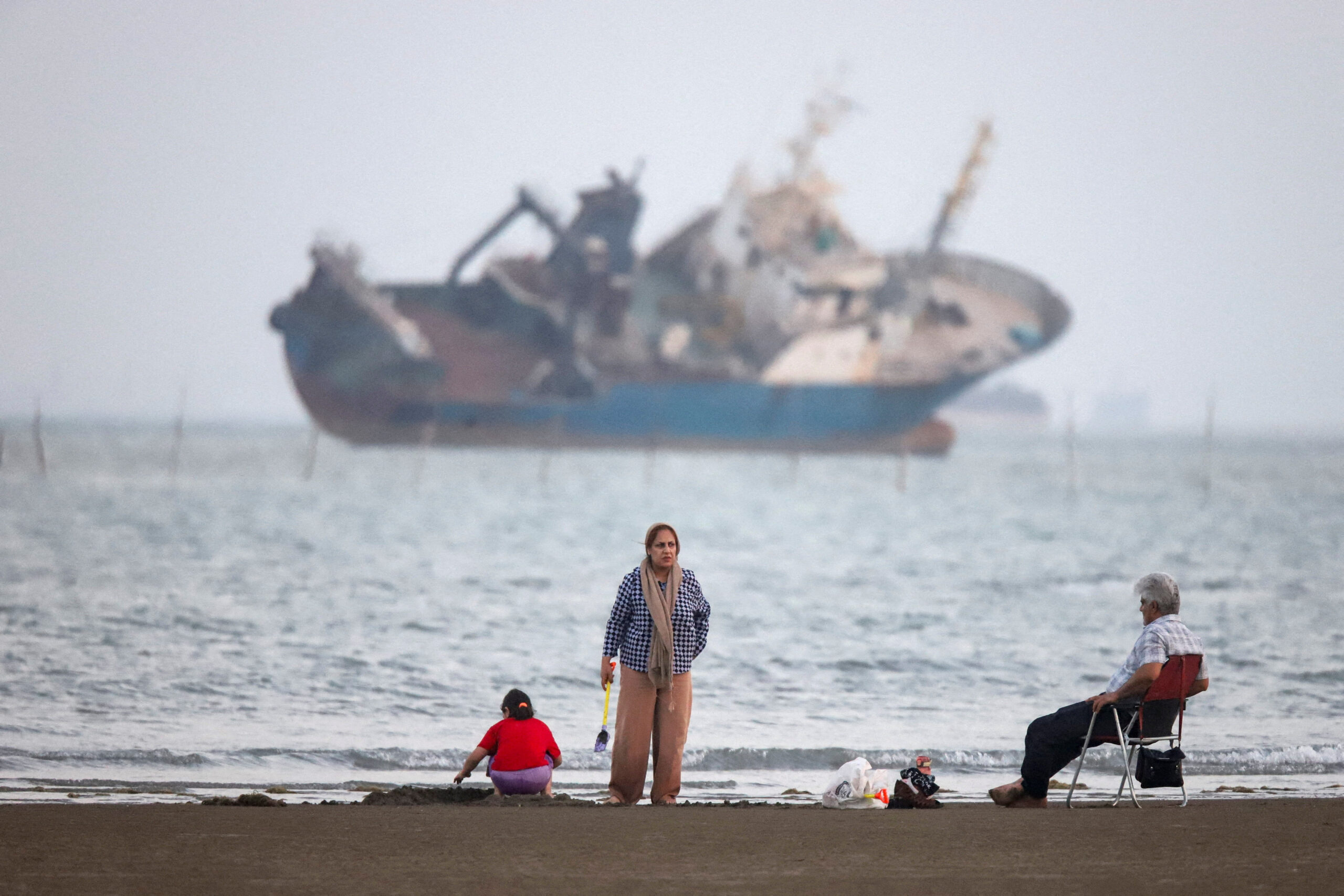
Jeanne Ives and Jim Iuorio filled in for Dan Proft on Chicago’s Morning Answer, tackling a fresh round of military action in the Middle East after U.S. forces attacked two Iranian rocket launchers in the Strait of Hormuz on Sunday, the first American strike in weeks. The hosts noted the timing was notable given that Treasury Secretary Scott Bessent had just unveiled a new economic pressure campaign called Operation Economic Outcast days earlier.
Joining the show to break down the developments was Steven Bucci, who served in the military and government for three decades as an Army Special Forces officer and a top Pentagon official, and now serves as a visiting fellow at the Heritage Foundation’s Allison Center for Foreign Policy Studies. Bucci pushed back on any suggestion that the return to strikes contradicted Bessent’s economic strategy, arguing that military and economic pressure work in tandem for a nation with the capabilities the United States has. He said the economic squeeze was never designed as a fast fix, but rather a slow strangulation of the opposing side, and that the renewed strikes came because Iran continued mining activity and other provocations despite warnings to stop.
Bucci also addressed a leaked Washington Post story suggesting the U.S. military was dangerously low on munitions, calling the leak reckless and saying whoever was responsible should be prosecuted and removed from government service. He argued that reporters often exploit self-styled whistleblowers who believe they are acting heroically but end up endangering American troops instead. As for the substance of the report, Bucci said the U.S. is lower on some supplies than it would like to be, but stressed that military logisticians work off algorithmic thresholds rather than some arbitrary ceiling, and that current levels have not been breached to the point of forcing a halt in operations. He traced the underlying shortfall to years of underinvestment under the Obama and Biden administrations, noting that President Trump moved quickly after the first shots were fired to convene defense industry leaders and push them to ramp up production.
On the question of how long the conflict might last, Bucci acknowledged that early comparisons to the swift capitulation seen in Venezuela months earlier had proven overly optimistic. He said Iran’s leadership operates from a fundamentally different mindset than Venezuela’s government, describing the Iranian regime as true believers willing to die for their cause rather than political operators who fold under pressure. While the conflict has now stretched to roughly six months, Bucci rejected comparisons to prolonged conflicts like the Global War on Terror or Vietnam, arguing that six months does not constitute a forever war regardless of how it’s characterized in the press.
Asked about the status of the Strait of Hormuz, Bucci said it remains technically open, since no one besides the United States has the actual capability to close it. He explained that shipping and insurance companies have simply deemed passage too risky given ongoing Iranian harassment, which has led to a slowdown in traffic rather than an outright blockade. He said American forces had shifted from warning off small Iranian boats to sinking them when they approach shipping lanes.
On Iran’s nuclear program, Bucci said the U.S. had clear intelligence on the location of Iran’s nuclear materials before striking them, and defended the decision to act rather than allow the program to continue developing clandestinely. He was sharply critical of the Obama-era approach to Iran, characterizing it as a flawed belief that Tehran could be a Middle East partner ahead of traditional allies like Saudi Arabia and the Gulf states. He was particularly dismissive of former Secretary of State John Kerry’s diplomatic efforts, arguing that Iranian negotiators are shaped by a religious tradition that permits deception toward non-Muslims and are, as a result, extraordinarily difficult adversaries at the negotiating table.
The conversation also turned to Russia’s warning that it could strike British military targets if Ukraine uses long-range British cruise missiles against targets deep inside Russian territory. Bucci characterized the threat as consistent with a pattern of Russian bluster that has rarely translated into action, noting that Vladimir Putin has repeatedly threatened escalation, including tactical nuclear use, without following through. He argued that Putin, unlike Iran’s leadership, is a pragmatic actor who wants to remain in power and has no interest in triggering mutually assured destruction, even as he continues to use psychological pressure tactics against the West.
Closing out the interview, Bucci was asked about the Pentagon’s Office of Strategic Capital, a unit stocked with recruits from Wall Street investment banks and tasked with structuring a $65 billion oil deal with Venezuela through mechanisms like penny warrants. Bucci said he did not understand the rationale for turning a military department into an investment vehicle, suggesting that responsibility would be better placed with the Treasury Department under Secretary Bessent. He said the Pentagon’s core competency is decisive action rather than efficient capital structuring, and that expecting otherwise misunderstands what the department is built to do.