




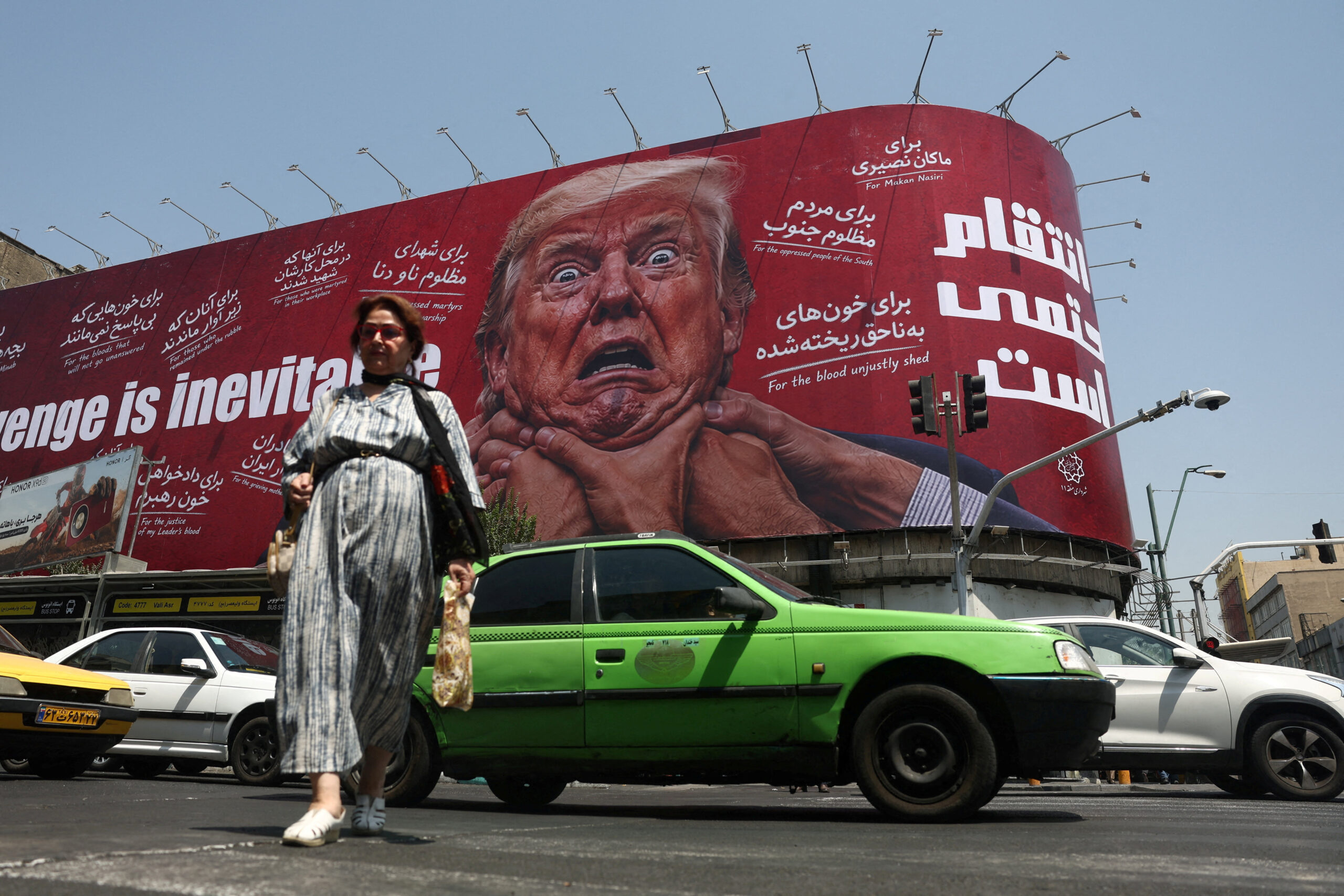
Steven Bucci, a former Army Special Forces officer and top Pentagon official now serving as a visiting fellow at the Heritage Foundation’s Allison Center for Foreign Policy Studies, joined Dan Proft for his weekly conversation on Chicago’s Morning Answer to assess the state of the standoff with Iran, ahead of a new round of sanctions expected from Treasury Secretary Scott Bessent.
Bucci said the combination of economic pressure and the naval blockade in the Strait of Hormuz appears to be working, with oil prices trending downward as confidence grows that the U.S. can control traffic through the strait. He noted the effect firsthand, saying he paid less for a tank of gas recently than he had in some time. Still, Bucci argued that President Trump needs to move past reassurances that the situation is under control and start showing tangible results, warning that an extended stretch of optimism without visible progress risks becoming a defining criticism of the administration’s handling of Iran.
Asked whether the U.S. should continue engaging with Iran through intermediaries in Pakistan and Qatar or cut off further negotiation, Bucci said he favors ending the back-and-forth entirely and letting the sanctions campaign run its course until the regime is replaced, a benchmark he said Bessent laid out last week. He said repeated returns to the table, prompted by allied pleas, undermine the administration’s credibility and risk repeating what he characterized as failed diplomatic patterns from the Obama era.
On Ukraine, Bucci addressed a Wall Street Journal editorial board piece urging the administration to grant Kyiv expanded ability to strike targets and infrastructure deep inside Russian territory. He said Trump has already authorized strikes inside Russia, but cautioned against encouraging Ukraine to target everything indiscriminately, warning that cornering Vladimir Putin too aggressively could provoke an unpredictable escalation, including the use of a tactical nuclear weapon. He said any expansion of Ukrainian strike authority should happen incrementally rather than all at once.
Asked about reports of Ukraine considering the conscription of women into military service, Bucci said the move reflects an effort to broaden the pool of skilled personnel for precision operations rather than a sign the country is running critically short on manpower. He said Ukraine’s population remains sizable enough to sustain the current pace of the conflict, which he expects to continue as a war of attrition for the foreseeable future. He predicted internal pressure within Russia, driven by mounting casualties and growing public dissent, is more likely to shift the trajectory of the war than any single battlefield development.
On Cuba, Bucci discussed the Trump administration’s escalating pressure campaign led by Secretary of State Marco Rubio, which includes targeted sanctions against Communist Party officials, penalties on state-run enterprises, and revoked visas for regime-connected individuals and their families. Bucci said the loss of support from Venezuela and reduced backing from China and Russia have left Cuba in a more vulnerable position than at any point in his lifetime, raising the prospect of internal unrest that could open the door to economic and covert pressure aimed at regime change, without requiring military intervention.