




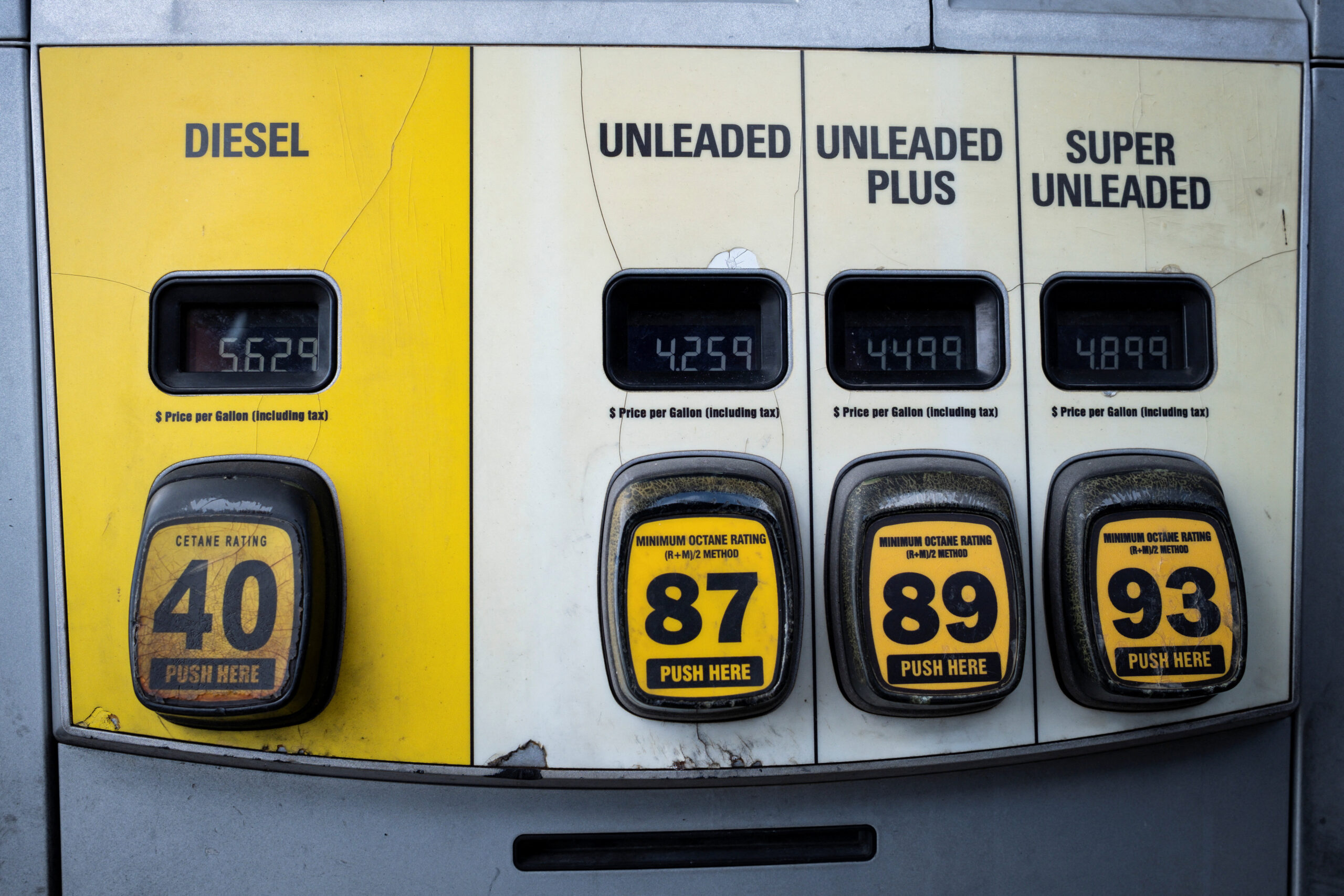
Jim Iuorio and Jeanne Ives, filling in for Dan Proft on Chicago’s Morning Answer, turned to the markets to make sense of the Trump administration’s new oil deal with Venezuela and whether it will actually do anything to bring down prices at the pump. The hosts noted that Secretary of State Marco Rubio had called the arrangement a major win that would lower gas prices, a claim they wanted tested.
Bob Iaccino, co-founder of Path Trading Partners and co-host of the Futures Edge podcast, was skeptical of that framing. He said the idea that the Venezuela deal will meaningfully lower prices at the pump is a stretch, explaining that crude oil itself is not what fills a gas tank. It has to be refined, and U.S. refining capacity has been running at 96 to 97 percent for roughly two years with essentially no spare room to expand. He pointed to a long-delayed refinery project in Brownsville, Texas, first approved a decade ago and only now breaking ground, as an example of how difficult it has become to build new refining capacity in the United States. He also noted that California once had 36 refineries and is now down to five, which he tied directly to the state’s gas prices running well above the national average.
Iaccino argued that most of the price differences between states come down to taxes rather than production costs, comparing California’s roughly $5.69 average, Texas’s $3.61, Florida’s $3.88, and Illinois’s $4.28. He was particularly critical of a recent increase in Illinois’s gas tax, noting the disconnect between state officials publicly blaming federal policy for high prices while simultaneously raising taxes of their own. He estimated that about 90 percent of the price gap between Illinois and lower-cost states like Texas and Florida comes from state taxes, which adds up meaningfully for a household using around 400 gallons of gas per year.
On the substance of the Venezuela arrangement, Iaccino explained that Trump administration officials had initially pushed major oil companies, including ExxonMobil and ConocoPhillips, to return to Venezuelan oil fields, but that effort stalled. The administration then turned to a deal involving 17 oil fields and roughly 65 billion barrels of reserves, about a fifth of the country’s total, developed in partnership with a businessman who is reportedly under investigation in Spain. Iaccino said he was uneasy with the government effectively becoming a business partner in that arrangement rather than allowing private markets to operate, but argued that U.S. regulatory hurdles leave companies with few alternatives if they want to expand supply. He suggested the deal’s durability is uncertain given that a future presidential administration could simply unwind it, and noted reporting suggesting the agreement may conflict with Venezuela’s own constitution, which designates the country’s oil reserves as non-transferable state property.
Despite the attention on Venezuela, Iaccino said the real driver of this week’s oil price movement remains the Strait of Hormuz. He noted that Venezuela produces about 1.1 million barrels a day compared to roughly 13 million barrels a day of U.S. production, making the deal a relatively small piece of the overall supply picture. Crude prices, he said, were up more than 3 percent on stress tied to the Strait rather than anything related to Venezuela, and while he saw room for oil to climb somewhat further based on recent chart patterns, he expects the market’s reaction to renewed Iran tensions to keep diminishing over time as traders grow accustomed to the pattern of flare-ups.
Iaccino closed by describing Iran as increasingly depleted after months of confrontation, though he cautioned that ideological commitment could still prolong the conflict even without meaningful remaining capability. He said his role as a strategist is not to judge whether the Venezuela deal is right or wrong, but to assess what is likely to happen next, and he predicted the arrangement will likely remain in place at least until the next election cycle or change in administration.