




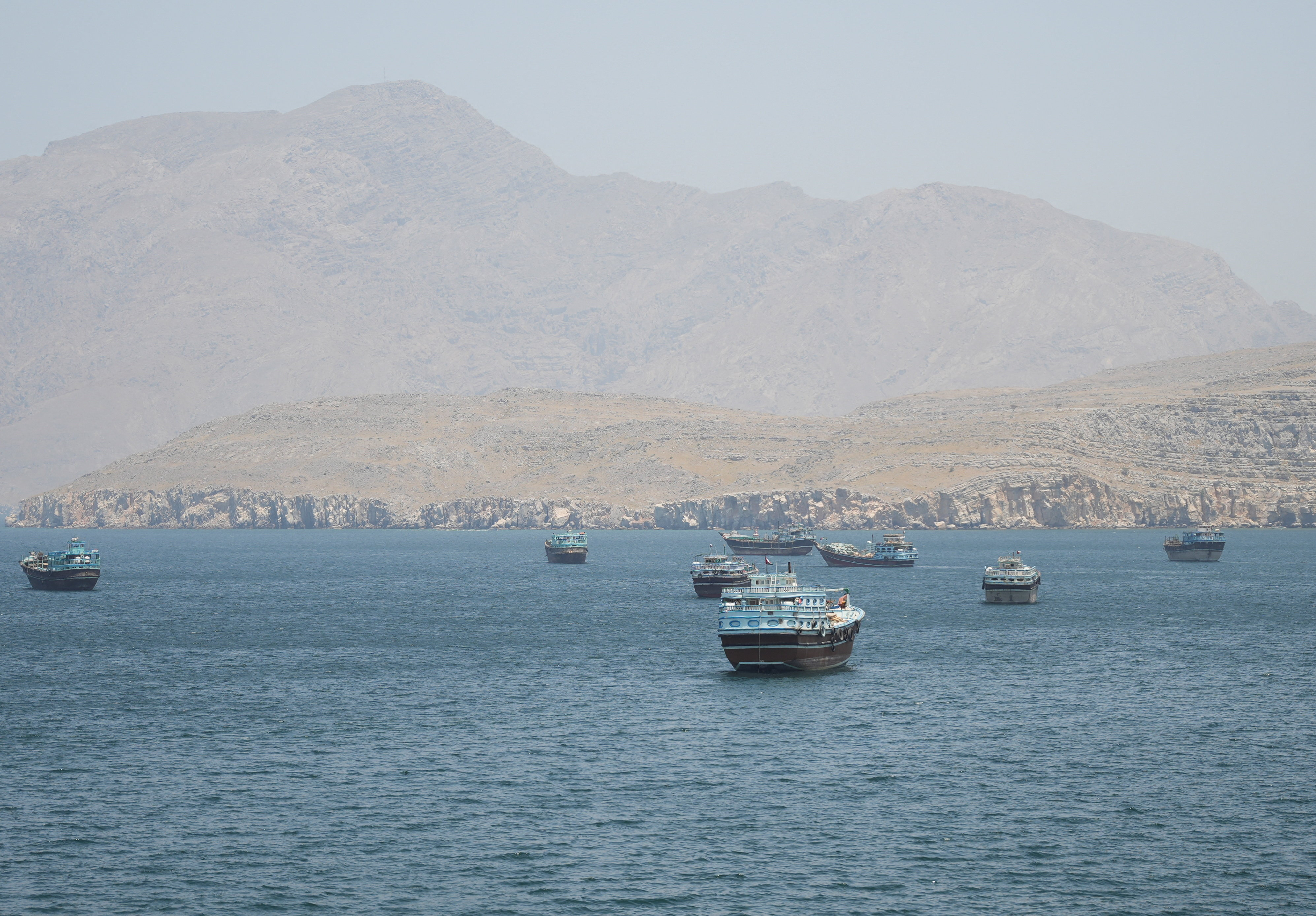
A significant overnight exchange preceded the emergence of a potential framework agreement Wednesday, with Iran launching four one-way attack drones toward a commercial vessel attempting to transit the Strait of Hormuz, all four being shot down by American forces, who then struck a control station near Bandar Abbas that was preparing to launch a fifth. Iran responded by launching drones and missiles against a US base in Kuwait, with the Kuwaiti government confirming the attack triggered sirens on its territory. Within hours, reports emerged of a possible memorandum of understanding involving a sixty-day ceasefire, unrestricted strait shipping with no tolls, Iranian mine removal within thirty days, conditional lifting of the naval blockade, and an Iranian pledge to pursue no nuclear weapons.
Retired Brigadier General John Teichert, who commanded Joint Base Andrews and Edwards Air Force Base and served as a senior US defense official in Iraq and assistant deputy undersecretary of the Air Force for international affairs, joined Dan Proft on Chicago’s Morning Answer to assess the framework and the broader strategic picture.
Teichert said he is an eternal optimist but is skeptical of the framework for two foundational reasons. First, Iran is notorious for acting and negotiating in bad faith. The current ceasefire was conditioned on Iran opening the strait with no strings attached and that never happened. The country is now seven weeks into what was supposed to be a two-week arrangement. Second, he said the devil is in the details but purgatory is in the phasing. The catastrophic error of the Obama administration’s JCPOA was that Iran received the benefits of the deal before it was required to demonstrate any commitment to its terms. Any framework the Trump administration signs must be structured so that Iran performs first and receives benefits only after demonstrating actual compliance. He said he genuinely hopes the president is weighing both of those factors carefully before putting his signature to any document.
He said the drone, mine-laying, and missile activity from Iran this week is best understood as Iran testing how eager the United States is to make a deal without returning to military action. He said the American response to that testing, continuing to negotiate without resuming strikes, signals to Tehran that it has leverage it can continue to exploit. He said this puts Iran in a stronger negotiating position than the military situation on the ground would otherwise justify.
On the strategic question of why air power was not used more aggressively during the first six weeks of the campaign, Teichert said he believes something important was left on the table. He said on day one of Air War College, students are taught that effective air power strikes at the heart of what matters most to a regime, not just operational and tactical targets. He said the campaign hit many operational and tactical targets but did not strike the things that actually underpin the strength and survival of the Iranian regime, and that those targets should be hit the moment Iran negotiates or acts in bad faith again.
On mine clearing in the strait, Teichert said the situation is essentially where it was when Project Freedom was halted after two days. The moment that operation stopped, American and allied assets stopped actively working to demine the waterway. He said the mines are still there, the process of clearing a mined waterway is genuinely laborious even with capable assets, and restarting would take meaningful time before results could be seen.
Proft raised the argument, circulating from energy industry contacts who attended recent meetings in Dubai, that the UAE and other Gulf states are aggressively building pipeline capacity that will allow them to bypass the strait entirely within approximately twenty-four months, meaning the Iranian strait card will effectively be removed from play by the natural response of affected countries to having it played. Under that analysis, the United States primarily needs a deal that reopens the strait and buys time rather than achieving comprehensive settlement of every issue, because the medium-term economic isolation of Iran from its oil customers and the deterioration of its Gulf state relationships will produce regime collapse without requiring additional American military risk or weapons expenditure.
Teichert said he is willing to accept some of that elongated timeline logic but identified two critical conditions. First, Iran actually opening the strait with no conditions attached in the immediate first phase of any agreement, which he doubts will materialize as hoped. Second, and more urgently, the nuclear program. He said Operation Midnight Hammer last year substantially degraded Iranian nuclear capabilities, but two years is a long time to give Iran a sanctuary in which to reconstitute that program. He said the pipeline bypass scenario and the medium-term regime deterioration argument both depend on Iran genuinely opening the strait now and on the United States doing something decisive about the nuclear program. Neither condition is guaranteed by a framework agreement, and the risk of a two-year window for nuclear reconstitution is something the administration cannot afford to discount.
On oil prices, Chevron CEO Mike Wirth warned this week that buffers and shock absorbers are being steadily drawn down and that upward price pressure will flow more directly into physical prices through June and into July. An Exxon senior vice president said models indicate that once inventories reach the extremely low levels currently being approached, dated Brent could spike to one hundred and fifty or one hundred and sixty dollars per barrel before demand destruction brings prices back into balance. Teichert said the president’s apparent concern about energy prices is understandable but that the decision to avoid stronger kinetic action from the beginning has ironically prolonged the price disruption rather than shortened it. A more aggressive initial campaign would have produced a shorter and sharper price spike before the matter was concluded, rather than the extended slow-burning disruption the current approach has generated.