




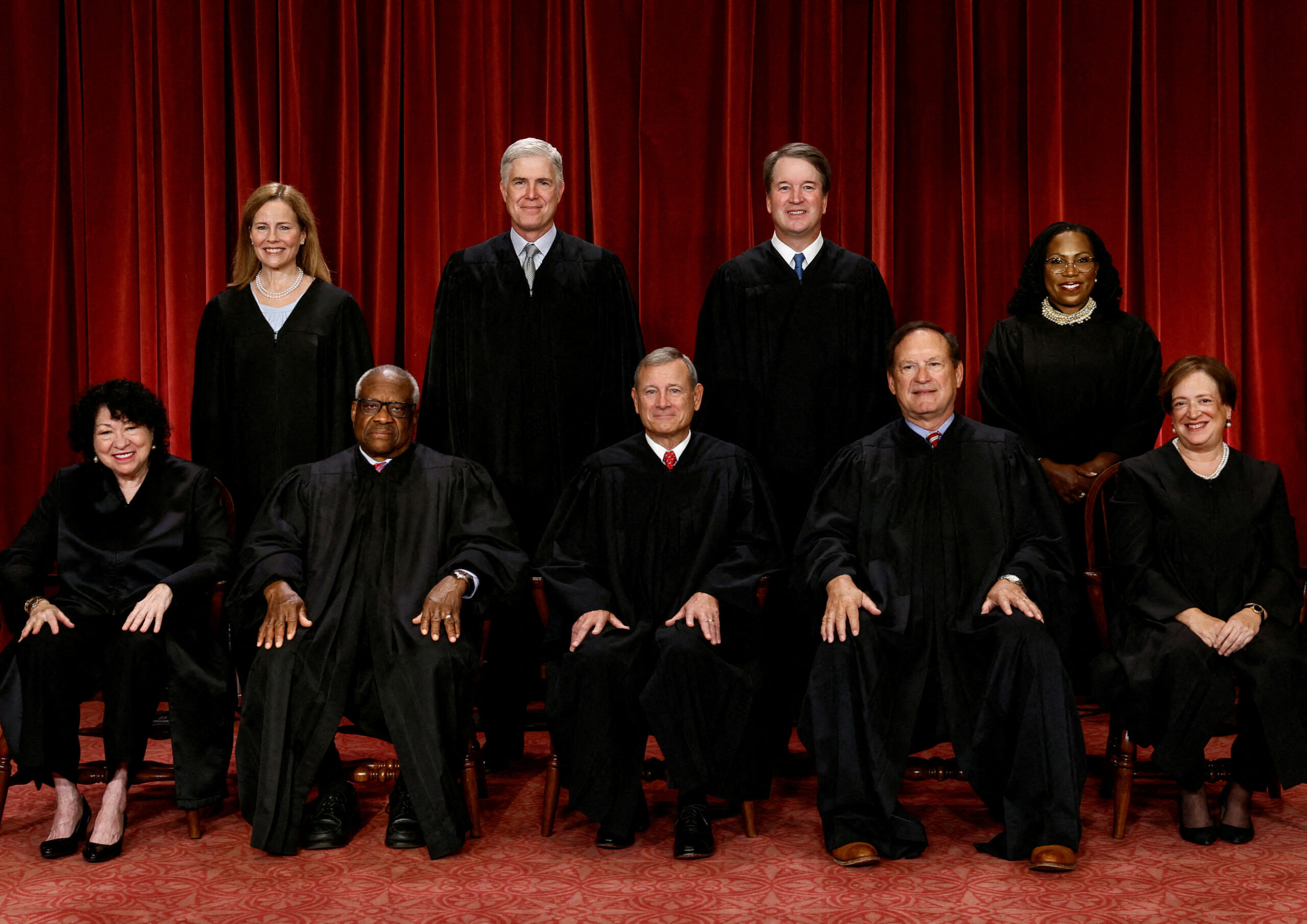
The Supreme Court handed down two major decisions on executive authority yesterday, ruling six-to-three in the Slaughter case that the president has the constitutional right to remove principal officers of federal agencies without cause, while simultaneously ruling in the Lisa Cook case that the Federal Reserve Board is sufficiently distinct to require cause for removal. Justice Gorsuch wrote that the court was taking a notable step back toward the Constitution by recognizing that executive power must be exercised through a chain of dependence running from the lowest offices to the president and from him to the American people, while warning that the journey is not finished until legislative and judicial powers improperly delegated to agencies are returned to Congress and the courts where they belong. Justice Thomas authored a withering dissent in the Cook case, writing that regardless of whether unaccountable executive officers would better govern the economy, the framers rejected such a promised land of technocratic governance and chose government by the people instead.
William Jacobson, clinical professor of law and director of the Securities Law Clinic at Cornell, founder of LegalInsurrection.com, and president of the Legal Insurrection Foundation and Equal Protection Project, joined Dan Proft on Chicago’s Morning Answer to assess both decisions and preview today’s expected birthright citizenship ruling.
Jacobson said the Slaughter decision is a major victory for the concept of the unified executive branch, establishing that if you exercise the executive powers of the presidency, you are subject to the president’s discretion on whether you remain in your position. He said this dismantles the concept of a permanent bureaucracy that exists beyond the reach of any particular president, a concept that has been politically advantageous to Democrats because the people who populate that permanent bureaucracy are overwhelmingly Democrats. He said this is not speculation but observable fact, noting that his own law school classmates who spent their entire careers at the Justice Department and other agencies are almost uniformly Democrats, and that Republicans generally do not stay over from administration to administration the way Democrats do. The so-called professional independent civil service that Michigan law professor Barb McQuade mourned in her response to the decision is, in Jacobson’s assessment, a beautiful lie masking a partisan power structure.
He cited the double standard in media treatment of executive removals, noting that when Obama fired all US attorneys on essentially his first day in office, the media defended it as standard practice, while Trump’s attempts to remove even a handful were characterized as authoritarian overreach. Jacobson said the Slaughter ruling should have come two years earlier, in which case Trump would not have lost a year or two of his second term to a recalcitrant bureaucracy that delayed implementation of his agenda. The ruling has significant implications not just for this president but for every future president, Republican or Democrat, who wants to actually run the executive branch as the Constitution envisions.
On the Lisa Cook and Federal Reserve case, where Justices Kavanaugh and Roberts joined the three liberal justices to carve out an exception for the Fed, Jacobson agreed with Proft’s assessment that those two justices made a political rather than legal judgment. He said the question of where in the Constitution one finds a distinction between the Federal Reserve Board and every other executive agency is one the majority did not convincingly answer. He said the court relied on the history and context of how the Federal Reserve was created and a stylized account of its century of performance, but that, as Thomas noted, many do not share the court’s rosy appraisal of that record. Jacobson said his read is that Kavanaugh in particular was thinking about Trump’s public battles with Fed Chairman Jay Powell and did not want to enable a president to fire the Fed chair over interest rate disagreements, a legitimate policy concern but not a proper basis for constitutional interpretation.
On today’s expected birthright citizenship decision, Jacobson said he expects the court to address the question head-on rather than finding a procedural or technical off-ramp. He recalled that during an earlier procedural appearance of the case before the court, Justice Sotomayor essentially said they should stop dancing around the issue and decide whether birthright citizenship exists or does not. He said if the court had been inclined to dispose of the case on narrow procedural grounds related to the specific text of the executive order rather than the underlying constitutional principle, it would not have taken the case this far. He expects a direct ruling either affirming or denying birthright citizenship as constitutionally mandated.
He noted with some dark humor the observation circulating on social media that the likely outcome can be inferred from the absence of leaks to the press and the absence of security fencing around the Supreme Court building, both of which would be expected if a ruling overturning birthright citizenship were imminent and both of which are conspicuously absent.
Proft opened the segment with a broader reflection on the significance of the Federalist Society’s forty-year project, citing federal district court judge Roy Altman’s observation that three or four law students at Yale in the early 1980s looked up at a Supreme Court that had unanimously embraced a judicial philosophy they believed was wrong and said they were going to do something about it. Forty years later, all nine current justices have on the record subscribed to the Federalist Society’s central principle that constitutional and statutory interpretation begins with the text. Altman’s point, which Proft endorsed, is that this kind of institutional transformation is achievable and that the same model of long-term intellectual commitment can be applied to other challenges facing the country.