




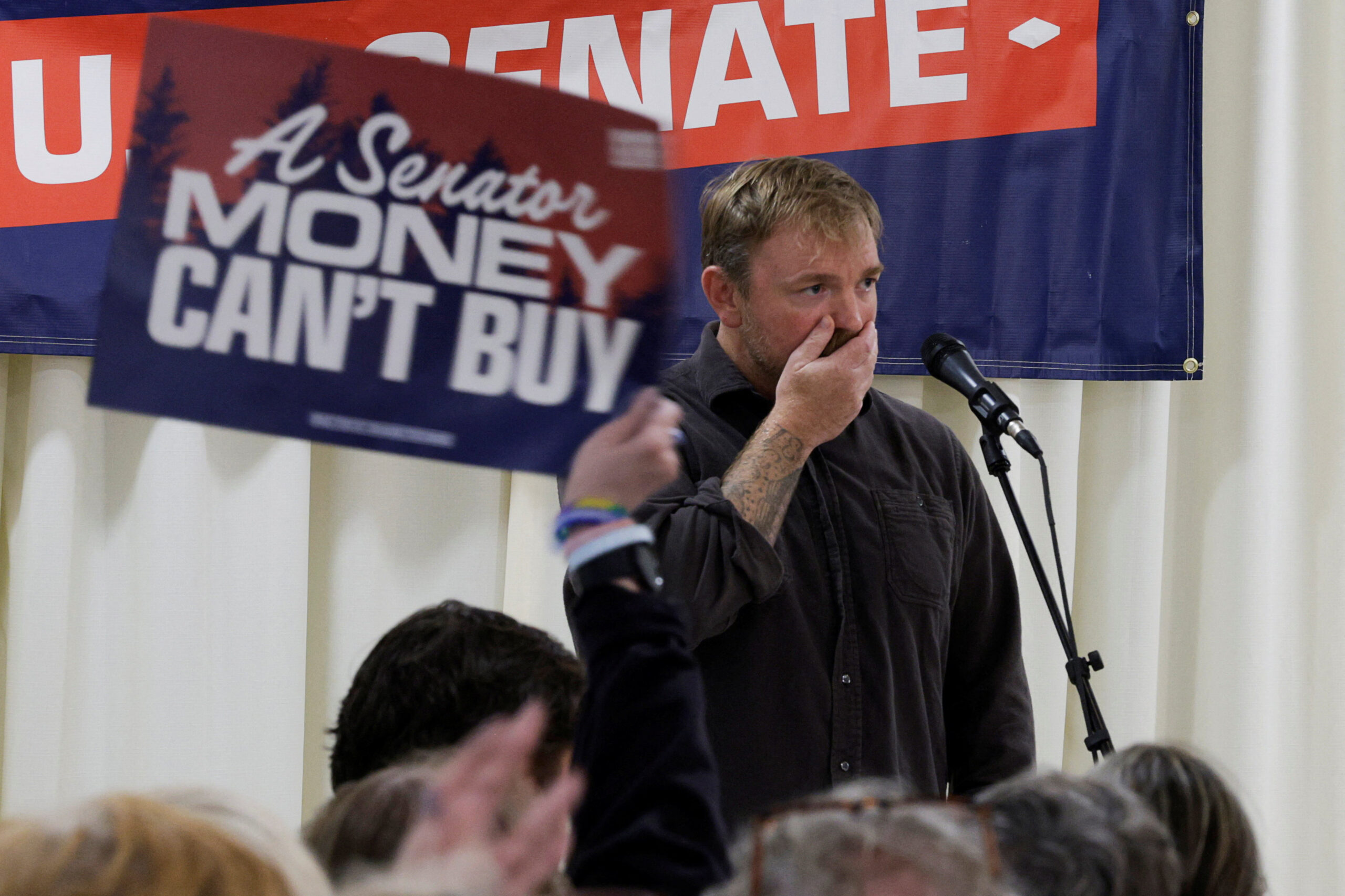
The Graham Platner saga entered a new phase this week as the executive director of the Maine Democratic Party publicly complained that the Platner team is attempting to influence who would replace him as the nominee even as no formal announcement of withdrawal has been made. Platner has canceled events and fundraisers and gone quiet publicly for the first time in his campaign, but whether he actually exits the race remains genuinely uncertain.
David Drucker, senior writer for The Dispatch and author of In Trump’s Shadow: The Battle for 2024 and the Future of the GOP, joined Dan Proft on Chicago’s Morning Answer to assess Platner’s political future, the broader DSA wave reshaping the Democratic Party, and why the Iran situation remains impossible to predict.
Drucker said he is not convinced Platner will drop out. He noted the irony that a candidate who has complained incessantly about rigging in American politics is now attempting to rig his own exit and rig the selection of his replacement, and said that is a bipartisan affliction in which the people who complain most about rigging do the most of it. He said this is the first time Platner has appeared contrite or seemed to recognize the gravity of his situation, but that the people closest to him, his advisers and the far-left activists who constitute his core support, do not necessarily want him to leave. He said for many of those supporters, beating the Democratic establishment matters more than beating Susan Collins, and a forced withdrawal orchestrated by the party machinery they despise would represent a loss more painful than a general election defeat.
On the broader DSA wave, Drucker pushed back against the suggestion that the internal debate within the Democratic Party has already been resolved in favor of the socialist wing. He said the debate is actively happening but acknowledged the populist wing now has more numerous, more active, and more capable candidates than at any previous point. He said he is currently in Michigan covering the Senate primary between Abdul El-Sayed and incumbent Congresswoman Haley Stevens, and described El-Sayed as a very good political athlete regardless of one’s view of his positions. He said El-Sayed simplifies his message to getting money out of politics, putting money in your pocket, and passing Medicare for All, a formula that resonates with primary voters even when his specific claims, like attributing Stevens’s support for Israel entirely to AIPAC money rather than genuine conviction, do not withstand scrutiny.
Drucker said he asked El-Sayed directly at a press gaggle whether it was possible Stevens simply supports Israel and therefore receives donations from people who also support Israel, and El-Sayed would not move off his position that the relationship is purely transactional. He said this kind of simplistic corruption narrative was also central to Trump’s rise, noting that the Republican Party’s signaling that the whole system was corrupt and that money was being sent overseas instead of invested at home was a major factor in Trump’s appeal. The same populist formula is now being deployed effectively by DSA-aligned Democrats.
He cited Franchesca Hong as the leading Democratic gubernatorial candidate in Wisconsin running on abolishing ICE and describing police as a vestige of white supremacy, Cori Bush receiving a fresh DSA endorsement for her St. Louis congressional seat, and El-Sayed in Michigan as evidence that the phenomenon extends well beyond the East Coast. He said in a neutral or Republican-leaning cycle like 2022 or 2014, candidates like El-Sayed would have no chance in a swing state like Michigan, but in a strong Democratic cycle like 2018 or the current one, an upset cannot be ruled out.
On the Texas Senate race between Ken Paxton and James Talarico, Drucker compared it to the 2018 Cruz-O’Rourke contest rather than the 2024 Cruz-Allred race, saying Paxton’s extensive scandal and baggage combined with the favorable Democratic cycle will make the race competitive even though the makeup of the state still favors the Republican. He said he would still bet on Paxton to win but acknowledged the margin will be much closer than it would have been two or four years ago.
On Iran, Drucker said it is genuinely impossible to predict where the situation is heading because Trump changes his mind from week to week, and the course of the war leading up to the memorandum of understanding was characterized by alternating signals every few days about whether a deal was imminent or whether bombing was about to resume. He said the difference in approach between Rubio and Vance was already well known before the war began, and the dynamic of Rubio and Hegseth reportedly convincing Trump to launch retaliatory strikes at the NATO conference in Turkey while Vance was absent tells you something about the internal competition without resolving where the president will ultimately land. He said Trump has never made a sustained, cogent case to the American public for the war, has not tried to bring along Congress or allies in a systematic way, and has essentially acted as a guy alone, which makes the trajectory inherently unpredictable.
On the New York Times’ handling of the Platner story, Drucker said he has not dissected every aspect of the coverage closely enough to render a definitive judgment on whether the paper engaged in a soft catch and kill, but said as a reporter he understands the constraints of working with sources who will not go on the record with serious allegations. He said the more important point is that Lindsey Field’s on-the-record allegations alone should have been sufficient for the party to throw Platner overboard, and the fact that it took the additional rape allegation from Jenny Rascott to produce the current crisis reflects a broader pattern in which voters and party officials on both sides of the aisle have been willing to look past escalating scandal and baggage for a decade or more, dismissing their own candidates’ problems while treating the opposition’s as disqualifying. He said the spotlight should be on how the Democratic Party chose to handle what it already knew rather than on whether a newspaper’s publication sequence was optimal.