




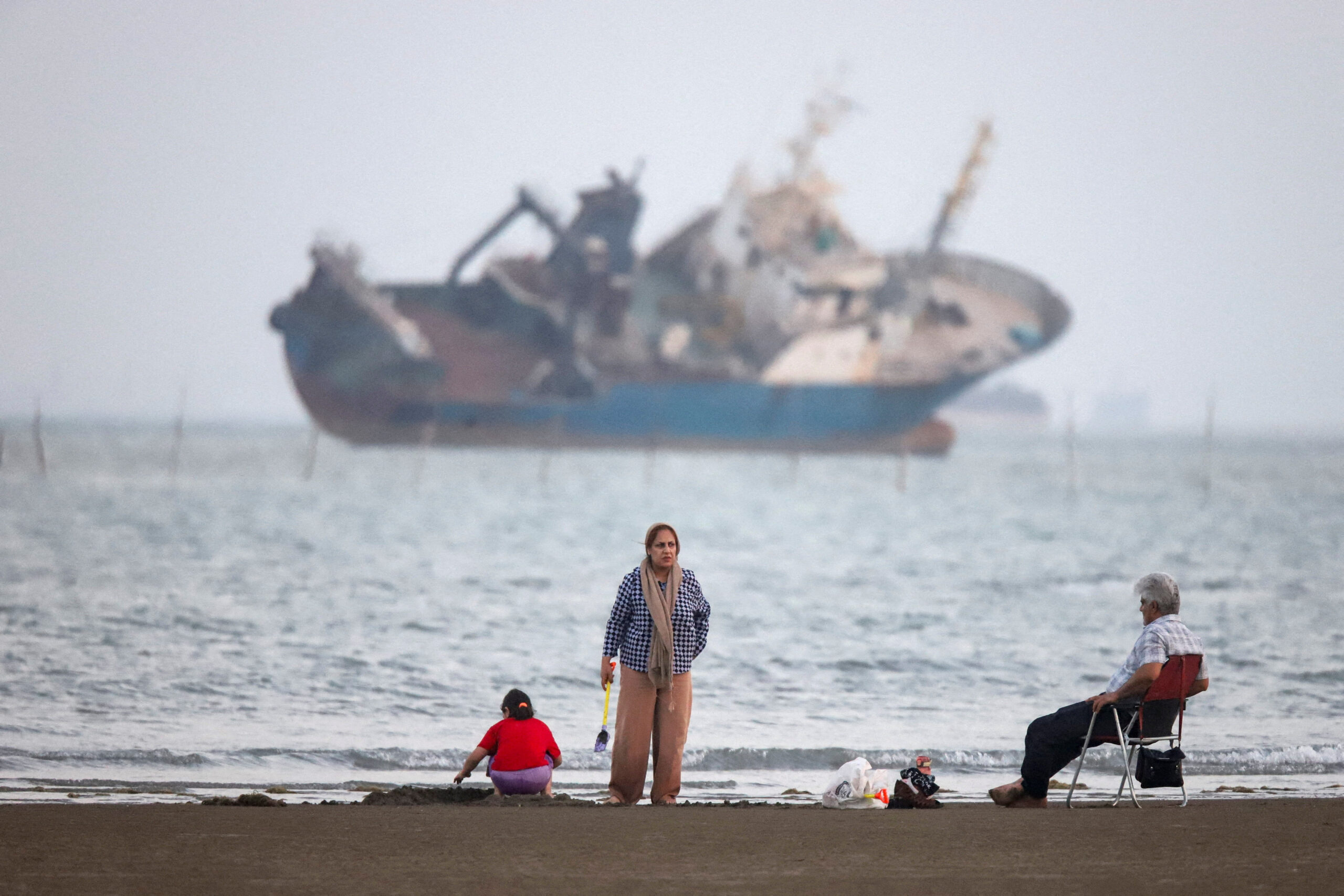
CENTCOM forces struck more than eighty Iranian targets yesterday including air defense systems, command and control networks, coastal radar sites, anti-ship missile capabilities, and more than sixty IRGC small boats in and near the Strait of Hormuz, the most aggressive single round of strikes since the memorandum of understanding was announced. The Treasury Department simultaneously revoked Iran’s oil waiver, halting all new purchases or loading of Iranian crude and petroleum products effective immediately, with only existing transactions allowed to wind down over ten days and all payments during that period required to flow into blocked US-controlled accounts. The strikes came while President Trump was hosting Turkish President Erdogan, praising Turkey’s helpfulness during the conflict, announcing the lifting of sanctions on Turkey, and expressing openness to selling F-35s to Ankara while simultaneously expressing deep disappointment with NATO allies who he said refused to support American operations against Iran.
Cameron McMillan, senior research analyst at the Foundation for Defense of Democracies’ Center on Military and Political Power, joined Dan Proft on Chicago’s Morning Answer to assess whether the military objectives of the campaign have been achieved and what the strait situation means for American global standing.
McMillan said the military objectives of the Iran campaign were actually articulated quite clearly throughout the conflict by the CENTCOM commander and the chairman of the Joint Chiefs: destroy Iran’s ballistic missile, drone, and naval capabilities in order to eliminate Iran’s ability to project power outside its borders. He said the critical question is whether that end state has been met, and the honest answer is no. Iran has been severely degraded but still retains enough capability to conduct attacks not only in the strait but throughout the region. He noted that many of the target categories appearing in yesterday’s CENTCOM announcement, air defenses, command and control, coastal radar, are the same categories that have been struck repeatedly throughout the campaign, which raises an obvious question: if we destroyed Iran’s air defenses, why do we keep hitting them?
He said he expects no meaningful progress in negotiations with a regime that remains radical, views itself as being in an existential fight to retain its grip on power over the Iranian people, and has demonstrated no substantive interest in the concessions the United States requires. He said the president faces a decision about whether to resume sustained military operations to accomplish the objectives established at the campaign’s outset, and that the outcome of that decision will define the conflict’s legacy.
On Trump’s criticism of NATO, McMillan offered a corrective to the president’s characterization. He said that with the exception of Spain and Italy, most European allies were actually extremely helpful during Operation Epic Fury. Between four and five thousand American aircraft launched from bases in Europe to support the operation. Bombers flew from the United Kingdom. Air refueling tankers operated from multiple countries. He cited Landstuhl Regional Medical Center in Germany, where American service members seriously wounded in the Middle East are evacuated for treatment, and said Americans are alive and have their limbs and vision because of that facility, which has served the same function in every Middle East conflict including Iraq where McMillan himself served. He said the reality is that the United States would have had significant difficulty conducting an operation of this size and scope without European base access, which the vast majority of allies granted, even though they were not consulted on the war beforehand and were placed in a difficult domestic political position by the president’s simultaneous messaging that America did not need their help but wanted it.
On why the strait has not been forcibly reopened, McMillan said the bottom line is cost. He said the United States has the capability to do it but it would be a sustained campaign involving additional American casualties, significant expenditure of munitions and resources, and substantial economic costs. He said the president entered the conflict hoping it would be quick, and when the initial target list was exhausted without producing Iranian capitulation, the administration found itself in the position every wartime leader faces: ending your deliberate operations does not mean the end of the conflict. He said the strait closure was predicted by many analysts but the administration appears to have hoped the initial shock would be sufficient to produce an Iranian capitulation that never materialized.
On Iran’s stated intention to institute a tolling system for the strait with special considerations for favored nations like China, McMillan said that in Iran’s dream scenario, the end state of this conflict would be Iranian control of the strait with preferential access for American adversaries and restricted access for American allies. He called that outcome unacceptable not only in the specific instance but because of the global precedent it would establish. He said if tiny Iran is permitted to hold the Strait of Hormuz, there is no logical argument for why China cannot apply the same approach to the Taiwan Strait or the Strait of Malacca, shutting down sea lanes that the United States has kept open since the end of World War II and upon which an extreme element of American national power and global standing rests.
He said he is pessimistic that some in the administration may be considering a face-saving approach in which the United States pretends Iran does not actually control the strait while allowing it to exercise that control in practice. He said people much smarter than him are trying to find a way out, but the fundamental reality is that Iranian control of an international waterway through which the global economy flows cannot be accepted without consequences that extend far beyond the Middle East and far beyond this presidency.