




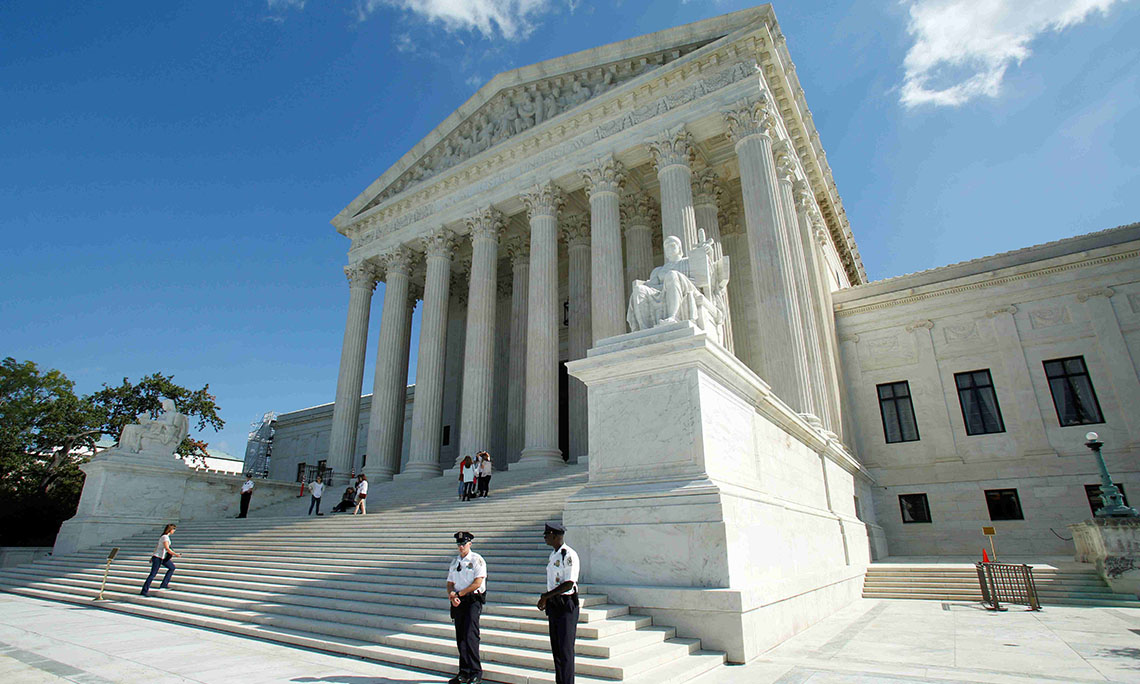
Chicago’s Morning Answer host John Anthony, filling in for Dan Proft, welcomed Matt Kittle, senior elections correspondent for The Federalist and former executive director of Empower Wisconsin, to discuss recent Supreme Court decisions, the stalled SAVE Act, and the confirmation process for a new Justice Department leader. Anthony opened by referencing recent testimony from Justices Elena Kagan and Amy Coney Barrett and raising questions about accountability within federal institutions, particularly following the Supreme Court’s ruling on birthright citizenship and reports that President Trump has since urged the court to revisit the issue.
Kittle argued that Chief Justice John Roberts’ judicial legacy will ultimately be defined by what he described as cowardice and inconsistency, pointing to Roberts’ role in upholding the Affordable Care Act by reclassifying its individual mandate as a tax as an early example of the chief justice prioritizing institutional stability over consistent legal reasoning. Kittle said Roberts has positioned himself as a protector of governmental institutions rather than as an originalist in the mold of Justice Clarence Thomas, and argued that this instinct shaped his approach to the recent birthright citizenship case, where Kittle believes Roberts and Barrett sided against a stronger textual reading of the Fourteenth Amendment. Kittle also faulted the solicitor general’s office for what he characterized as an inadequate presentation of national security considerations during arguments in that case.
The conversation turned to the SAVE Act, federal legislation that would require documentary proof of citizenship to register to vote alongside photo identification requirements. Kittle argued the measure enjoys broad public support and criticized Senate Majority Leader John Thune for what he called a pattern of delay on the bill, drawing a comparison between Thune’s handling of the legislation and Roberts’ approach to contentious legal questions.
Kittle and Anthony also discussed the ongoing Senate confirmation process for Todd Blanche to lead the Department of Justice, with Kittle citing a letter signed by dozens of former senior DOJ officials expressing support for the nomination. Kittle argued that Blanche’s prior experience representing President Trump during various legal proceedings gives him unique insight into what Kittle described as the politicization of federal law enforcement during the Biden administration, and said accountability for prior Justice Department conduct was a significant factor in the last election. Kittle also renewed calls for Senator Mitch McConnell to publicly clarify the nature of his prolonged absences from the Senate, citing Senate rules requiring formal notice for extended leave.
Closing the interview, Anthony and Kittle reflected on the legacy of the late Senator Lindsey Graham, whose sudden death was widely reported this week. Kittle predicted that critics and left-leaning historians will remember Graham primarily for his alliance with President Trump, while acknowledging what he described as a long record of dedicated service in Congress alongside a reputation among some colleagues for self-interest. Anthony noted that he does not give credence to speculation surrounding the circumstances of Graham’s death, though he said he found it notable that Graham reportedly contacted a fellow senator’s aide rather than emergency services when he first began feeling unwell.