




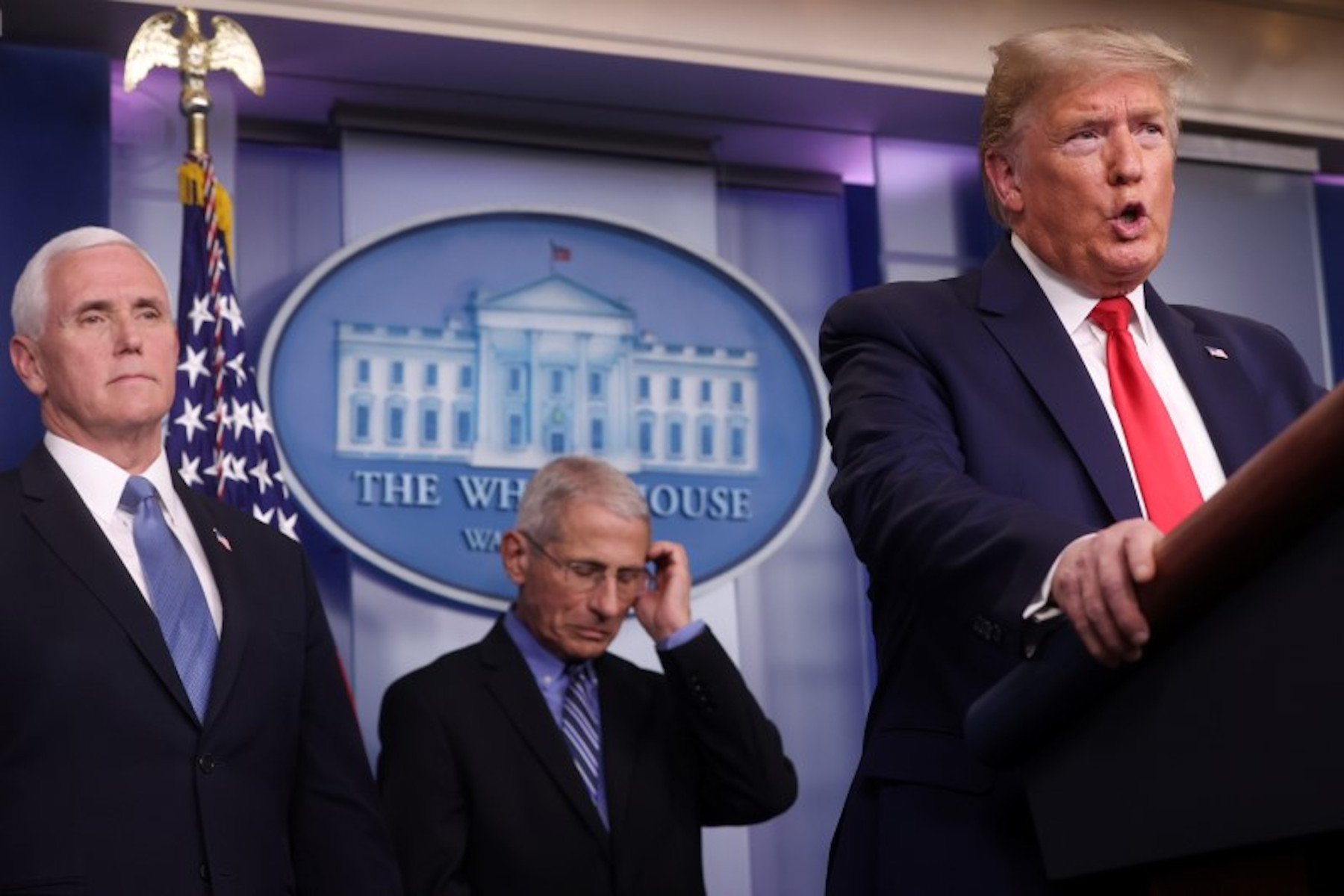
Recent disclosures tied to Dr. Anthony Fauci’s congressional testimony, including his invocation of Fifth Amendment protections along with newly surfaced diary entries, texts and emails, have reopened long-simmering questions about how federal health officials handled COVID-19 vaccine guidance for pregnant women.
Host Dan Proft opened the segment by revisiting a five-year-old satirical bit from comedian Jim Breuer that mocked the whiplash nature of pandemic-era public health messaging, framing it as an early example of skepticism toward official guidance that has since been vindicated by later revelations. Proft then turned to comments from Dr. Jay Bhattacharya, the current NIH director, who has argued that the evidence around whether COVID vaccines contributed to miscarriages remains genuinely unsettled. Bhattacharya noted he had worked on an unpublished draft paper suggesting a modest rise in first-trimester miscarriage risk, while acknowledging other researchers have found no such increase. His central criticism was not about the science itself but about how it was communicated: he argued that pregnant women, as a uniquely vulnerable population, deserved the kind of cautious, hedged guidance doctors typically apply to other borderline risks, rather than a blanket mandate that dismissed the possibility of harm entirely.
Former CDC director Dr. Robert Redfield went further in a separate interview cited during the segment, arguing that pregnant women should never have been encouraged to get vaccinated in the first place, let alone mandated to do so. Redfield pointed to a New England Journal of Medicine paper reporting a miscarriage rate of roughly 14 percent among a few hundred vaccinated pregnant women, while cautioning that the study lacked a control group and therefore couldn’t establish causation. His broader argument was that since the vaccine never prevented infection, the rationale for vaccinating pregnant women to protect their babies from maternal illness didn’t hold up, since the shot’s real benefit was limited to preventing severe illness and death in older, higher-risk populations.
Proft then brought in Dr. Jonathan Ellen, a primary care pediatrician, epidemiologist and former CEO of Johns Hopkins All Children’s Hospital, for a wider-ranging conversation.
Ellen argued that the deeper failure was a breakdown in honest risk communication: officials issued absolute-sounding mandates without adequately weighing the policy consequences, and that certainty, once revealed to have been overstated, has corroded public trust in science more broadly. He said he remains particularly troubled by how forcefully the lab-leak hypothesis was dismissed early in the pandemic, suggesting the motivation was more about avoiding accusations of xenophobia than following the evidence, and that this episode continues to color how the public views other official pronouncements. Ellen also said he was unconvinced there had ever been a full, independent accounting of the pandemic response, comparable to an aviation safety investigation, and suggested Dr. Deborah Birx, Francis Collins and Redfield himself should also face congressional questioning alongside Fauci.
The conversation closed with Ellen’s reaction to the Trump administration’s newly announced revised childhood vaccine schedule. While he said he wasn’t especially bothered by which specific vaccines were altered, he was critical of the tone of the announcement, which he felt implied there was little scientific basis behind the broader childhood immunization program. Ellen warned that overstating uncertainty about well-established vaccines risks repeating the same communication failures that damaged public trust during the pandemic, just swinging the pendulum in the opposite direction.