




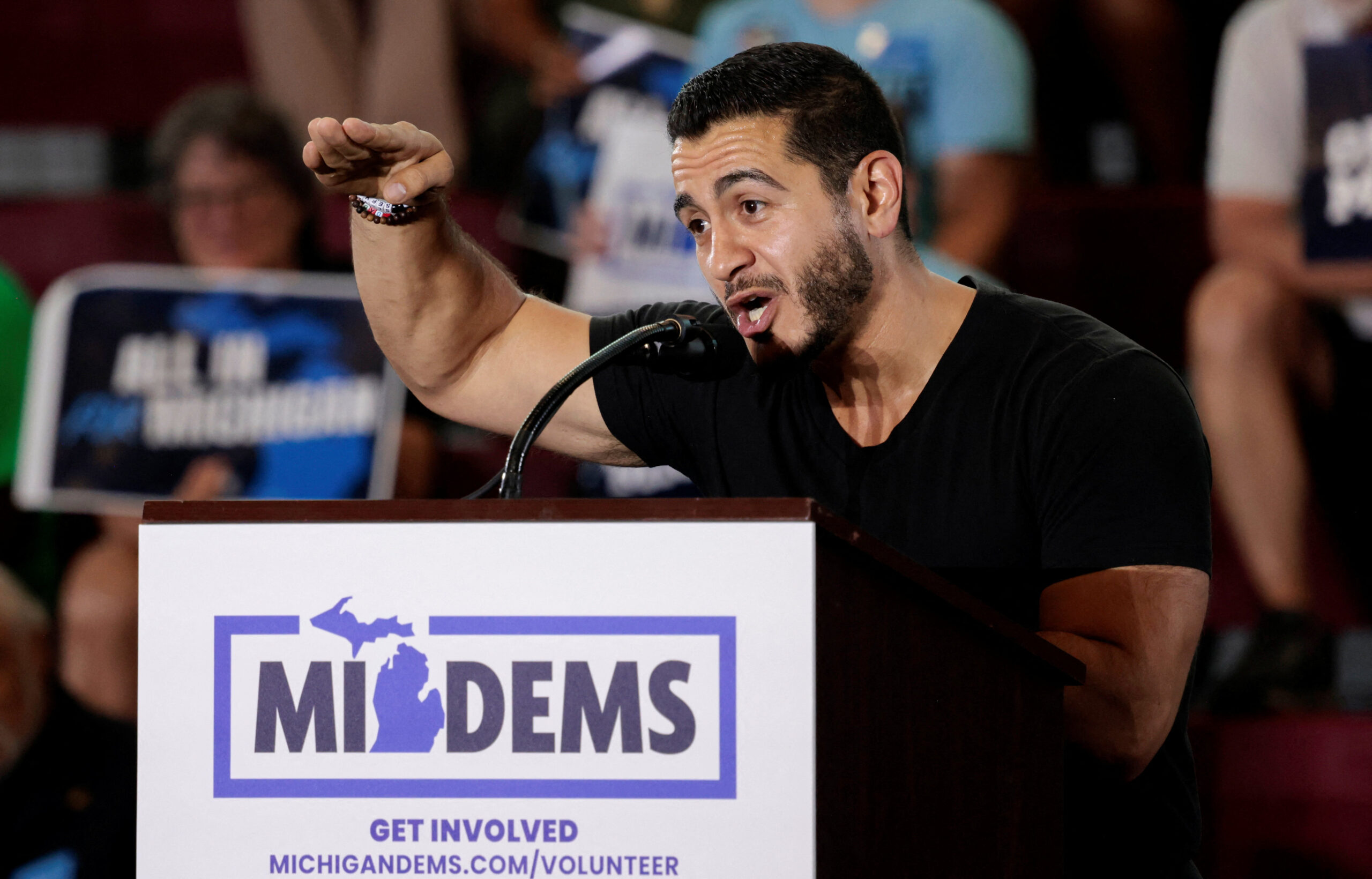
Democratic US Senate candidate Abdul El-Sayed has drawn criticism over his response to online commentator Hasan Piker’s remarks about American Jews and Israel. Michigan Congressman Jeremy Moss has voiced hesitation about backing El-Sayed’s campaign, citing the candidate’s past statements on Israel and his association with Piker. El-Sayed’s campaign issued a statement afterward defending his commitment to Jewish safety and condemning antisemitism, while insisting the race should center on cost-of-living issues rather than online commentary.
Dan Proft then welcomed Michael Rubin, director of policy analysis at the Middle East Forum, to discuss both the Senate race and Treasury Secretary Scott Bessent’s newly announced Operation Economic Outcast, a sanctions campaign targeting Iran and its financial networks. Rubin raised concerns about the security clearance process for U.S. senators, suggesting that if El-Sayed were elected, associates in his orbit could gain access to sensitive intelligence, a scenario he called risky given what he characterized as sympathies toward groups hostile to American interests. Proft and Rubin also discussed El-Sayed’s family, drawing comparisons to past controversies involving other officials’ family members and their alleged ties abroad.
Turning to Iran, Rubin called Bessent’s sanctions push overdue but ultimately insufficient on their own, arguing that sanctions historically only succeed when a regime is genuinely responsive to its population’s suffering. He pointed to the collapsing Iranian rial and comments from Iranian parliament speaker Mohammad Bagher Ghalibaf about economic hardship, while questioning Ghalibaf’s own credibility given his reputation for personal wealth. Rubin drew on the Clinton-era sanctions of the mid-1990s as a cautionary example, noting that a $6 billion transfer to Iran under a prior agreement took months to filter through the financial system and, in his view, ultimately helped fund terrorist activity given the low cost of staging attacks.
Rubin argued that American political debate around Iran is too often driven by domestic partisanship rather than a clear-eyed assessment of the threat the regime poses, and he challenged candidates from both parties to articulate concrete plans for countering Iranian influence rather than relitigating past policy. On the question of oil flow through the Strait of Hormuz, which recent reporting pegged near pre-war levels, Rubin said the data suggests the United States and its allies have time on their side. He likened the current moment to the sanctions campaign against Slobodan Milošević’s Serbia in the late 1990s, when economic pressure eventually contributed to the dictator’s ouster the year after NATO’s bombing campaign, even though the initial military action alone did not remove him from power.