




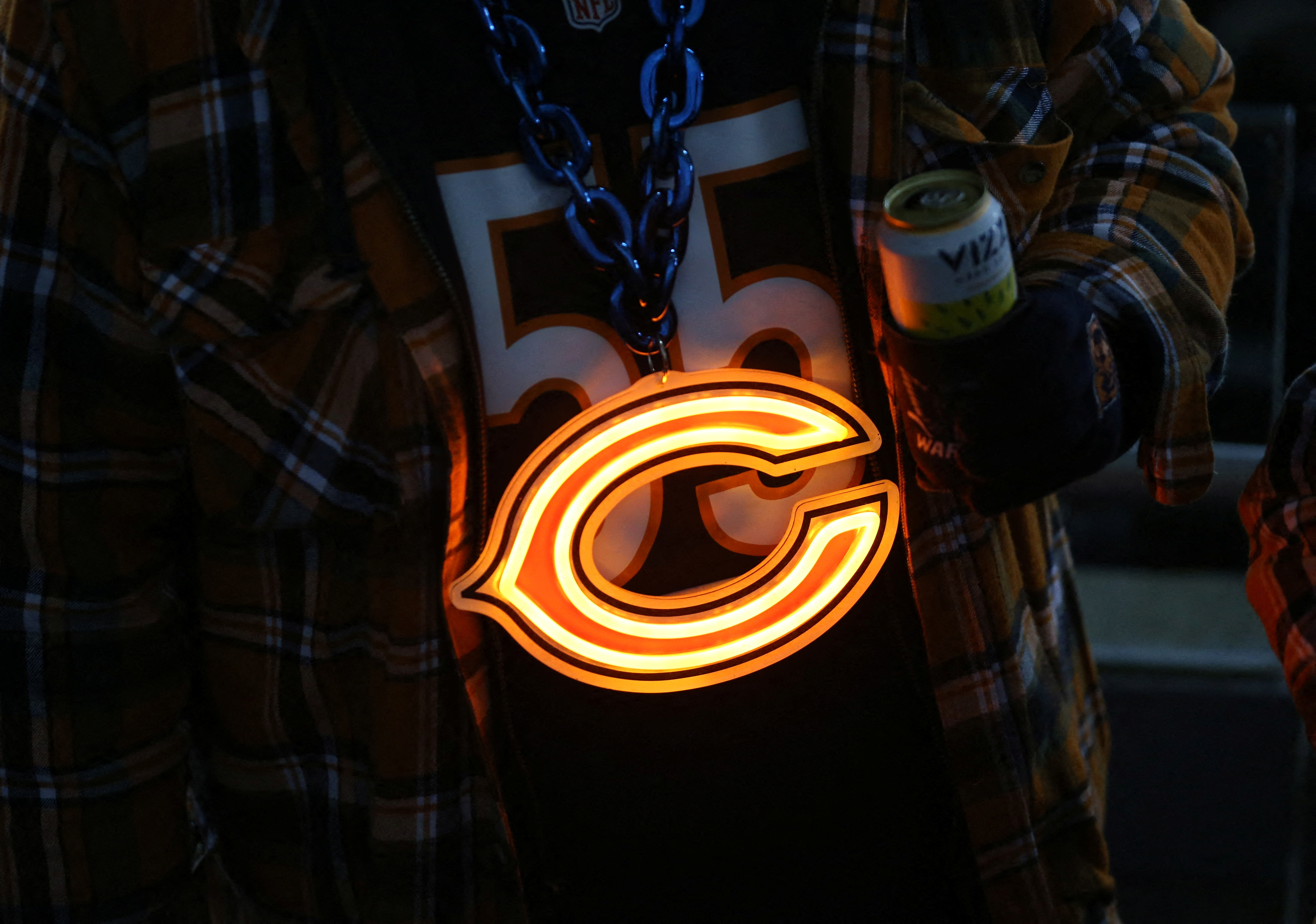
The Chicago Bears announced Friday they are moving forward with a site in Hammond, Northwest Indiana, effectively ending a years-long negotiation with Illinois and Chicago that never produced a deal. Governor Mike Braun of Indiana joined Dan Proft on Chicago’s Morning Answer to tell the story of how it happened and respond to Governor Pritzker’s claim that he stood on principle by refusing to give taxpayer money to a billionaire-owned team.
Braun said the key to understanding how Illinois lost the Bears is the timeline. The Bears bought the Arlington Park site in 2021 and had been in preliminary conversations with Illinois going back five to six years. The political class in Illinois spent that entire period assuming the Bears would never actually leave, treating every overture from Indiana as a bargaining posture rather than a genuine alternative. About three years ago the conversations picked up in intensity, and six months ago, shortly before Christmas, the Bears called Indiana directly. Braun said he told his team to make sure it was honest brokering rather than leverage, and from that point through Thursday evening when he received the call at a reception at the governor’s residence, the two sides communicated twice a week and checked items off systematically. By the time the Bears made their decision, five and a half years of Illinois’s clock had been frittered away while Indiana moved at the speed of business.
He said the contrast between how the two states operate explains everything. Illinois has one-party supermajoritarian control of every constitutional office and the entire legislature, and it still could not produce a deal in five years. Indiana had a Democrat mayor in Hammond working alongside a Republican governor and a Republican-controlled legislature, and they completed their due diligence and structured a framework in six months. He said as someone who built a small business into a national company, he has learned that politics and government are easier than the real world of running a business if you bring the right instincts. Pritzker, he said, may not have had the same experiential background to recognize that when an organization with real options runs up against a political timeline, the organization exercises its options.
On Pritzker’s stated principle of refusing to give taxpayer money to billionaire team owners, Braun was brief: Illinois has no problem directing hundreds of millions of taxpayer dollars toward Chinese Communist Party-backed electric vehicle battery plant investors whose projects local residents often oppose, and has spent several billion dollars annually providing services to people in the country illegally. The principle, in other words, is selective.
Braun said the Hammond site offers the Bears something Arlington Heights could not provide in the Illinois political environment, which is confidence about the next thirty to fifty years. Indiana has a AAA credit rating, the hottest economy in the Midwest, GDP growth running at roughly twice Illinois’s rate and six times Michigan’s rate, and a government that operates more like a business than the federal government. Chicago, by contrast, was the subject of a Washington Post story about its debt service burden exceeding that of the federal government on a per-capita basis. None of that signals a promising environment for a multi-generational stadium investment. He said he believes what ultimately drove the Bears decision was not the tactical comparison of the two sites but the fundamental question of where you have more confidence in political and economic stability over the life of a fifty-year investment.
On what the Bears development means for Northwest Indiana, Braun said the region is already transforming as conservatives and businesses relocate from Illinois into Lake and Porter Counties, turning an area that had not elected a Republican congressman in forty-six years progressively redder. A Bears stadium with mixed-use development surrounding it accelerates that transformation and makes the region a more dynamic part of the Indiana economy. He noted that Indianapolis itself is dealing with some of the same urban governance problems that plague Chicago, with prosecution failures and public safety challenges that required him to send state police into the city last Fourth of July and again for a WNBA event when local law enforcement needed backup.
On next steps, Braun said the urgency has decreased now that the Bears have taken their vote, since the Soldier Field lease does not expire until 2033, and a stadium takes two to three years to build. The threshold crossed Thursday and Friday was the significant one. What remains is the standard due diligence on a large real estate transaction, which the Bears have already been conducting. He said he expects some histrionics from the Illinois legislature and governor but that it has been nearly fully discounted by everything that has happened over the past six months, and that the Bears’ unanimous vote to focus on Hammond signals that those conversations are functionally over.