




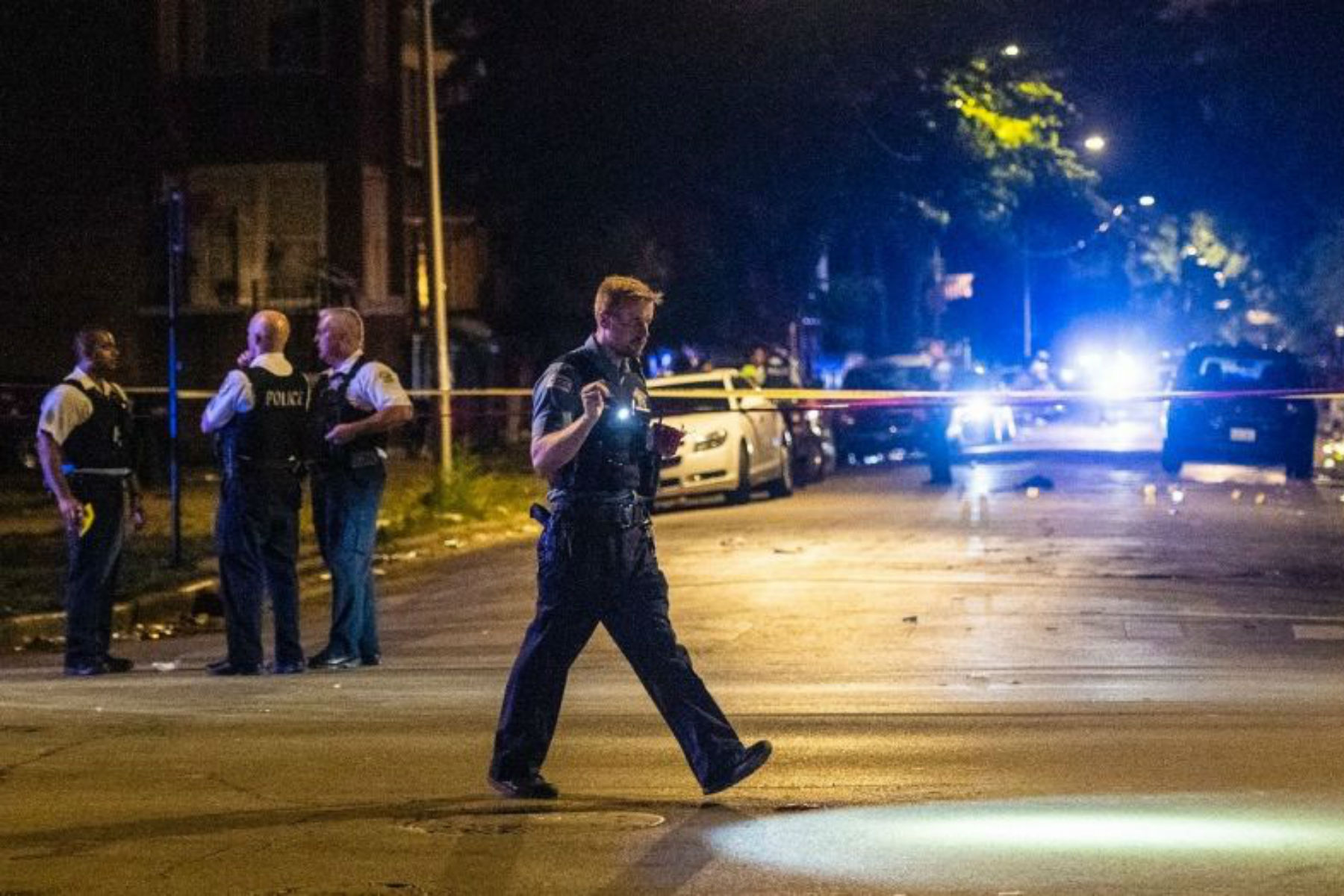
As protests continue in Chicago against federal intervention in local policing, some law enforcement veterans are urging city leaders to reconsider. During an appearance on AM560’s Chicago’s Morning Answer, former Chicago Police Lieutenant John Garrido argued that cooperation with the National Guard and federal agencies has historically worked well and could help address the city’s chronic crime problems.
Mayor Brandon Johnson and Governor J.B. Pritzker have opposed federal assistance, framing it as an overreach. Johnson even issued an executive order attempting to impose municipal policing rules on any federal law enforcement officers deployed to Chicago. Protesters have echoed the message, chanting against federal troops in recent rallies. But Garrido said the loudest opposition tends to come from the neighborhoods least affected by crime.
“Of the 293 people murdered this year, 224 were Black and 53 were Hispanic,” Garrido noted, emphasizing that residents in high-crime areas are the ones most in need of support. He pointed out that polling shows stronger support for more police among Black and Hispanic Chicagoans than among white residents on the North Side.
Garrido suggested the National Guard could be used strategically for “scarecrow policing” in high-visibility areas like Michigan Avenue and on CTA trains. That would free up thousands of sworn CPD officers to conduct proactive patrols in neighborhoods on the West and South Sides where violence remains high. “If they sent us 2,000 troops, we could reassign 2,000 officers to the communities that need them most,” he explained.
The former lieutenant also criticized claims from some officials that Chicago’s crime crisis is “manufactured.” While homicides have declined from pandemic-era peaks, he said the city still faces thousands of shootings, carjackings, and robberies each year. “From astronomical highs, yes, numbers are down slightly. But we’re still far above where we should be,” Garrido said.
He urged city and state leaders to take the same pragmatic approach they used when securing Chicago during the Democratic National Convention, when thousands of federal agents and troops worked alongside CPD without incident. “Whether you like Trump or not, the resources are coming. The responsible thing to do is plan how to use them effectively,” he said.
Garrido also commented on the Cook County State’s Attorney’s office under Eileen Burke, saying that while problems remain, relations between prosecutors and police appear to have improved compared to her predecessor’s tenure. As for Illinois’ SAFE-T Act and its elimination of cash bail, he described it as a “complete disaster” that has undermined public safety across Cook County.
While city leaders continue to resist outside help, Garrido believes many Chicagoans in the hardest-hit neighborhoods would welcome it. “These aren’t federal troops coming in as an occupying force. These are National Guard members, many of whom live here. They’re proud to help. And they could give Chicago police the breathing room they desperately need.”