




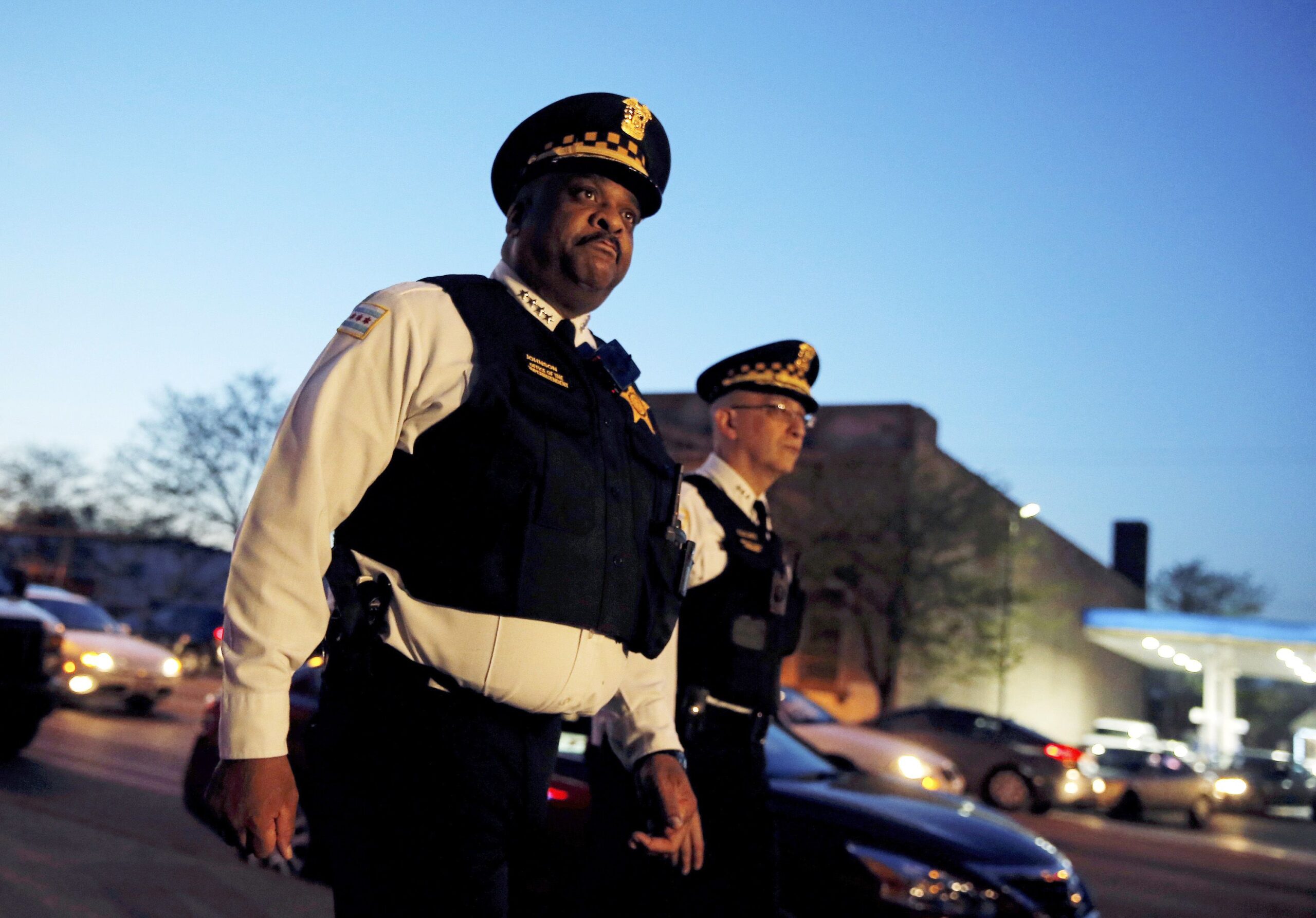
In the wake of growing confusion over whether Chicago police were ordered to “stand down” during a chaotic confrontation between protesters and federal immigration agents over the weekend, Chicago’s Morning Answer host Dan Proft turned to former Chicago Police Superintendent Eddie Johnson for clarity. What he got was a blunt assessment: “You cannot not assist anyone if they’re calling for help.”
The controversy erupted after radio dispatch audio surfaced suggesting that responding officers were told—repeatedly—to “pull back” from the scene of an altercation near 39th and Kedzie, where federal agents reportedly requested backup. Superintendent Larry Snelling has denied issuing any official “stand-down” order, insisting that Chicago police were not told to withhold assistance. But as Proft played the recorded exchange, the directive from the Chief of Patrol to “clear out” was unmistakable.
Johnson, who led the department from 2016 to 2019, didn’t equivocate. “Listening to the recording, they were clearly told not to assist,” he said. “It’s unfortunate, but we all heard it several times. The question is what was actually said between the Chief of Patrol and the district command.”
The former superintendent noted that under his leadership, no such directive would have been made without his knowledge. “I can guarantee you the Chief of Patrol wouldn’t have made that call unless I was okay with it,” he explained. “Because if someone calls for assistance—federal agents, citizens, anyone—you respond. Period.”
Johnson also revisited how CPD managed coordination with federal agencies when the city’s “Trust Act” limited cooperation on immigration enforcement. He described a pragmatic approach: daily communication with federal officials and patrol units stationed nearby to ensure safety without directly participating in immigration operations. “You cannot not respond if anybody calls for assistance,” he repeated.
Asked by Proft whether the mayor’s office might have influenced the decision, Johnson didn’t rule it out. “The only thing I can think is that somehow City Hall got involved,” he said. “I just can’t fathom anyone in the command staff arbitrarily saying we’re not going to go.”
Proft floated the idea that senior leadership might have acted preemptively, anticipating the political expectations of Mayor Brandon Johnson and Governor J.B. Pritzker. Johnson admitted that was possible, especially in a city where political pressure often drives police policy. “If that’s the case,” he said, “someone still has to own up to it. If it was a mistake, say it was a mistake. But there’s no excuse for CPD not responding to a call for help.”
The discussion then turned to Mayor Johnson’s latest executive order declaring Chicago an “ICE-free zone,” barring federal immigration agents from using city property for operations. Johnson dismissed it as “political theater.”
“What’s troubling to me is that this has become so politicized,” he said. “They’re putting these cops right in the middle of the lunacy.” He warned that the lack of communication between local police and federal agents could lead to dangerous confusion in the field. “You can’t have situations where CPD officers are responding and agents are deploying tear gas without coordination,” Johnson said. “That’s just lunacy.”
Instead of posturing, Johnson argued, city leadership should pick up the phone. “If I were mayor, I’d call the feds and say, ‘What are we doing here, and how do we work through this without chaos?’” he said. “We all need to act like adults and do what’s best for the city.”
As the investigation into the alleged stand-down order continues, Johnson’s words served as a reminder of what’s at stake when politics trumps public safety. “At the end of the day,” he concluded, “there’s just no excuse for the police not responding to anyone that calls for help.”