




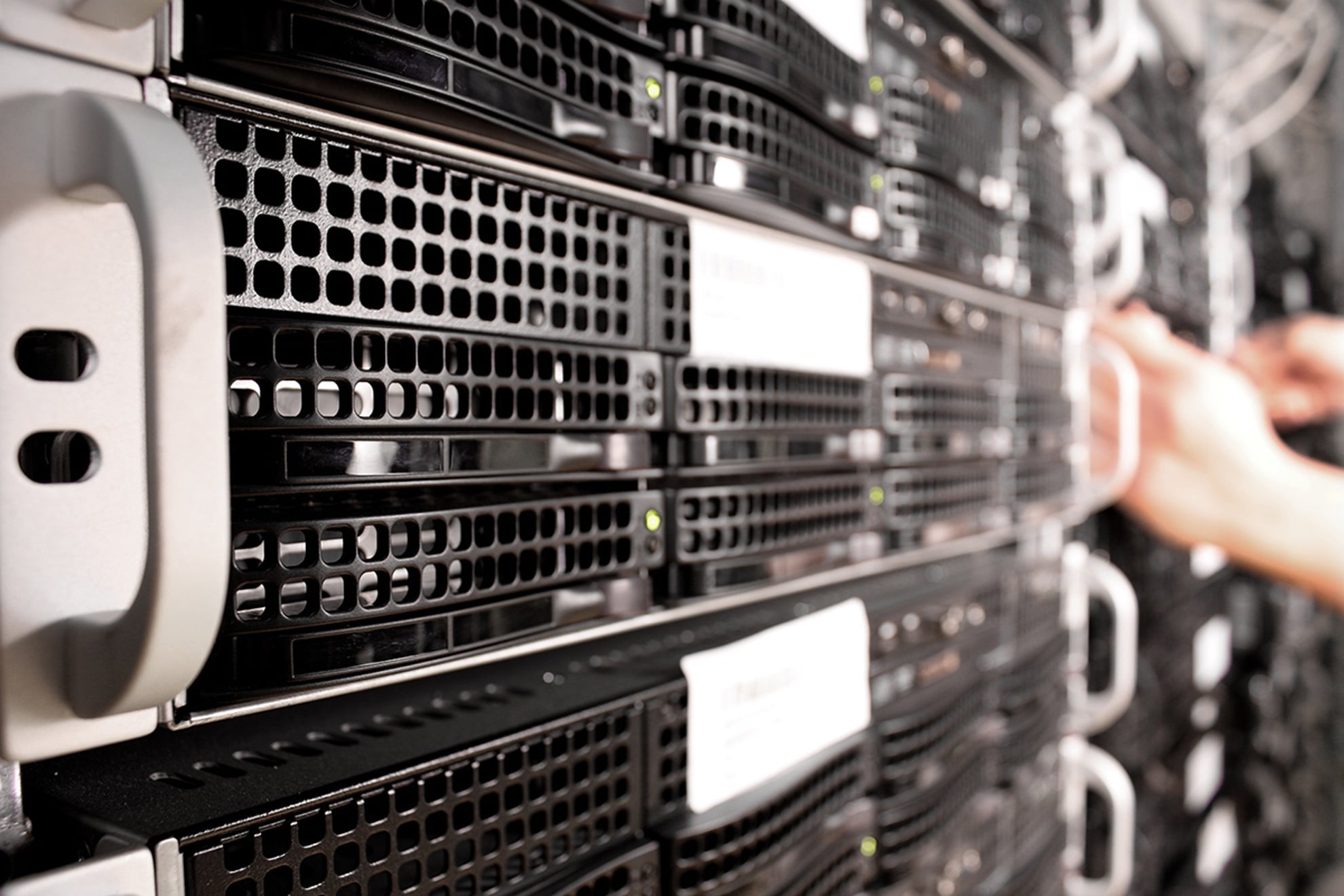
A back-of-the-envelope analysis posted on X by billionaire tech investor David Sacks, suggesting that a one-gigawatt data center requires approximately fifty billion dollars in capital expenditure but generates twenty-five to thirty billion dollars in annual revenue for a two-year payback, drew both enthusiastic agreement and sharp methodological criticism from people who know the space.
James Perry, founder and chief investment officer of Perry International Capital Partners, joined Dan Proft on Chicago’s Morning Answer to offer his own assessment of whether the AI boom is real and where the genuine economic risks lie heading into Trump’s Beijing summit.
Perry said the data center buildout itself is unambiguously real, and that the clearest indicator is not Sacks’s revenue projections but the behavior of the institutional investors financing the underlying deals. Insurance companies, pension funds, foundations, endowments, and sovereign wealth funds are competing for fixed-income exposure to data center cash flows at rates of three to five times oversubscription on every deal that comes to market. When institutional money of that character and at that volume is seeking exposure to an asset class, the underlying demand story is genuine regardless of what any individual analyst thinks about the revenue projections. He said the argument that the whole sector is circular finance, where Nvidia sells chips to Oracle, Oracle gets commitments from data centers, and data centers buy more chips from Nvidia, misses the point that beneath all of that lies a leveraged loan structure with real institutional capital at risk.
He provided data from an internal Microsoft document he saw approximately eighteen months ago showing business AI spending at three hundred and fifty billion dollars in 2024, doubling to seven hundred and fifty billion in 2025, and projected to reach two trillion dollars in 2026, roughly six percent of GDP. Microsoft’s projection for AI spending as a share of GDP by 2030 is twenty-five percent. He said the earnings data already coming through the market validates the revenue side of the story. With approximately ninety percent of S&P 500 companies having reported first quarter results, earnings growth is running at twenty-seven percent against an expectation of fifteen percent, more than double the forecast. The Magnificent Seven technology companies are reporting sixty-one percent earnings growth in the quarter. The other four hundred and ninety-three companies in the index are growing earnings at sixteen percent. He said the market’s current price-to-earnings multiple of roughly twenty-four to twenty-five times is supported by forward earnings estimates that bring the multiple down to twenty-one because the denominator is rising so fast.
On China, Perry said the economic picture is considerably darker than most Western commentary acknowledges. The Chinese real estate problem is structurally similar to the American mortgage crisis of 2007 and 2008 but roughly four times larger in proportion to the economy. Where the American mortgage crisis destroyed approximately ten percent of GDP over three years, Perry estimates the Chinese real estate write-off will eventually consume approximately twenty-five percent of GDP over the next three to five years, with forty percent of Chinese economic output having been directed toward a property sector in which enormous numbers of built units sit vacant. He said China is effectively insolvent on paper but can paper over the problem indefinitely through central bank money printing because it does not operate a market economy. He noted that China has approximately one year to eighteen months of oil reserves and that Chinese companies purchase ninety-five percent of Iran’s oil exports, with fifty percent of all Gulf oil exports going to China and another seventy percent of the remainder going to other Asian countries. The strait closure is therefore an existential economic problem for Asia in a way it simply is not for the United States, which has achieved genuine energy independence.
He said if the strait does not reopen with free commercial traffic within approximately one month, a global recession beginning in Asia and spreading to Europe becomes the likely outcome, with knock-on effects that would eventually slow the American economy as well despite its relative insulation. He said this dynamic is what Trump carries into Beijing, and that the pressure on Xi Jinping from his own energy situation, compounded by the catastrophic performance of Chinese-supplied military equipment against American forces in Iran, gives Trump genuine leverage that he did not have going into previous diplomatic encounters.
On the non-bank mortgage sector risk flagged by Institutional Risk Analyst editor Chris Whalen, who suggested that United Wholesale Mortgage’s aggressive market share strategy bears similarities to Countrywide Financial’s pre-crisis practices, Perry said he respects Whalen’s analysis but disagrees with the systemic conclusion. The key difference between now and 2007, he said, is liquidity. The money supply is expanding, corporate balance sheets are far stronger than they were heading into the last crisis, and the labor market with one hundred and seventy million workers earning record wages is generating strong cash flow throughout the system. He also noted that new home sales, which represent fifteen to twenty percent of the overall housing market, grew 8.9 percent in February and 7.4 percent in March, a pattern that did not exist heading into either the dot-com collapse or the mortgage crisis. He said the sunbelt construction boom visible from Orlando to Phoenix to Miami, where he counts roughly fifty construction cranes currently active, is inconsistent with the picture of an economy on the verge of a credit-driven housing collapse.
He closed by framing the current moment as an industrial revolution driven by technology, the genuine roaring twenties analogy, provided the Gulf situation resolves within the window before energy disruption triggers the broader global economic contraction he described.