




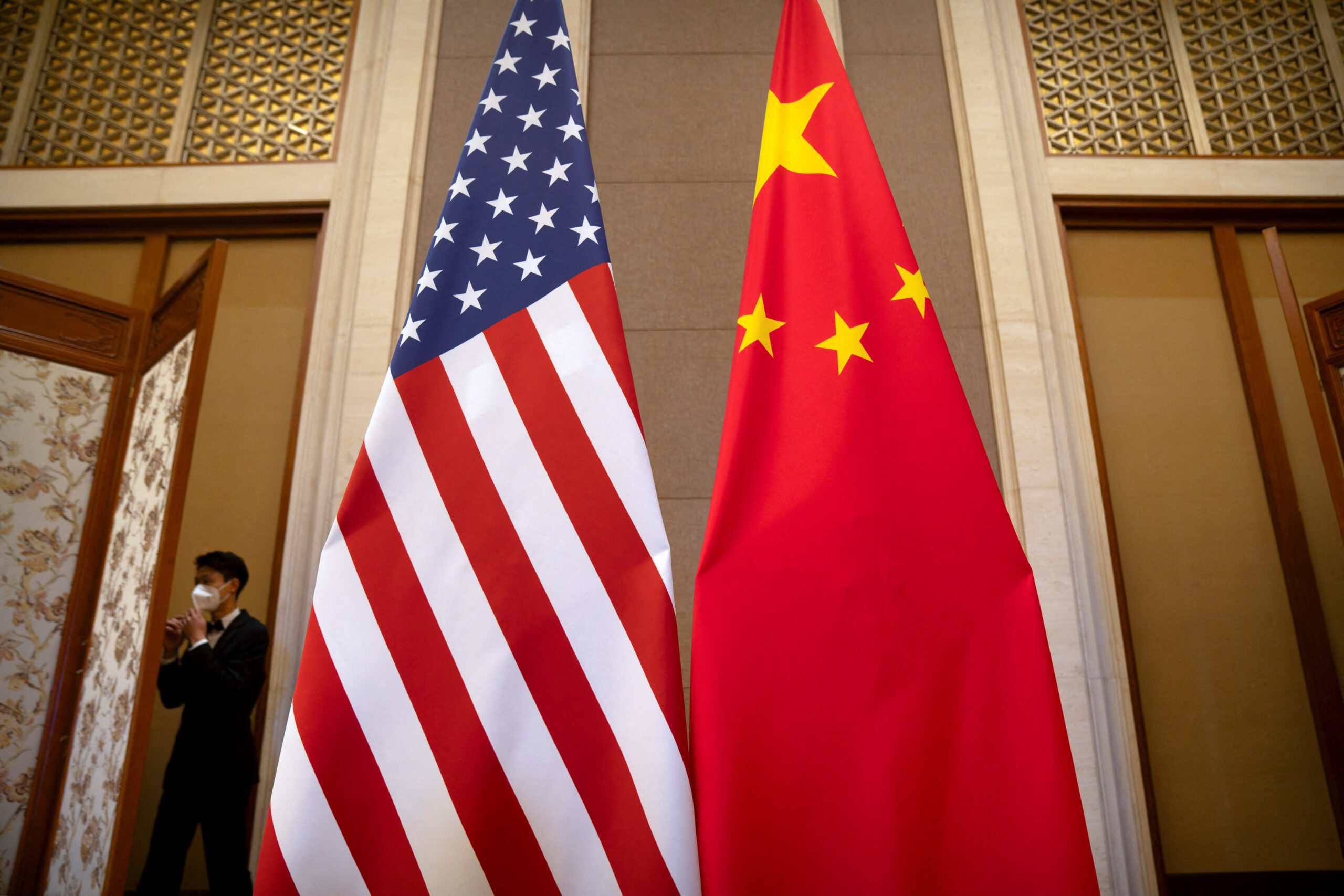
Financial analyst and Futures Edge podcast host Jim Iuorio joined Chicago’s Morning Answer to discuss America’s uneasy economic relationship with China, the challenges of reshoring manufacturing, and the best strategies for investors navigating global uncertainty.
As tensions rise over trade restrictions and China’s control of rare earth minerals, Iuorio said the United States is paying the price for decades of outsourcing key industries in the name of environmental virtue. “Rare earths aren’t actually rare—they’re just messy to mine,” he explained. “When the environmental movement made it politically impossible to produce them here, we shipped the problem to China and pretended it went away.”
Iuorio said reversing that dependency will take time and sacrifice. “If we try to move supply chains out of China, we’re looking at five to ten years of lower living standards during that transition,” he said. “The question is, do Americans have the stomach for that? Or will they vote out anyone who tries?”
He noted that China’s model of centralized capital allocation may look efficient on paper but ultimately can’t outperform free markets. “Xi Jinping can write all the five-year plans he wants, but that doesn’t make him a better investor than the market,” Iuorio said. “Communism still means state control, and state control kills innovation.”
While acknowledging that China remains a geopolitical threat, Iuorio believes its economic rise is more fragile than many assume. “They’ve always punched below their weight because communism puts a ceiling on growth,” he said. “Our best response isn’t panic—it’s competing smarter.”
Iuorio also discussed the trend of “inshoring” jobs to small American towns, where companies are training rural workers for tech and service roles once outsourced abroad. “It’s a great model,” he said. “But we need to keep Washington regulators from strangling it with one-size-fits-all mandates like a national $15 minimum wage.”
Turning to markets, Iuorio weighed in on the “debasement trade” as investors hedge against inflation and geopolitical risk. “I’d say three-quarters gold, one-quarter Bitcoin,” he said. “Central banks have been buying gold at record levels since we froze Russia’s dollar reserves, and that trend isn’t over. But crypto is here to stay too—you don’t want to be completely out of it.”
Despite the turbulence, Iuorio expressed confidence in America’s long-term strength. “If we can endure short-term pain, invest in ourselves, and resist the instant-gratification mentality, we’ll come out ahead,” he said. “Capitalism still wins—it just takes patience.”