




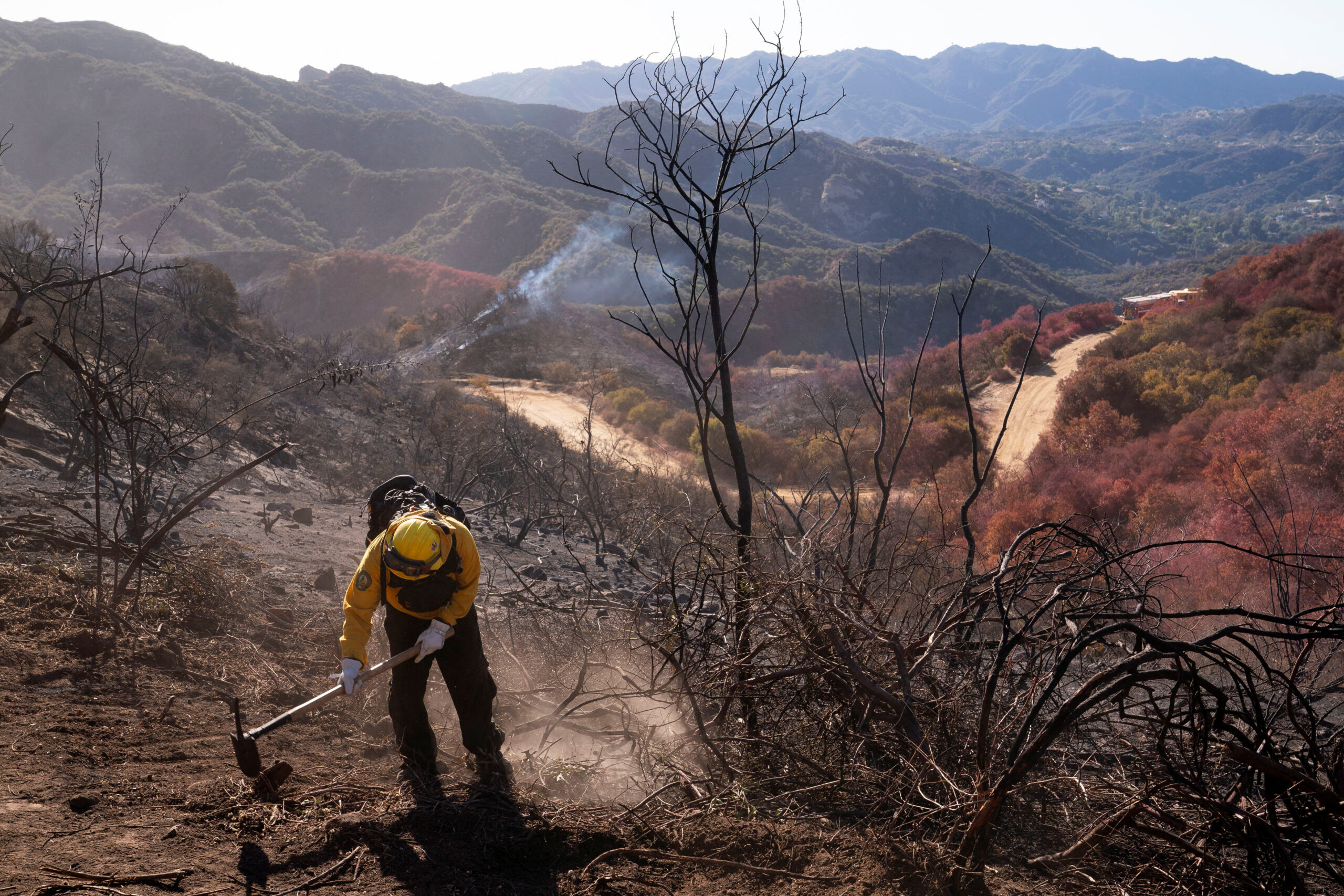
A series of new disclosures about the deadly Palisades wildfire has reopened questions about leadership, competence, and political priorities in Los Angeles—and what those failures may signal for big cities across the country. On Chicago’s Morning Answer, host Dan Proft spoke with Susan Crabtree, national political correspondent for RealClearPolitics and co-author of Fool’s Gold: The Radicals, Con Artists, and Traitors Who Killed the California Dream, about emerging evidence that firefighters were ordered to abandon a smoldering burn site days before it reignited into a catastrophic blaze.
Recent reporting from KTLA and the Los Angeles Times revealed text messages from firefighters at the scene of the early “Lochman Fire,” which investigators say was intentionally set and left partially burning through January 7. Despite warnings from personnel on the ground, a battalion chief ordered units to pull out, declaring the fire contained. Days later, historic winds whipped the still-smoldering remnants into the deadly Palisades wildfire that destroyed thousands of homes and businesses.
Crabtree said the story underscores a deeper breakdown inside Los Angeles’ public-safety and infrastructure agencies—one driven by political agendas, not public protection. She noted that former Fire Chief Kristin Crowley and other senior officials centered their priorities around DEI hiring goals and identity-based promotions rather than operational readiness. “When leadership’s focus is on identitarian politics instead of competency, you end up with failures that cost lives and livelihoods,” she said.
Crabtree also pointed out that failures at the Fire Department were layered atop long-standing environmental and land-management problems. While the Palisades incident was arson, many California fires originate from utility negligence. Yet those utilities—particularly PG&E—are deeply intertwined with state political leadership through funding and influence. “This is about money and political protection,” Crabtree said. “The same utilities responsible for repeated disasters are the ones donating to the very leaders who look the other way.”
The human cost has been staggering. Ten months after the blaze, only a handful of the roughly 2,000 destroyed homes have been rebuilt. Residents testified that elderly parents suffered strokes after being displaced, while others can no longer afford to remain in their communities as insurance payouts fall far short of rebuilding costs. Crabtree said many homeowners are now selling their land—often to foreign investors—because the financial hurdles are insurmountable.
Despite these realities, Crabtree noted, both Gov. Gavin Newsom and L.A. Mayor Karen Bass have attempted to frame the fire as a climate-related event. Newsom even traveled to Brazil for a climate conference shortly after the disaster. “He walked away from thousands of families whose lives were destroyed to go take photos in the Amazon,” Crabtree said. “That tells you everything about where his priorities lie.”
Crabtree argued that systemic accountability failures—amplified by a deferential California press corps—allowed these problems to fester. In fact, she said, much of the breakthrough reporting stemmed not from journalists but from reality TV figure Spencer Pratt, who lost his home in the fire. Pratt’s documentation of firefighter texts and agency decisions forced larger outlets to follow his lead.
Meanwhile, California’s elected officials have largely avoided scrutiny. Crabtree criticized the state’s congressional delegation, including Adam Schiff and Alex Padilla, for declining to engage, leaving investigative efforts to out-of-state senators like Ron Johnson and Rick Scott.
She said these problems aren’t isolated to Los Angeles. Cities like Chicago, Minneapolis, Seattle, and New York—all led by mayors with similarly ideological approaches—are vulnerable to institutional failures when political signaling takes precedence over performance. “It may not be a wildfire, but the result is the same,” Crabtree said. “When ideology outranks competence, public safety collapses.”
With thousands still displaced, little progress on rebuilding, and key agencies consumed by political objectives, Crabtree said the Palisades disaster offers a clear warning. Leadership matters, and ignoring real risks—to infrastructure, public safety, or emergency response—comes at a devastating cost.