




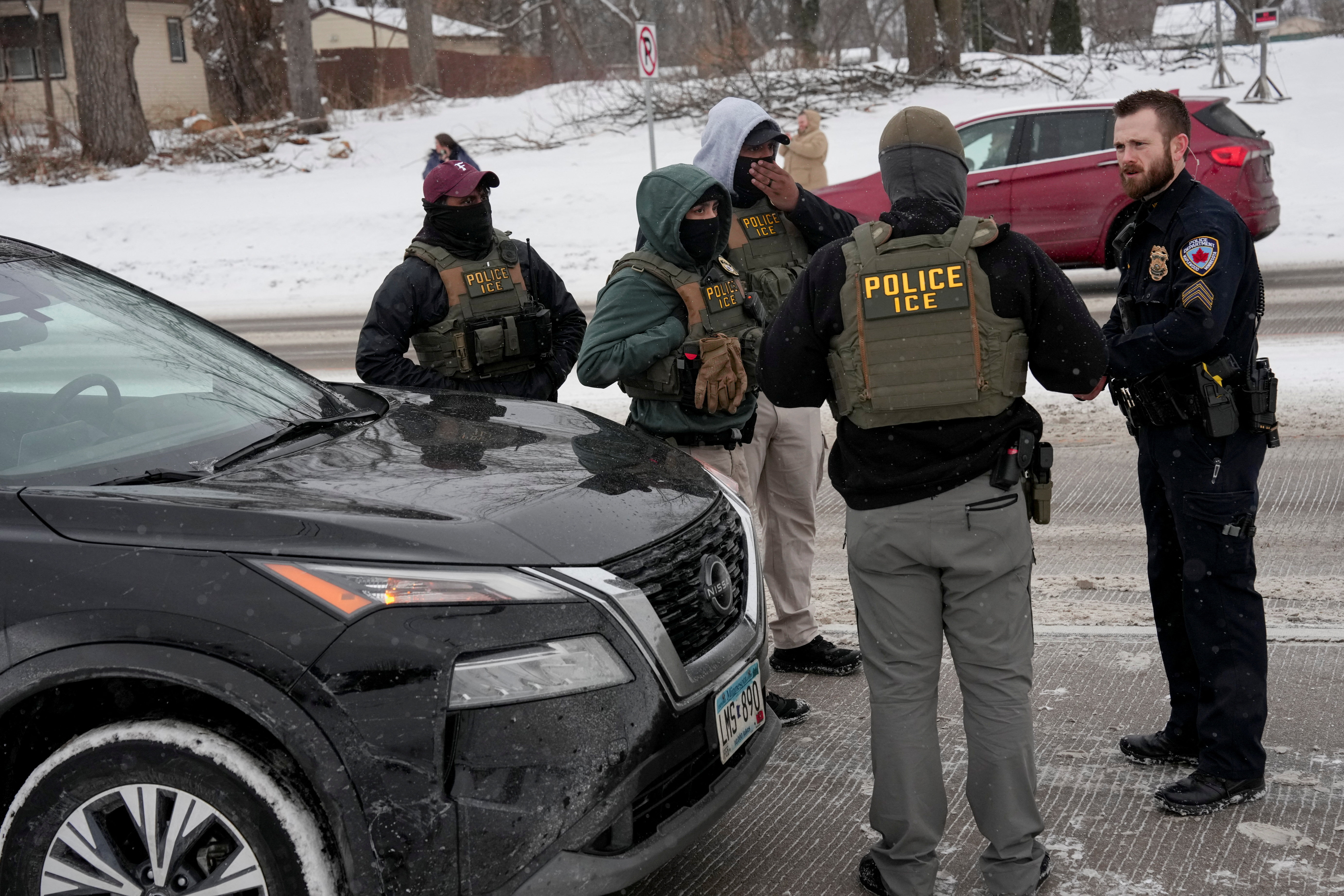
The U.S. Department of Justice has launched an investigation into whether state and local officials in Minnesota unlawfully impeded federal immigration officers, escalating a legal and political clash over immigration enforcement and the limits of state authority. The inquiry follows public statements by senior Minnesota officials that critics say encouraged resistance to Immigration and Customs Enforcement operations, raising questions about whether those actions crossed from political speech into criminal obstruction.
Deputy Attorney General Todd Blanche said the department is examining whether officials violated federal law by interfering with ICE officers carrying out their duties. Federal statutes make it a felony to obstruct or impede a federal officer in the performance of official responsibilities, and Justice Department officials have emphasized that no elected office confers immunity from those requirements. Blanche also stated that the department would not open a civil rights investigation into an ICE officer involved in a fatal shooting in Minneapolis, noting that video evidence showed the officer acted in self-defense and that such incidents are not investigated absent specific legal cause.
Minnesota leaders, including Governor Tim Walz and Minneapolis Mayor Jacob Frey, have denied wrongdoing, framing their comments as protected political speech and advocacy on behalf of constituents. Frey has said he has not received a subpoena and insists he has merely exercised his First Amendment rights. Federal officials, however, argue that while public criticism is lawful, coordinating with or encouraging efforts to physically block federal officers is not.
Legal analyst Andrew R. Arthur, a resident fellow at the Center for Immigration Studies, said the investigation rests on well-established precedent. Arthur pointed to federal obstruction statutes and Supreme Court rulings holding that states may not impose discriminatory barriers on federal operations. He argued that repeated rhetoric likening ICE to authoritarian forces, combined with reports of coordination between officials and protest groups, could strengthen the Justice Department’s case.
Arthur described the dispute as a “legal civil war” likely to be resolved in the courts rather than through street-level unrest. He said Minnesota’s refusal to honor ICE detainers forces federal officers into public settings to make arrests, increasing the risk of confrontation and politicization. According to Arthur, that dynamic has been exacerbated by officials who publicly criticize ICE while declining to cooperate with routine enforcement against individuals convicted of serious crimes.
The controversy has unfolded alongside broader debates in other states, where lawmakers have proposed measures to further limit cooperation with ICE or restrict federal officers from serving in state and local law enforcement roles. Supporters frame those efforts as safeguards for civil liberties, while opponents argue they undermine public safety and invite costly legal battles with the federal government.
Justice Department officials have said the investigation will proceed based on evidence, not political pressure, and emphasized that the rule of law requires cooperation between levels of government even amid policy disagreements. As the inquiry continues, its outcome could clarify how far state and local leaders may go in opposing federal immigration enforcement before triggering criminal liability.