




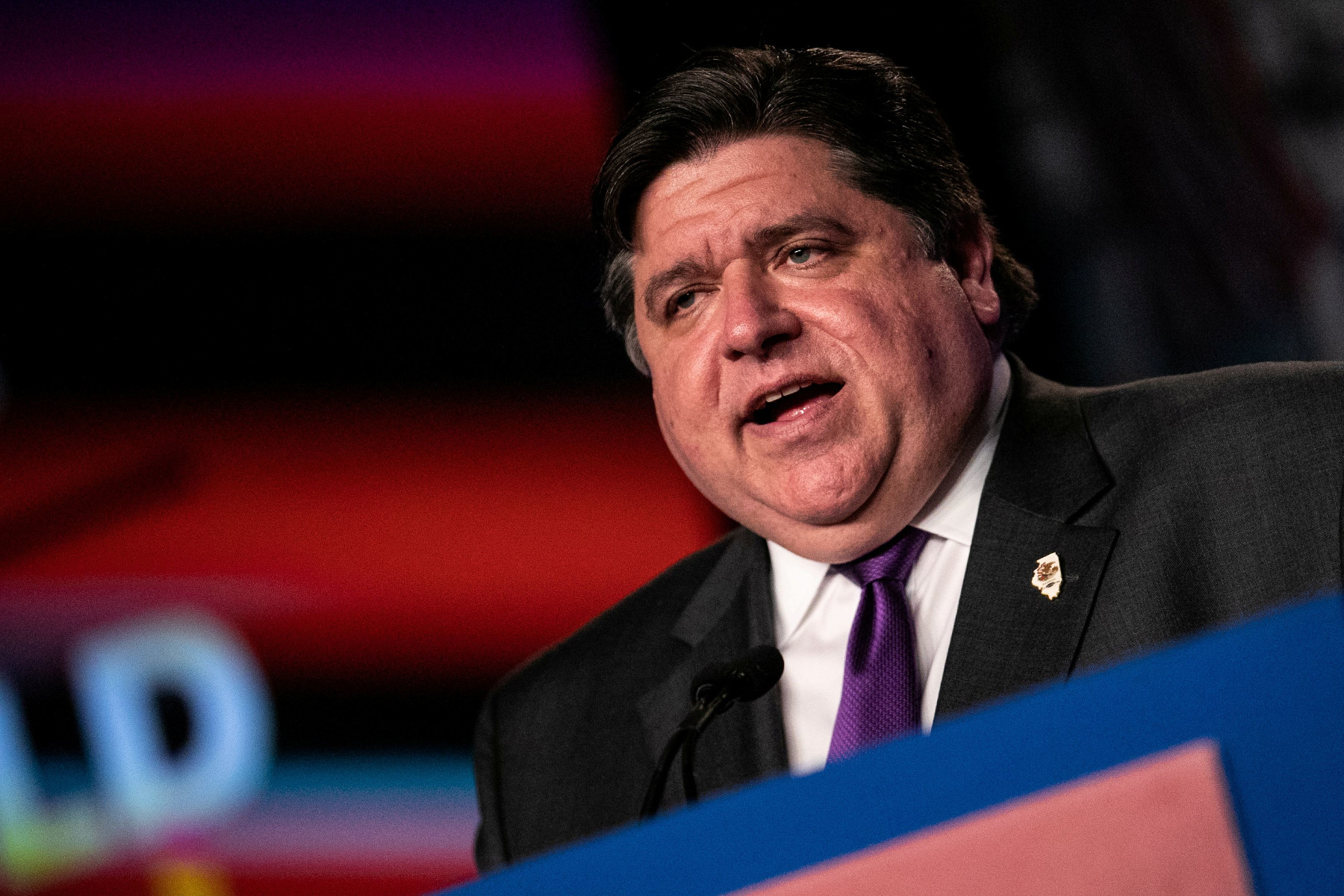
A proposal in Springfield to create an Illinois “Epstein Files Investigation Commission” is drawing skepticism and renewed questions about Gov. J.B. Pritzker’s past connections to former President Bill Clinton, after resurfaced comments placed the governor’s name in a broader discussion about flights associated with Jeffrey Epstein.
The legislation, filed by Illinois lawmakers, would establish a bipartisan commission to examine any Illinois connections to Epstein’s sex trafficking operation. Supporters describe the measure as a good-faith effort to pursue accountability tied to the disgraced financier, who was charged with sex trafficking minors and died in federal custody in 2019.
Critics, however, question whether the commission would have meaningful authority—or whether it represents political theater in a state grappling with more immediate public policy challenges.
The renewed attention comes after a transcript of Bill Clinton discussing flights connected to his foundation included a reference to Pritzker and his wife. In the exchange, Clinton said that on one of his early trips, he believed he brought “the man who’s now the governor of Illinois, JB Pritzker, and his wife.” Clinton framed the trip in the context of foundation-related travel and charitable work.
Mark Glennon, founder of Wirepoints, addressed the issue in a conversation with Dan Proft on Chicago’s Morning Answer, arguing that the wording and timing of Clinton’s reference warrant further scrutiny. Glennon noted that Clinton volunteered Pritzker’s name without being prompted in the specific exchange, calling the mention “curious.”
Glennon acknowledged that Clinton appeared uncertain in his phrasing but said the voluntary insertion of Pritzker’s name into the conversation was notable. He also pointed out that subsequent clarifications from Clinton’s representatives emphasized that the flights referenced were tied to foundation travel, not Epstein’s private plane, though Glennon questioned whether that distinction was clear in the original questioning.
Neither Pritzker nor his office has publicly elaborated on the specific travel referenced in Clinton’s remarks. The governor has not been accused of wrongdoing related to Epstein, and no evidence has surfaced tying him to criminal conduct. Still, Glennon argued that transparency would be the most straightforward way to address lingering questions.
The proposed Illinois commission would examine potential state-level links to Epstein’s network, though its scope, investigative power, and appointment process remain under discussion. Skeptics have questioned whether a commission appointed through the existing political structure could independently examine high-profile figures.
Beyond the Epstein-related debate, Glennon and Proft also turned their attention to crime trends in Chicago, particularly on the Chicago Transit Authority. While city and state leaders have cited overall declines in certain crime categories, recent reporting has shown aggravated assaults and batteries on CTA property reaching a 24-year high last year.
One example discussed involved a man accused of robbing a Red Line passenger while on electronic monitoring for a previous robbery. According to reports, the suspect had also been on electronic monitoring at the time of the earlier offense. Glennon said such cases help explain why many riders remain uneasy despite broader statistical claims of improvement.
He argued that transit safety is central to the city’s economic health, particularly as downtown struggles with office vacancies and commuting patterns altered by the pandemic. Working-class riders, he said, are disproportionately affected when public transportation feels unsafe.
The conversation also touched on housing policy proposals moving through Springfield. Lawmakers are considering zoning changes that would permit accessory dwelling units and other density increases in areas currently reserved for single-family homes, part of a broader effort to address what advocates describe as a housing shortage.
Glennon warned that overriding local zoning authority could dramatically reshape suburban communities without delivering the intended affordability gains. He cited research from Minneapolis, which implemented similar zoning reforms, suggesting that rent declines there were linked more to reduced demand than to an increase in supply.
Suburban officials across northeast Illinois have expressed concern that state-level mandates could erode local control and alter neighborhood character. Glennon argued that while debates often focus on affluent suburbs accused of resisting development, the most significant impacts are likely to fall on middle-class communities where density changes would be most noticeable.
As the legislative session continues, Illinois lawmakers face a series of contentious policy debates ranging from public safety to housing to high-profile national controversies. Whether the proposed Epstein commission gains traction—or fades amid competing priorities—remains to be seen.