




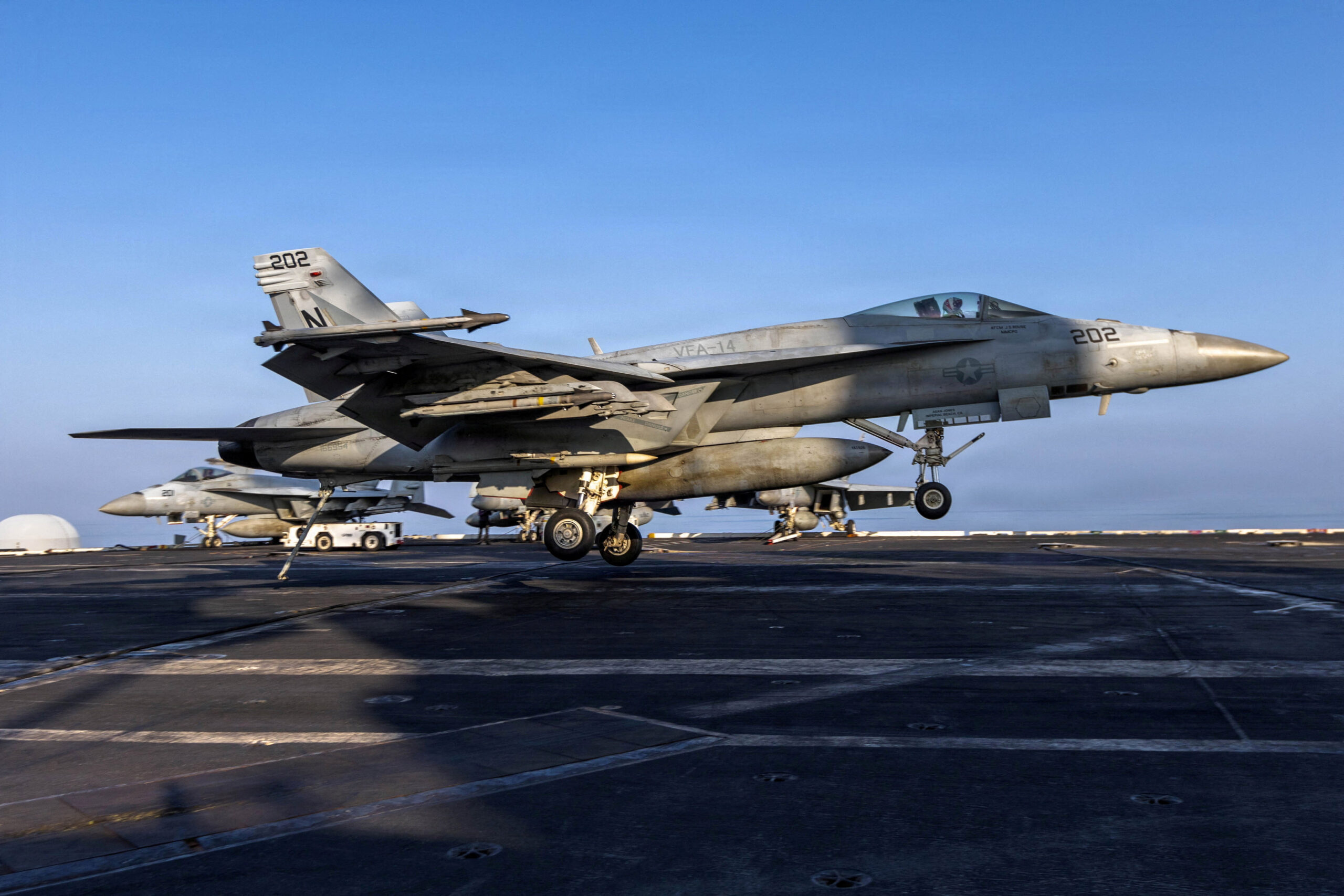
As U.S. airstrikes against Iranian military and missile targets enter their first week, Dr. Zuhdi Jasser says the Trump administration’s stated objective of a limited, decisive campaign is aligned not only with American security interests, but with what he describes as a historic popular uprising inside Iran.
President Donald Trump and Defense Secretary Pete Hegseth this week emphasized that the operation is not an open-ended nation-building effort, but a defined mission aimed at degrading Iran’s ballistic missile capabilities and preventing further nuclear development. Hegseth rejected comparisons to the Iraq and Afghanistan wars, calling the current effort a targeted operation with clear goals.
Jasser, president of the American Islamic Forum for Democracy and a former U.S. Navy lieutenant commander, told Chicago’s Morning Answer that the distinction is critical. He argued that the campaign represents a strategic effort to “defang” a regime whose ideology has long included hostility toward the United States and Israel.
“There is an amazing alignment right now,” Jasser said, pointing to internal unrest in Iran that he believes has been building for years. He cited student protests, women-led movements, labor unrest, and broader anti-clerical demonstrations as signs that a large segment of Iran’s population is rejecting the ruling theocracy.
Jasser described the current moment as unprecedented in modern Islamic history, contending that more than 80 percent of Iranians oppose clerical rule. He said the regime’s economic collapse, currency devaluation, and internal repression suggest it is increasingly unstable.
Rather than framing the situation as traditional “regime change,” Jasser characterized the strategy as weakening a hostile government to the point where the Iranian people can determine their own future. He compared the approach to Israel’s actions in Syria, where the degradation of military infrastructure preceded the rapid collapse of Bashar al-Assad’s hold on power.
The regional implications are also significant, he said. Iran’s actions have already drawn Gulf states closer to U.S. and Israeli security cooperation. While countries such as Saudi Arabia initially signaled caution, Jasser argued that Tehran’s aggressive posture ultimately reinforces shared security interests among its rivals.
Still, he acknowledged serious risks. Among them are potential attacks by Iranian proxy groups, including Hezbollah and the Houthis, as well as the possibility of retaliatory terrorism abroad. Jasser said heightened vigilance will be necessary, particularly given concerns about unvetted migrants who entered the United States in recent years.
However, he contended that weakening the Iranian regime’s central leadership would ultimately reduce the long-term terrorist threat by dismantling what he described as the “hive mind” driving Islamist extremism.
“There’s no doubt that vigilance needs to increase,” Jasser said, but he argued that eliminating the regime’s financial and propaganda infrastructure would cut off oxygen to its global network of influence.
Looking ahead, Jasser outlined several possible outcomes. One scenario involves a transitional period in which civil institutions are rebuilt over one to two years following the regime’s collapse. Another possibility is internal fragmentation, with competing factions vying for control. A third and less desirable outcome, he said, would be remnants of the Islamic Revolutionary Guard Corps consolidating power and maintaining authoritarian rule.
Jasser also addressed speculation about a constitutional monarchy or transitional figurehead, noting that some Iranians have expressed nostalgia for the era preceding the 1979 revolution. While he said a symbolic monarchy could serve as a bridge, he emphasized that long-term legitimacy would require democratic governance, not simply a return to hereditary rule.
“No expert can tell you exactly where this is headed,” Jasser said, calling the situation “uncharted territory” after nearly five decades of clerical dominance.
For now, he supports the administration’s limited timeline, saying a campaign measured in weeks rather than years offers the best chance to neutralize immediate threats while creating space for internal change.
Whether that change results in democratic reform, political fragmentation, or a reconstituted authoritarian structure will depend largely on forces within Iran itself.