




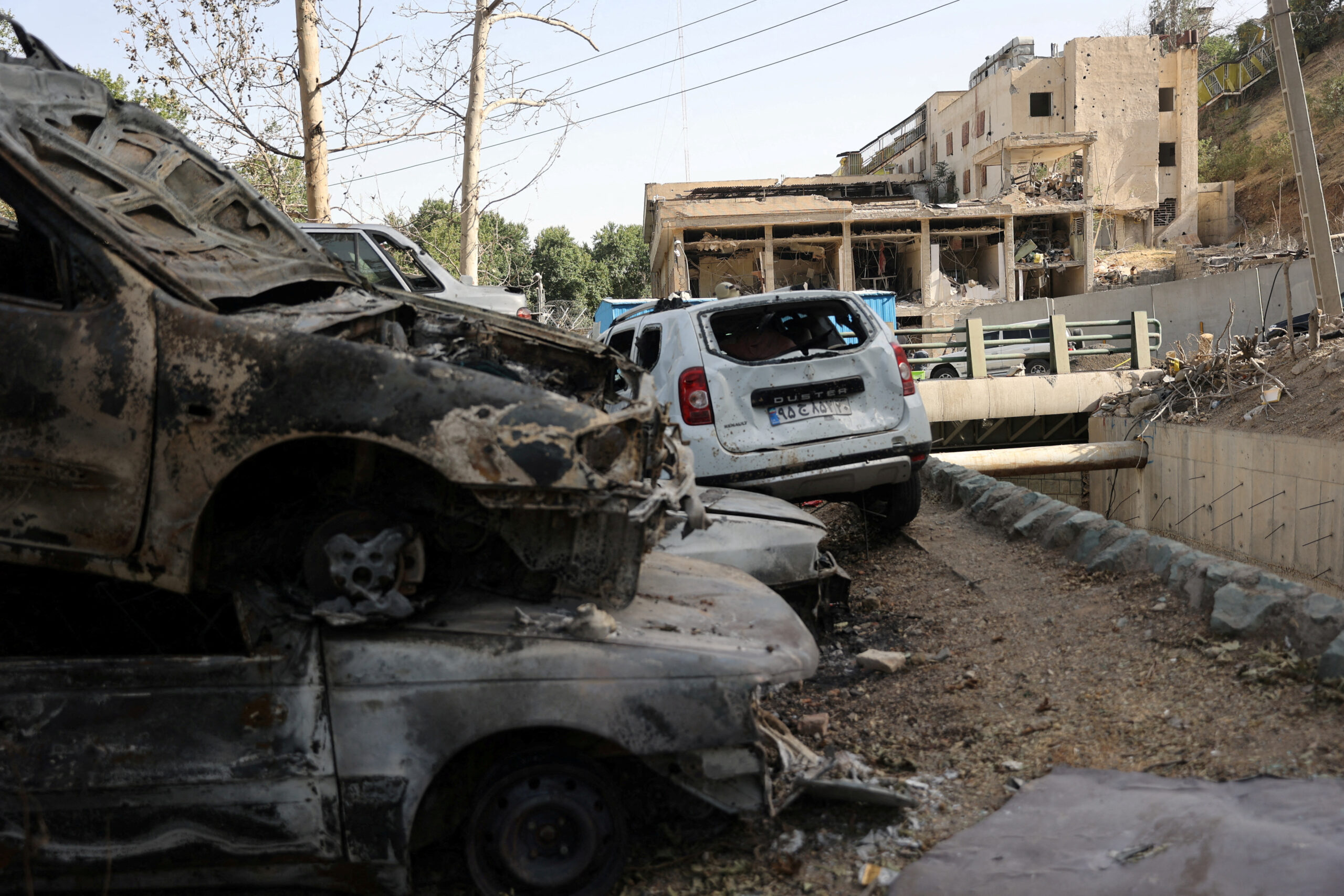
Israel’s military campaign against Iran is progressing faster than expected and continues to receive broad support among Israelis, according to Elad Strohmayer, the consul general of Israel to the Midwest, who says the effort is weakening the Iranian regime while strengthening cooperation among regional allies.
Strohmayer said recent commentary in the United States criticizing the campaign, including claims that the killing of Iran’s supreme leader would spark a wider religious war, has not matched the realities unfolding in the region.
He dismissed those predictions, saying the situation on the ground demonstrates that the Iranian regime is struggling and that its grip on power is weakening rather than strengthening.
“The Iranian regime is crumbling and struggling,” Strohmayer said, while noting that the conflict is not yet finished and the regime still maintains a chain of command and military capabilities.
According to Strohmayer, one of the most significant developments in the conflict has been the growing cooperation among countries that have long viewed Iran as a destabilizing force in the Middle East. Several Gulf nations, he said, have quietly aligned with Israel and the United States in opposing Iran’s actions.
Those governments, he said, understand the threat posed by Iran’s missile programs, its pursuit of nuclear weapons, and its use of proxy groups such as Hezbollah and Hamas.
“They understand this threat needs to be eliminated,” Strohmayer said.
Within Israel, he said public support for the campaign remains strong even among political opponents of Prime Minister Benjamin Netanyahu. While domestic political disagreements remain, Strohmayer said most Israelis believe the military operation is necessary for national security.
“There is a broad consensus in Israel that this regime needs to cease from existing in its current form,” he said.
Iran has launched missiles at Israel during the conflict, targeting civilian infrastructure rather than military installations, according to Strohmayer. Some residential buildings have been damaged and civilians have taken shelter during missile attacks, though he said the destruction has been less severe than many had anticipated.
Israel’s air defense systems, including interceptors designed to stop incoming missiles, have played a major role in limiting the damage, he said.
At the same time, Strohmayer warned that Iran has been conducting an aggressive misinformation campaign on social media, spreading false reports about conditions in Israel.
He cited rumors circulating online claiming that major Israeli cities were burning or that Israeli leaders had been killed, describing those claims as propaganda designed to undermine public confidence.
“Israel is functioning,” Strohmayer said. “There are attacks and people are in shelters, but the country continues to operate.”
Israeli defense officials believe the campaign is currently ahead of schedule, he said, and remain confident that the military objectives will be achieved.
The core goals of the operation, according to Strohmayer, are to stop Iran’s nuclear weapons program, dismantle its ballistic missile capabilities, and reduce the influence of Iranian-backed proxy forces operating across the Middle East.
The conflict also has implications beyond the region, he said, arguing that Iran’s missile programs and decades of attacks through proxies have posed a threat not only to Israel but also to the United States and its allies.
“Iran has been responsible for the deaths of thousands of Americans over the past decades,” he said.
Strohmayer also addressed concerns about rising antisemitic violence following a recent attack on a synagogue in West Bloomfield, Michigan. The incident involved a suspect who drove a vehicle toward the synagogue before being stopped by a trained security guard.
Strohmayer said he traveled to Michigan to meet with members of the Jewish community and attend Sabbath services in a show of solidarity after the attack.
He praised the synagogue’s security personnel and law enforcement officers for preventing what could have been a far more serious tragedy.
“It was a heroic act,” Strohmayer said, noting that the synagogue also houses a school attended by young children.
The attack highlights the need for continued security measures at Jewish houses of worship, he said, particularly as antisemitic incidents have risen in the wake of recent international conflicts.
Strohmayer described antisemitism as a persistent threat that has existed throughout history but said recent events have caused a spike in incidents targeting Jewish communities.
While many synagogues had already implemented security precautions in the past, he said the need for such measures has increased following several high-profile attacks in the United States and Europe.
“People should be able to go to their place of prayer and feel safe,” he said.
Despite those concerns, Strohmayer said the broader goal of the current military campaign remains focused on reducing long-term threats from Iran and restoring stability to the region.
“We will finish the job,” he said. “And when we do, the Middle East, Israel, and the United States will all be safer.”