




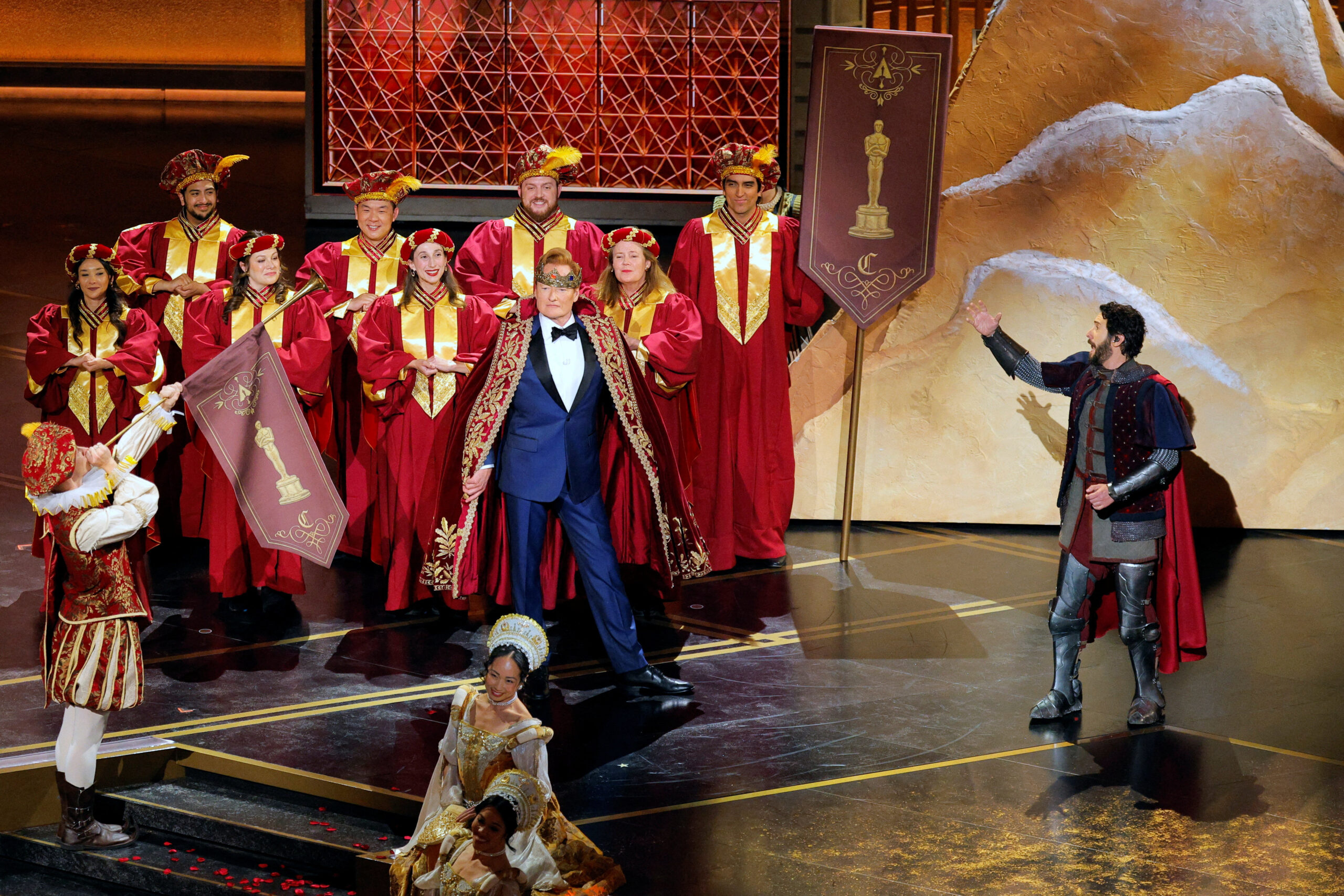
The Academy Awards once again delivered a mix of spectacle, controversy, and political commentary, prompting renewed debate about whether the ceremony still resonates with audiences outside Hollywood.
Film critic Christian Toto said this year’s ceremony, while containing a few entertaining moments, ultimately reinforced many of the criticisms that have followed the Oscars in recent years, including long runtimes, uneven comedy, and an increasing disconnect between the film industry and the broader public.
Toto, host of the Hollywood in Toto podcast, said the night’s biggest winner, the film Sinners, reflected a trend among awards voters to embrace movies that align with their worldview while overlooking other storytelling concerns.
While acknowledging strong performances and technical skill in the film, Toto said the movie’s narrative and message left him unconvinced.
“The story is a mess and it goes on far too long,” Toto said, adding that the film seemed to glorify political violence rather than grapple with its consequences.
He said the film’s central themes made it an obvious favorite with awards voters but less compelling for audiences looking for coherent storytelling.
Toto noted that long running times have become increasingly common among major film releases, a trend he said often works against the pacing and impact of a story.
“Every movie seems to run well over two hours now,” he said. “You always look at the runtime and think, why does it need to be that long?”
One performance that drew particular attention was Sean Penn’s portrayal of the film’s antagonist, a role Toto described as powerful but exaggerated.
Penn’s performance, he said, showcased the actor’s undeniable talent but sometimes crossed into theatrics that overshadowed the character itself.
“It was mesmerizing at times, but also over the top,” Toto said.
Another film that generated debate among critics was the horror drama Sinners, which Toto praised as one of the more ambitious and visually striking entries among this year’s nominees. While some commentators criticized the film’s themes and final scenes, Toto said the movie demonstrated strong craftsmanship and creative storytelling.
“It’s a beautifully crafted film with real ambition,” he said, noting that the horror elements brought a fresh approach to a genre that often repeats familiar ideas.
Actress Kate Hudson also drew attention for her nominated performance, which Toto said stood out even though she was ultimately unlikely to win given the dynamics of awards season.
Her nomination alone, he suggested, could help open doors to more dramatic roles in the future.
“Sometimes the nomination itself changes how the industry sees an actor,” Toto said.
The ceremony also sparked criticism over the Academy’s handling of its traditional “In Memoriam” segment honoring film figures who died over the past year.
Toto said he was surprised that legendary actor Robert Duvall was not given a dedicated tribute comparable to those for Diane Keaton and Robert Redford.
“Duvall is a giant in the industry,” Toto said. “You don’t just include someone like that in a montage.”
He also noted that some major film figures were omitted entirely, including French actress Brigitte Bardot, whose decades-long career included dozens of films.
The omissions underscored what Toto said has become a recurring issue for the ceremony, which often struggles to balance its tributes and recognition among a large field of influential artists.
Politics also remained a recurring theme throughout the broadcast. While the evening began with relatively restrained commentary compared with past ceremonies, Toto said political messaging increased as the show progressed.
Several acceptance speeches referenced political themes without directly naming specific political figures, while late-night host Jimmy Kimmel drew criticism for jokes that critics described as predictable and repetitive.
Toto said the dynamic reflects a broader challenge for the Academy Awards, which has seen declining viewership as audiences drift away from the ceremony.
“The show is long, often preachy, and not very entertaining,” he said.
He noted that the Oscars broadcast now runs more than three hours, which can make it difficult for viewers to stay engaged.
Despite the ceremony’s cultural legacy, Toto said its influence appears to be fading as more viewers turn to streaming platforms and social media for entertainment rather than traditional awards shows.
Future changes to the broadcast may further accelerate that shift. The Academy recently announced plans to move the ceremony to YouTube in the coming years, a move that could reduce its traditional television audience but potentially expand its digital reach.
Even so, Toto said the Oscars will likely continue as an industry event regardless of viewership trends.
“They’ll keep having the ceremony,” he said. “But a large part of the country has already tuned out.”
For film fans, Toto suggested the best approach may be to focus less on the awards themselves and more on discovering films that resonate with audiences outside Hollywood’s voting circles.