




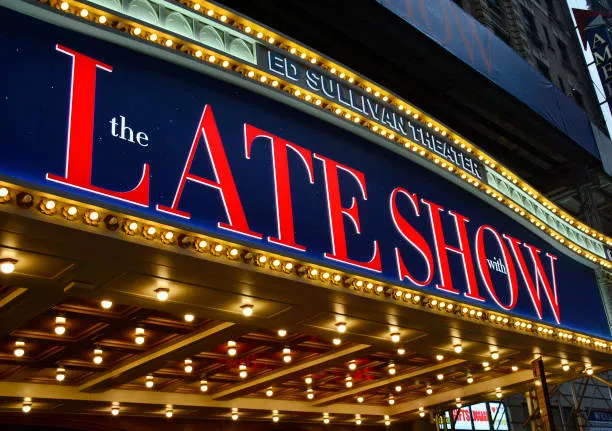
Barack Obama’s sit-down interview with Stephen Colbert, in which Obama expressed concern for the health of the Republican Party and suggested he longs for a loyal conservative opposition that believes in rule of law and science, drew the kind of analysis from Christian Toto, host of the Hollywood in Toto podcast, that the late-night landscape itself is constitutionally incapable of providing. Toto joined Dan Proft on Chicago’s Morning Answer to discuss the interview, the impending end of Colbert’s run, and the broader failure of entertainment media to hold the left to any meaningful standard of accountability.
Toto said his first question watching the Obama-Colbert exchange is always whether the performance is genuine or calculated, and that after watching long enough he suspects the two are now indistinguishable in Obama’s case. He said the tell is the shape-shifting, the way Obama presents himself as a nonpartisan statesman when operating through his presidential center and then steps into a different mode when the political situation calls for it, always perfectly calibrated to the environment. He said the intellectual vacuousness of what is actually being said is obscured by the fluency with which it is delivered, which is the essence of what Proft has called a flim-flam man.
On Colbert specifically, Toto said May 21st cannot come soon enough. He said the larger problem the show represents is not one bad host but the entire protection racket that late-night comedy provides for the Democratic Party. Has Colbert done a bit about Eric Swalwell? Has he examined why Karen Bass was in Ghana when her city was burning? Did the comedy shows ever mock Gavin Newsom for dining at the French Laundry at the height of COVID lockdowns? He said Saturday Night Live will almost certainly target Spencer Pratt in its next episode while leaving Karen Bass and Nithya Raman untouched, and that by making that choice the show is not doing satire, it is doing partisan communication. He said John Stewart and others who claim the mantle of speaking truth to power could be running bits on a Los Angeles city council member blaming Toyota’s engineering for the epidemic of catalytic converter thefts in her district, which he said Adam Carolla has already turned into excellent comedy material. The fact that they do not is the definition of not doing their jobs.
He connected the media protection to the political incompetence on display in the Los Angeles mayoral debate. He said the Spencer Pratt moment where his opponents looked at a loss for words facing substantive challenges was a direct product of years without meaningful accountability. He compared it to a boxer who skips sparring for three months before a big fight, convinced that technique and strategy will carry the day, and then gets demolished in the first round. Karen Bass and Nithya Raman have been operating in an environment where they never have to defend their positions against real skepticism, where the press serves as a communications shop rather than a check, and where fellow travelers in their political circle all share the same assumptions. When an exogenous force like Pratt shows up with specific numbers, direct language, and no interest in preserving anyone’s feelings, they have no intellectual muscle memory for the encounter.
He said the media failure pattern runs well beyond late-night comedy, pointing to the Southern Poverty Law Center indictments as a story that is in significant part a media failure, given that SPLC functioned for years as a quasi-official arbiter of hate group designations with credulous press coverage and no serious scrutiny of its financial practices or the accuracy of its designations.
On the Angel Studios production of Animal Farm, which inverted George Orwell’s critique of Soviet totalitarianism into a critique of capitalism, Toto said the film has the unusual distinction of being despised across the political spectrum. Liberal critics find it a bad movie on its own terms. Conservatives are angry about the ideological inversion of a work whose entire point is a warning against exactly the collectivist impulse the new adaptation appears to celebrate. He said Angel Studios has done genuinely good work and built a real audience, but that acquiring and distributing this film was a significant brand misstep that has damaged them with their core audience. He said their upcoming film Young Washington, timed to the country’s two hundred and fiftieth birthday, may offer a path to recovery.
He raised the persistent problem of right-leaning audiences failing to show up in theaters for films that speak to their values, using the 2019 Clint Eastwood film Richard Jewell as his example. He said it had everything going for it from a conservative perspective, a story about media malpractice, false FBI narratives, and the destruction of an innocent man’s reputation, and it underperformed significantly. He said he hears regularly from right-of-center friends that they prefer to wait for home release, and while he understands the impulse he finds it genuinely frustrating because the only signal Hollywood responds to is opening weekend box office. If the audience that claims to want different content does not show up to pay for it, the industry has no reason to produce it.
He offered a measured review of Devil Wears Prada 2, notably cooler than Jeffrey Tucker’s enthusiastic assessment that Proft had shared. Toto said it is a competently made sequel that is not as good as the original, and that its central problem is a mixed message. The film simultaneously celebrates the glamour, opulence, and sophistication of high fashion culture while having its protagonist lecture about income inequality, trying to have its cake and eat it while luxuriating in exactly the world it is supposedly critiquing. He said the first film worked because it had a coherent point of view. The sequel is muddled.