




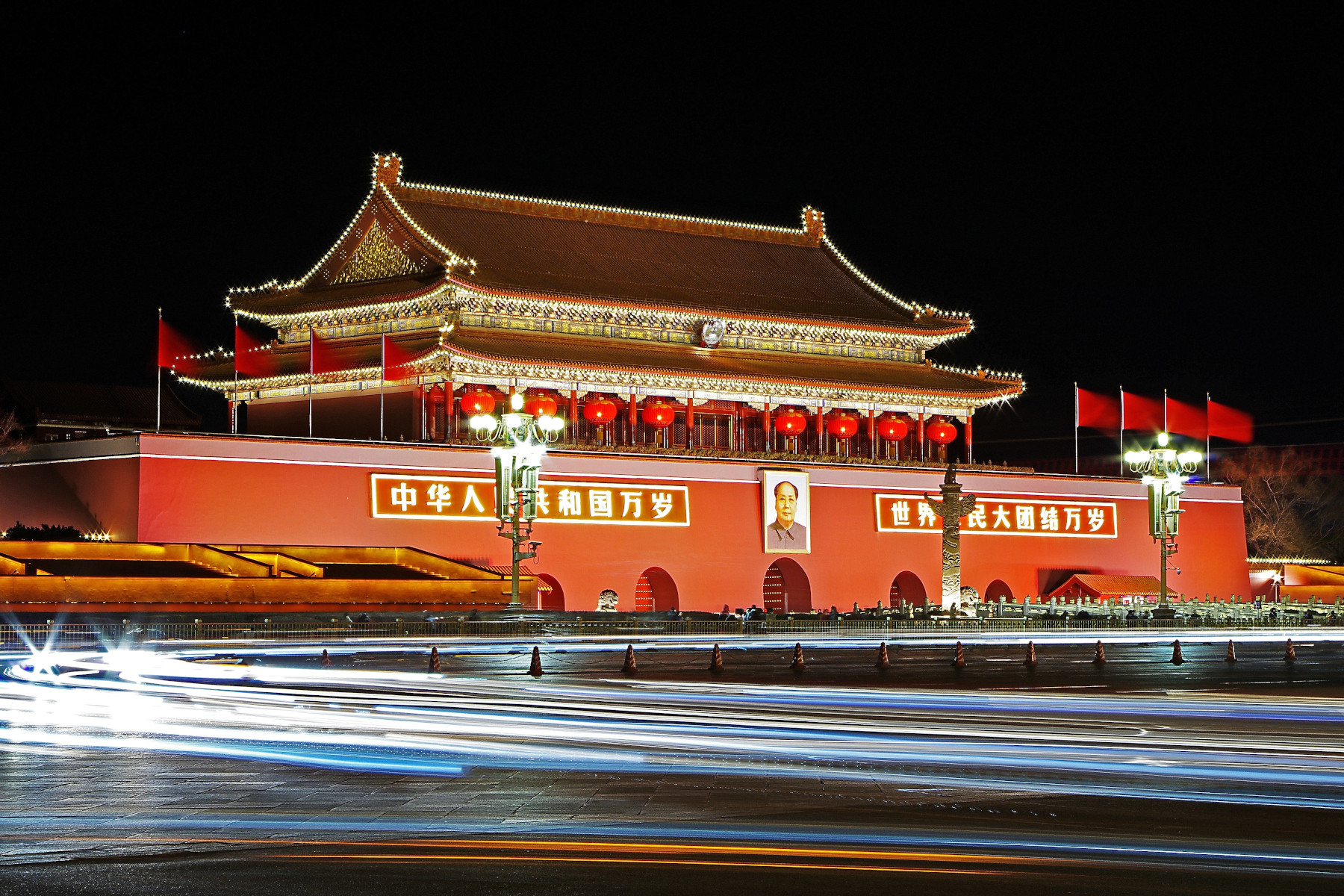
President Trump’s two-day summit with Xi Jinping in Beijing concluded with the customary pleasantries, back-slapping, and declarations of goodwill, but without any specific written agreements on Taiwan, Iran, or the strait, and with Xi offering the somewhat elastic commitment that he would not provide weapons to Iran and would be happy to help facilitate a deal if he could. Trump returned to deliver a blunt post-mortem to Sean Hannity, saying Iran can make a deal or get annihilated, that everything Iran has done over the ceasefire period to reconstitute its military capability will be gone in a day if hostilities resume, and that American surveillance knows precisely what Tehran has rebuilt.
Daniel DePetris, fellow at Defense Priorities and syndicated foreign affairs columnist at the Chicago Tribune and Newsweek, joined Dan Proft on Chicago’s Morning Answer to offer a measured assessment of what the summit actually accomplished.
DePetris said critics who are bashing Trump for failing to extract tangible signed commitments from Xi are completely mistaken about how statecraft between major adversarial powers works. He said anybody who expected the two presidents to sign something specific on Iran or Taiwan was setting themselves up for disappointment. The phase one trade deal of January 2020, which came after more than a year of serious negotiations, provides the relevant precedent: China signed it, then slow-rolled implementation on agricultural purchases and other commitments. The operating principle with China has to be trust but verify, and what matters is not what Xi says in public but what China is actually doing, which will take months to assess.
On whether Xi genuinely shares Trump’s opposition to Iranian nuclear weapons, DePetris said it is a long-standing Chinese position to oppose Iranian nuclear proliferation in principle. The complication is not the end goal but the method. The Trump administration is using maximum military and economic pressure to compel Iran to surrender its nuclear program entirely, including transfer of enriched uranium. China’s preferred approach is a negotiated arrangement under which Iran retains a limited domestic enrichment capacity under strict international protocols, something closer to the JCPOA framework. He said the two countries share an objective but are working at cross purposes on how to achieve it.
On the contested question of Iranian remaining military capacity, DePetris said his honest answer is that the information environment is too unreliable for any outside analyst to be confident. SenCom commander Admiral Bradley Cooper testified that reports suggesting Iran retained seventy to seventy-five percent of its ballistic missiles are untrue, and noted that in his hundred transits through the strait he would typically see twenty to forty fast boats whereas recent transits have shown two or three. Treasury Secretary Scott Bessent said Kharg Island has had no oil loadings in three days, that Iranian storage is full, no ships are entering or leaving, and that Iran will soon have to begin shutting down oil production. DePetris said his professional judgment is that any policymaker must plan for the worst-case scenario on Iranian military capacity rather than the optimistic one, and that assuming the Iranians have more capability than the generals are reporting is the only prudent basis for decision-making, particularly if resuming hostilities is under consideration.
His broader assessment of the administration’s likely course is that Trump wants the blockade to continue choking the Iranian economy to the point where the IRGC signs on the dotted line, and that he does not actually want further military escalation if it can be avoided. He said he believes the Iranians are more stubborn than Trump gives them credit for, and that the most probable near-term scenario is continuation of the economic pressure campaign rather than a resumption of bombing or a completed deal. He said Trump faces an unenviable political problem on any negotiated settlement: full sanctions relief is what the Iranians have demanded for decades, and providing it would be politically costly even if it secured a genuine constraint on the nuclear program. He said that tension between what Iran will accept and what Trump can credibly agree to may prove more difficult to bridge than either side’s public positions suggest.
On the question of the enriched uranium specifically, Proft noted that Iran reportedly agreed to turn it over and then walked back that commitment when it came time to put it in writing, and that both Trump and Netanyahu have said publicly the uranium will either be handed over or removed by force. DePetris said he is not certain Iran ever formally agreed to transfer the uranium rather than Trump characterizing the state of talks more favorably than the actual record supports. He offered dilution under IAEA monitoring as an alternative to physical transfer that might be more achievable, while acknowledging that any arrangement relying on Iranian compliance with inspection protocols carries the same credibility problem as every previous nuclear agreement with Tehran.
He said CIA Director John Ratcliffe’s visit to Havana, the most senior American official to visit Cuba in at least a decade, is significant and likely served one or both of two purposes: serious negotiation over what economic and political concessions Cuba is prepared to make, or a direct warning that Cuban non-cooperation will produce consequences. He said it could have been both simultaneously, and that the visit itself signals the Trump administration is treating the Western Hemisphere as an active theater of strategic competition rather than a secondary concern.