




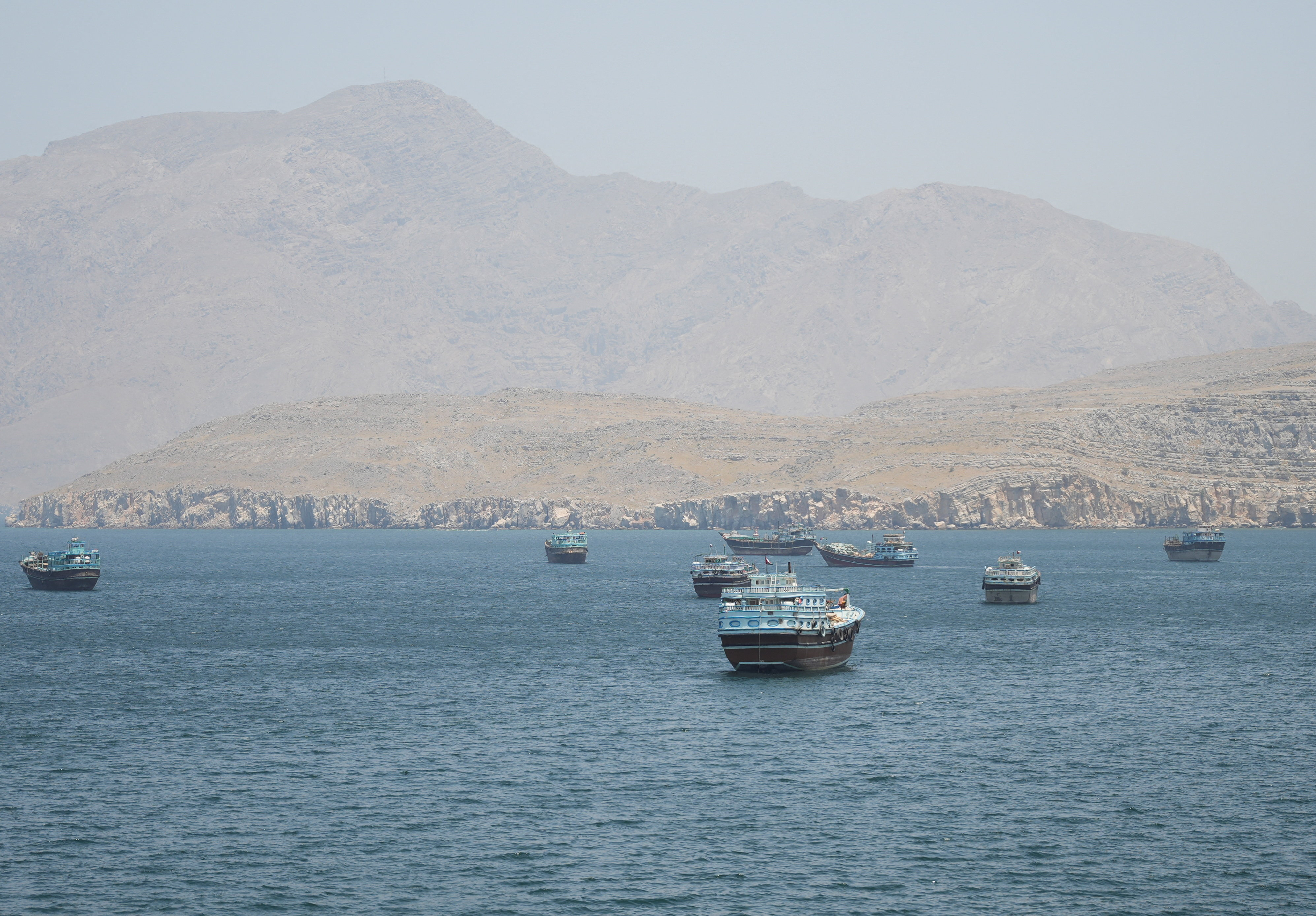
Three American Navy destroyers repelled attacks by Iranian fast boats Tuesday, knocking out eight vessels in a single day’s fighting and continuing what has become a running tally of Iranian small craft destroyed since the conventional naval threat was eliminated weeks ago. President Trump described the skirmish at the White House, noting that Iran’s original fleet of one hundred and fifty-nine boats is entirely at the bottom of the sea and has been replaced by fast boats with machine guns mounted on the front, which are being eliminated at a rate of roughly eight per day. He also said Iran is at the end of the line, reiterated that the ceasefire remains technically in effect, and added that if it ends, no one will need to ask because they will simply see a large glow coming out of Iran.
Seth Cropsey, founder and president of the Yorktown Institute, former naval officer, and former deputy undersecretary of the Navy, joined Dan Proft on Chicago’s Morning Answer to assess the military situation and the implications for the upcoming Trump-Xi meeting in Beijing.
On the fast boat skirmish, Cropsey said the outcome was a foregone conclusion. In an active state of war, American destroyers are prepared, radar-equipped, and armed for exactly that kind of engagement. He said whatever one calls the current period, ceasefire or otherwise, a de facto state of war exists between the United States and Iran, and Iranian fast boats attacking American destroyers were going to be eliminated. He expressed something close to bemusement that the Iranians sent those vessels against destroyers at all, calling it a display of either extreme bravery or extremely poor judgment.
The deeper strategic question Proft pushed on was whether the current approach, a combination of military degradation, economic blockade, and intermittent negotiation, can actually produce a durable result. Cropsey said his honest assessment is that any agreement Iran signs carries effectively zero chance of being honored. The capacity to build ballistic missiles has not been fully eliminated. Underground facilities and enrichment work can be resumed the day any agreement is signed regardless of what the document says. Inspectors can be expelled on short notice as they have been before. He said the only real assurance of a changed outcome in the Middle East is a genuine change of regime and a change in Iran’s fundamental orientation toward the United States and the international order, and that negotiating with the current leadership, whether Khamenei’s immediate successors or whoever is actually running the IRGC at any given moment, is an exercise in producing paper commitments that will be violated.
He said he thinks continued military pressure combined with active support for regime change is the correct policy, and said he agrees with Proft’s formulation that Trump’s good-faith negotiating overture has demonstrated to the world how intractable these Islamists are, which has some value, but that the window for that demonstration has passed.
On the Trump-Xi meeting, Cropsey offered a nuanced assessment. He said Trump goes into that meeting with both a stronger and a weaker hand simultaneously. The military performance has been genuinely impressive and Xi knows it. The United States destroyed a regional military in forty days in ways that should give Beijing serious pause about any adventurism that would put American naval and air power in direct opposition to Chinese forces. But the political outcome remains ambiguous because Iran has not been forced to concede on the central objective, the strait, in ways that fully demonstrate American political will as well as military capability. He said Xi will look at the strait situation and calculate whether controlling key maritime chokepoints might be more effective than nuclear weapons as an instrument of political leverage, which is a lesson the Iranian example may be teaching in ways Washington did not intend.
He said the Chinese anti-access and area denial strategy, which is designed to put American warships at risk within a thousand miles of China, remains the primary military challenge in any Taiwan scenario, and that the commander of US Indo-Pacific Command told Congress recently that he does not have enough ships to execute his mission. He said strategic ambiguity on Taiwan, the longstanding American policy of leaving deliberately unclear whether the US would defend the island from a Chinese attack, is not deterring China given the ongoing encirclement exercises, cyber campaigns, and naval buildup that have accelerated in recent years. He said Trump would do well to use the Beijing meeting to lift the veil of strategic ambiguity and tell Xi directly that the United States will defend Taiwan if China attacks it, and that the Iranian campaign has made that threat more credible even if the political resolution remains unfinished.
On China’s stated extension of its Taiwan timeline from 2027 to the early 2030s, Cropsey noted that this means there will be a different American president when that deadline arrives, and that the extension is consistent with a strategy of waiting for more favorable political conditions in Washington. He also noted that deception is a foundational principle of Chinese strategic doctrine going back to Sun Tzu’s Art of War, and that anyone who assumes the publicly stated deadline revision reflects China’s actual intentions should not be surprised if the original 2027 timeline turns out to have been the operational one all along.