




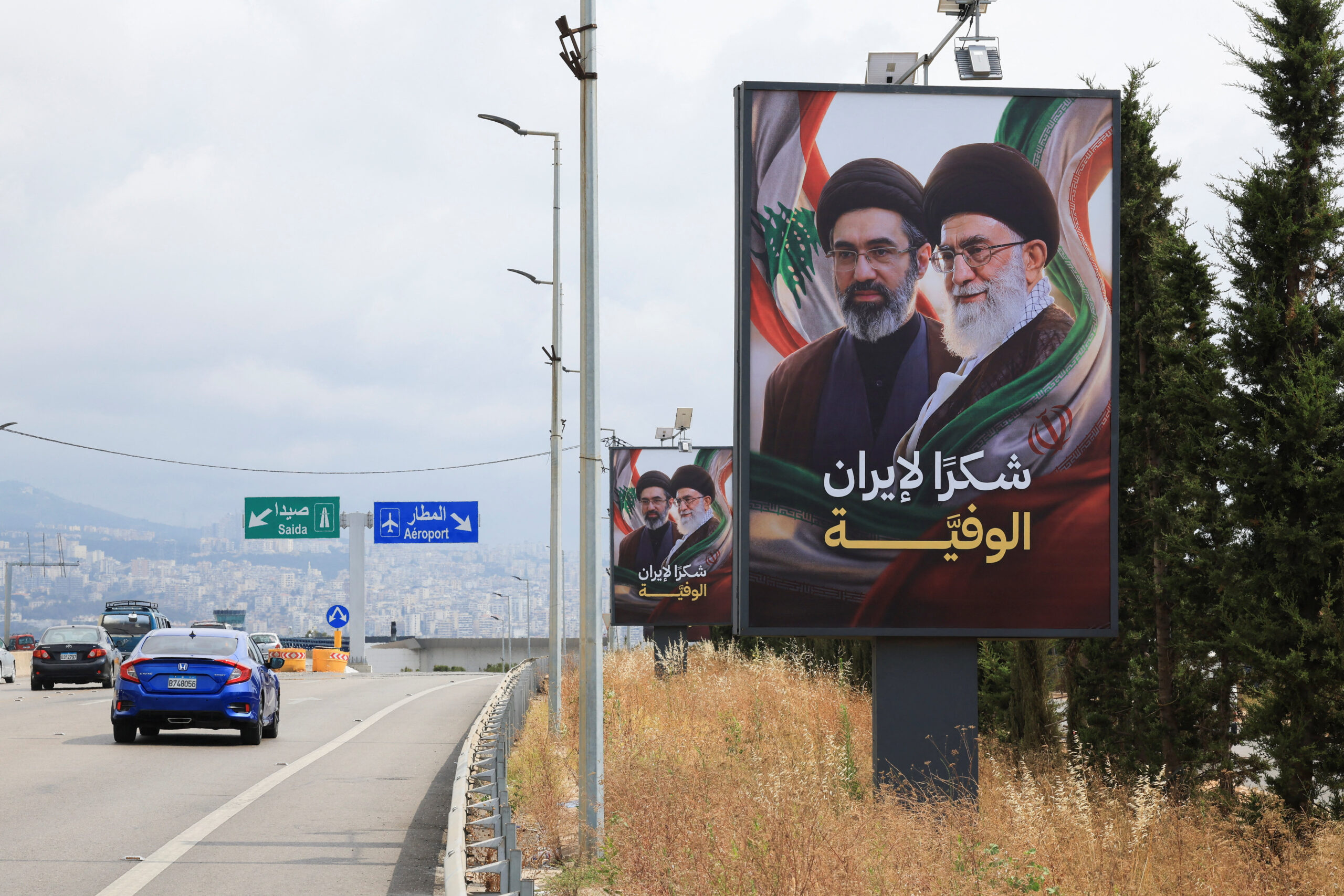
Negotiations at the Lake Lucerne summit in Switzerland over a formal settlement between the United States and Iran hit turbulence over the weekend after Israel launched retaliatory strikes into southern Lebanon, prompting Iran to walk away from the table, which triggered President Trump to threaten to obliterate the country, before officials from Pakistan and Qatar resumed mediation efforts. Iranian President Masoud Pezeshkian separately declared that Iran retains the right to enrich uranium without limiting that claim to domestic energy purposes, drawing a sharp warning from Trump that Pezeshkian had better watch his mouth.
Joel Pollak, opinion editor at the California Post, joined Dan Proft on Chicago’s Morning Answer to make sense of the chaos.
Pollak’s blunt assessment of the weekend’s events: nobody actually knows what is happening. He said the one fixed reality amid all the diplomatic confusion is that the Israeli military is not leaving Lebanon, and there is nothing Trump or the Iranians can do to change that fact, regardless of what gets negotiated in Switzerland. He said it is genuinely strange to hold a summit about a ceasefire between Israel and Hezbollah without Israel at the table, a pattern that has repeated throughout these negotiations, with the United States effectively speaking for Israeli security interests. He said the drawback for Israel in that arrangement is that it theoretically means deferring to whatever Trump decides, but in practice Israel has made clear it understands itself as ultimately responsible for its own security and will act accordingly regardless of what Washington prefers.
Pollak said Trump and Vance initially attempted to use a Lebanon ceasefire as a bargaining chip in the broader Iran negotiations, pressuring Israel to accept arrangements that would have allowed Hezbollah to maintain its position in southern Lebanon, and were told directly by Netanyahu that this was not going to happen. He said the reality slowly dawning on the American negotiating team is that Israel occupies physically elevated terrain in southern Lebanon specifically because Hezbollah has used the high ground to fire rockets and drones into Israeli valley towns, and Israeli forces have spent considerable blood and effort discovering and destroying Hezbollah tunnel networks and weapons caches in that territory. He cited the recent discovery of a 200-meter tunnel containing twenty terrorists, four launch shafts, and dozens of drones, found by an Israeli reserve brigade, meaning ordinary Israeli men called up from their civilian jobs and families to fight. He said expecting Israel to simply abandon that hard-won territory because of a deal negotiated in Switzerland fundamentally misunderstands both Israeli strategic reality and the lived experience of the war for the Israeli reservists who fought it.
He criticized the rhetoric Vance and Trump deployed toward Israel during the more contentious stretch of negotiations as unusually harsh for such a close ally, and said both men appeared to have been pushing Israel toward concessions before recognizing that Israeli officials were correct about the underlying security situation. He said American policy for years has correctly identified Hezbollah as an obstacle to a strong, unified Lebanese state, which makes any deal that tolerates continued Hezbollah entrenchment in southern Lebanon directly contrary to America’s own stated national security interests, not merely an inconvenience to Israeli preferences.
On why the United States has not simply taken control of the Strait of Hormuz outright, given that Trump has repeatedly threatened to do exactly that if Iran fails to cooperate, Pollak said the honest answer is that executing on that threat would require a level of sustained military commitment that the American public does not currently support, particularly heading into a midterm election. He said Trump’s approach, deliberately avoiding a fully articulated plan and maintaining strategic ambiguity, may actually be a defensible strategy given the domestic political constraints, even if it looks confused or indecisive from the outside. He drew a historical parallel to the Barbary Wars, in which the United States fought an initial campaign against North African pirate states that ended in a weak peace, widely regarded as something closer to a loss, before a second Barbary war years later finally resolved the threat decisively. He suggested the current situation may follow a similar arc, with the immediate post-election period determining whether the Trump administration finishes what it started or settles for an unsatisfying interim arrangement.
He identified the most significant constraint on Trump’s options as not foreign but domestic: a Democratic Party that has uniformly opposed the war and is nominating what he called genuinely extreme candidates ahead of the midterms and 2028, putting pressure on Trump to deliver tangible results, including lower gas prices, before voters go to the polls. He said Trump is also managing Gulf Arab states that want Iran defeated but do not want to be seen as too closely aligned with Israel and lack Israel’s missile defense capability, leaving them more exposed to Iranian retaliation and thus more cautious about how openly they support the campaign.
On Vance specifically, Pollak was sharply critical, saying he is appalled by the vice president’s rhetoric and conduct over the preceding week regardless of his evident intelligence and communication skills. He said Vance appears to be unduly influenced by online figures associated with Tucker Carlson and Candace Owens whom Pollak dismissed as keyboard commandos with no real political constituency, and said that even to whatever extent such voices represent some sliver of public sentiment, they should be given no quarter rather than catered to. He said Vance’s posture, hectoring and lecturing Israel publicly rather than acknowledging Israeli sacrifice while making the case for a broader strategic perspective, has driven a wedge between the US and Israel reminiscent of the dynamic that originally produced the Obama-era JCPOA. He said the warmth Vance has extended toward Qatari and Pakistani mediators buys no actual leverage with the IRGC or its proxies, and that charm and cash are not strategies that end this conflict favorably for the United States.