




Vice President Vance announced that Iran has agreed to allow nuclear inspectors back into the country, even as the Wall Street Journal reported that Iran has stepped up hangings of domestic dissidents as the threat of war with the United States eases.
Steven Bucci, who served three decades as an Army Special Forces officer and senior Pentagon official and is now a visiting fellow at the Heritage Foundation’s Allison Center for Foreign Policy Studies, joined Dan Proft on Chicago’s Morning Answer to assess Iran’s remaining military capabilities and the administration’s negotiating strategy.
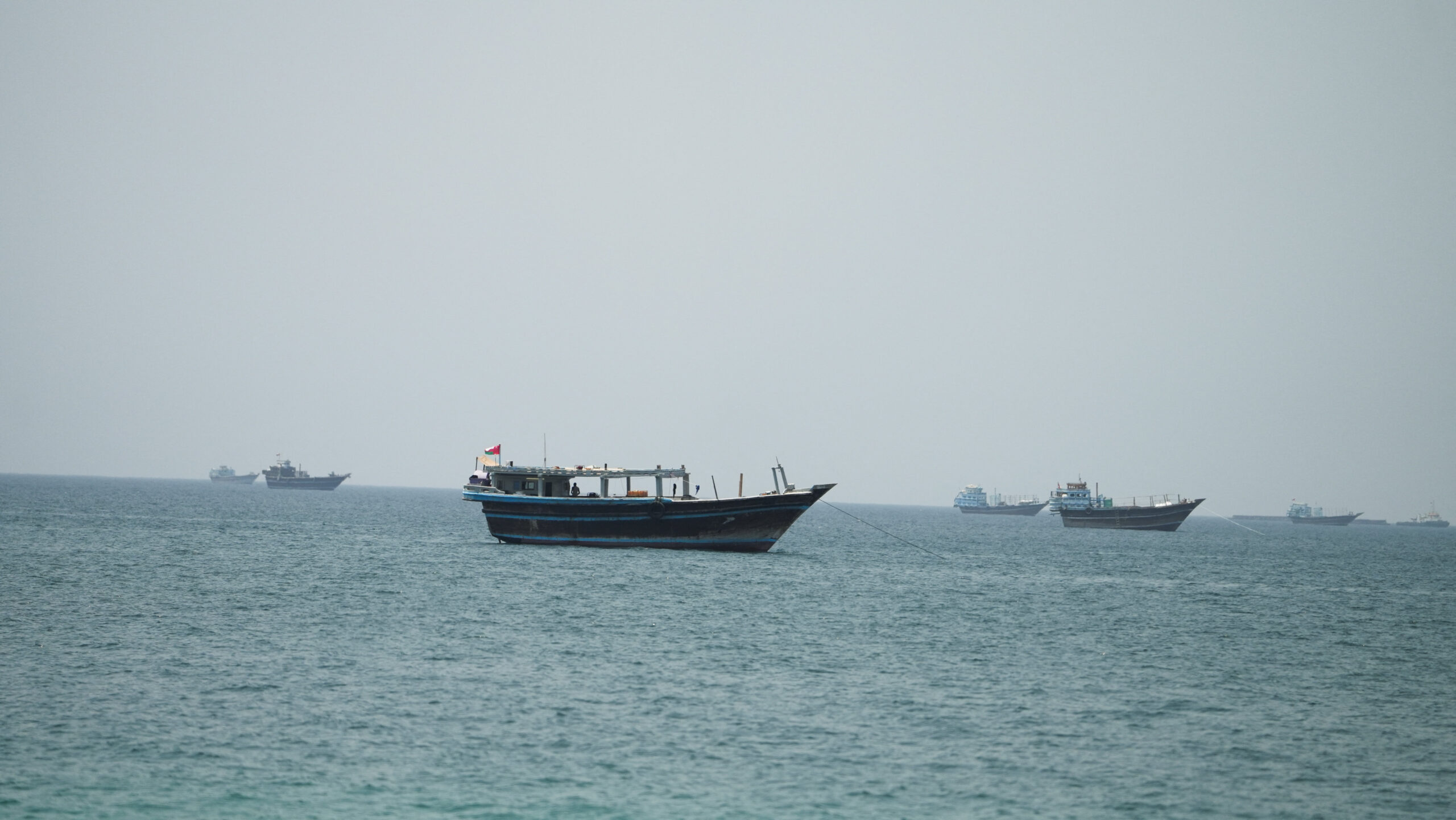
Bucci said Iran’s weapons stockpiles and production capacity have been significantly degraded but not eliminated. He cited Secretary Rubio’s point that Iran is producing more than one hundred missiles a month against an American interceptor production capacity of only six or seven per month, plus thousands of one-way attack drones, all while operating under sanctions. Bucci said Iran’s drone manufacturing capability in particular can be reconstituted quickly since it requires far less sophisticated infrastructure than ballistic missile production. He said the small fast boats causing ongoing problems in the strait are essentially off-the-shelf motorboats that Iran can replace or refit easily, and while American and allied forces have destroyed many of them, more remain available.
He said his preference throughout this conflict would have been a policy treating anything leaving the Iranian shoreline as a target, accepting the unfortunate cost of occasionally sinking fishing vessels as the price of denying Iran any maritime capability whatsoever. He said Iran was warned and chose not to heed those warnings, and that the United States let the maritime threat persist too long without imposing that kind of comprehensive deterrent.
On why the United States never simply took control of the Strait of Hormuz by force despite Iran’s demonstrated inability to actually close it, Bucci said he could not offer an answer and considers it the path he would have recommended. He said forcibly securing the strait likely would not have required extensive ground operations beyond possibly Kharg Island, would not have generated significant additional casualties beyond what already occurred during the higher-intensity phases of the conflict, and could have been framed diplomatically as denying Iranian control rather than asserting American control, an approach he believes regional allies would have supported. He said there is no military, logistical, or intelligence-based reason he is aware of that would explain why this option was not pursued, and that it reflects a choice made by the administration that he would not have advised.
On Trump’s comments to Axios dismissing critics of the settlement and citing stock market gains as validation, with Trump invoking Herbert Hoover and the specter of a worldwide depression as his rationale for avoiding further military escalation, Bucci pushed back gently but firmly. He said his disagreement with the administration’s approach has nothing to do with personal animosity toward Trump and that he has been a supporter throughout, but said the shifting rationales, alternating between claiming patience and claiming urgency, between downplaying oil supply risk and citing depression-level economic stakes, create the impression of a lack of strategic clarity that should be present when dealing with the Iranian regime. He said if intelligence exists that would justify the administration’s caution, releasing more of that information publicly would help build broader support for the chosen course.
On the newly announced IAEA inspection arrangement, Bucci said he will believe it is meaningful when he sees it function in practice. He noted that the original JCPOA also included inspection provisions, and the IAEA itself found Iran in violation of the nuclear non-proliferation treaty last year despite those mechanisms, precisely because Iran was continuing to advance its program in violation of the agreement the entire time. He said any inspection regime that does not grant inspectors access to any site at any time without interference will not be effective, and that kind of access is something this Iranian regime will never genuinely permit.
On Vance’s framing that Iran is interested in turning over a new leaf, Bucci said the timing of escalated dissident hangings inside Iran directly undercuts that narrative, and that Iranian citizens who saw a possible opening for change during the conflict are now watching the same regime that brutally suppressed them receive sanctions relief and international rehabilitation. He drew a direct parallel to the strategic theory applied to China three decades ago, in which extending most-favored-nation trading status and integrating China into the global economic system was supposed to moderate its behavior and reduce its expansionist tendencies. That theory failed with China, and Bucci said he sees no reason to expect a different outcome with Iran, an equally long-range, ideologically driven actor whose commitment runs deeper than economic incentive alone, anchored as it is in religious rather than merely political ideology. He said the conflict presented a genuine opportunity for a tipping-point resolution that appears now to have passed by without being seized.