




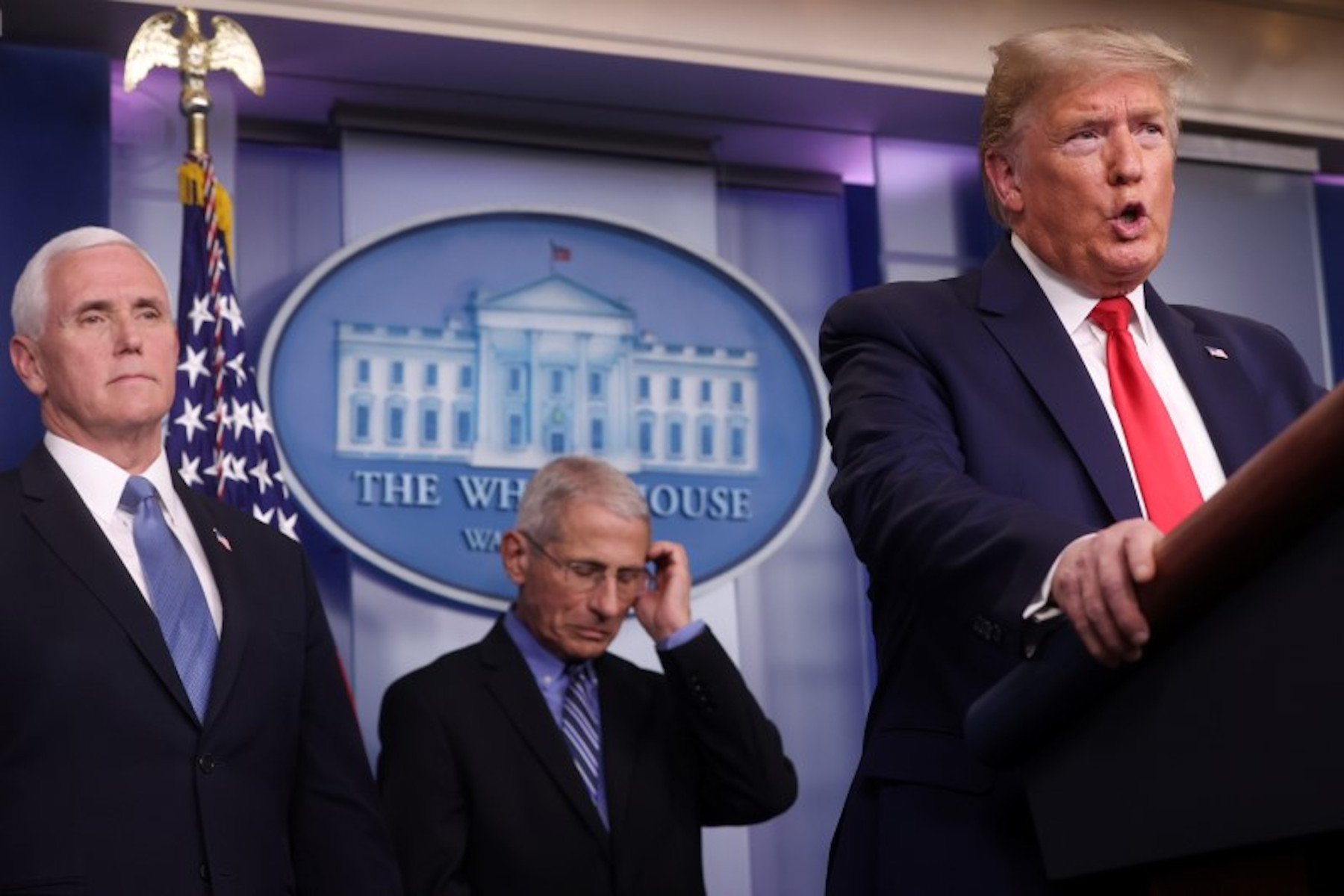
Dr. Anthony Fauci made public statements in 2022 expressing eagerness to testify before Congress, insisting he had nothing to hide, but during last week’s Senate Homeland Security and Governmental Affairs Committee hearing, he invoked his Fifth Amendment right against self-incrimination more than one hundred times in response to questions from Chairman Rand Paul. In Fauci’s opening statement, he accused Paul of an “unhinged obsession” with seeing him prosecuted and cited Paul’s public release of Fauci’s personal diary as evidence of an effort to embarrass and intimidate him ahead of the hearing.
Dan Proft welcomed Justin Hart, author of Gone Viral: How COVID Drove the World Insane and writer of the Substack newsletter Rational Ground, to discuss the broader reckoning surrounding Fauci’s pandemic-era conduct. Hart, who worked alongside Dr. Scott Atlas during his time advising the White House in 2020, argued that Fauci’s diary entries now provide documented evidence that many of his public pronouncements, including on the virus’s origins, mask efficacy, and social distancing measures, diverged sharply from what he privately understood or believed at the time. Hart also criticized the broader press corps for what he characterized as uncritical amplification of Fauci throughout the pandemic, citing CNN’s Dana Bash specifically for previously suggesting Fauci dismiss critics dismissively rather than engage substantively with them.
Hart argued that meaningful institutional change has already occurred within federal health policy, pointing to Dr. Jay Bhattacharya’s appointment as NIH director and Robert F. Kennedy Jr.’s leadership at Health and Human Services as evidence that individuals previously marginalized for questioning pandemic-era orthodoxy now hold significant policymaking authority. Hart specifically credited Bhattacharya with implementing a structural separation between NIH grant funding decisions and policy-making authority, arguing that Fauci’s diary reveals how funding leverage was previously used to influence scientific consensus and shape policy outcomes.
Hart also discussed diary entries reflecting discrepancies between Fauci’s public and private statements on the pandemic’s projected fatality rate, and expressed hope that documenting these inconsistencies will help inform public health decision-making during future health emergencies. He was sharply critical of Dr. Deborah Birx’s recent media appearances distancing herself from pandemic-era lockdown policies she had actively promoted to state governors, arguing she deserves comparable scrutiny to Fauci despite occupying a lower public profile during the pandemic.
Hart also addressed the Trump administration’s decision to formally restrict federal funding for gain-of-function research, arguing the policy reflects lessons learned from documented evidence suggesting the COVID-19 virus likely originated from modified research conducted in Wuhan, China, with prior U.S. funding support. He argued that oversight of biological research involving international transport of pathogens warrants far greater caution going forward, particularly regarding collaboration with research institutions in countries the United States cannot adequately monitor or trust.