




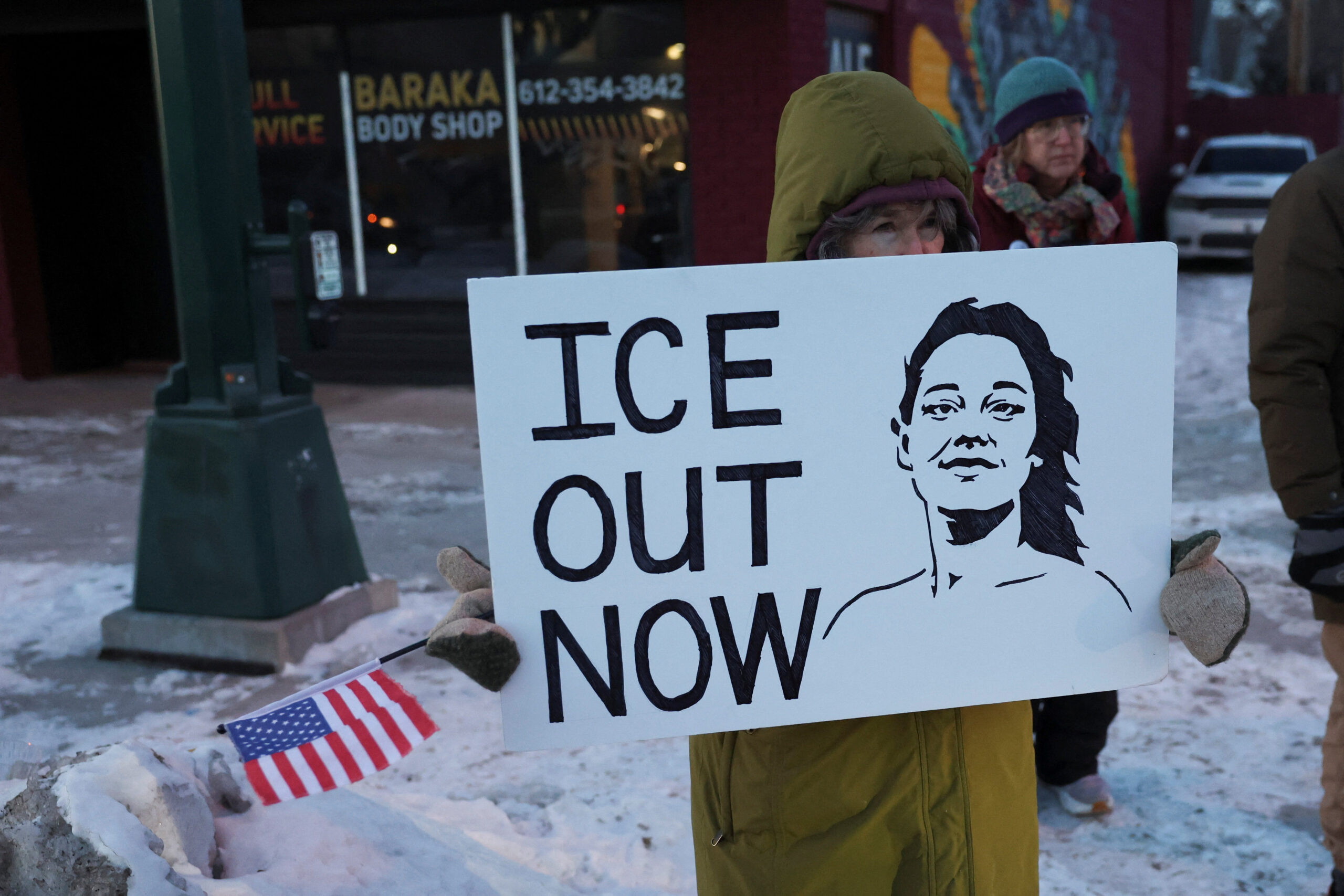
Comedian Bill Maher has made recent on-air criticism of Democratic Socialists of America-aligned candidates, including Wisconsin gubernatorial candidate Francesca Hong, during which Maher suggested his own vote could shift away from the Democratic Party if the DSA’s influence continues growing. Meanwhile, DSA co-chair Ashik Siddique is defending the organization’s platform positions on policing, prisons and ICE. Dan Proft connected the discussion to Illinois Secretary of State Alexi Giannoulias, who recently announced his campaign for Chicago mayor, criticizing his record on immigration enforcement issues and referencing a Department of Transportation finding regarding commercial driver’s license issuance to undocumented immigrants under his office. Proft also cited comments from Lieutenant Governor Juliana Stratton criticizing ICE operations in Chicago during Operation Midway Blitz.
Proft welcomed Rafael Mangual, senior fellow and head of research for the Manhattan Institute’s Policing and Public Safety Initiative and author of Criminal (In)Justice: What the Push for Mass Decarceration and Depolicing Gets Wrong and Who It Hurts Most, to discuss the broader implications of increasingly heated political rhetoric surrounding immigration enforcement. Mangual argued that characterizing lawful ICE arrests as “kidnappings” and lionizing protest activity aimed at disrupting enforcement operations creates conditions that can escalate into real violence, citing a recent attack near ICE facilities in Manhattan involving an attempted arson and an armed individual carrying an airsoft rifle alongside other weapons.
The conversation also touched on New York City Mayor Zohran Mamdani’s release of a public list identifying nearly 950,000 residential properties potentially subject to a proposed pied-à-terre tax, which included names and addresses. Proft cited criticism from NYU marketing professor Scott Galloway, a self-described progressive who nonetheless objected to appearing on the list, arguing the release functioned more as a public shaming mechanism than a legitimate tax administration tool. Mangual agreed, arguing the episode reflects a broader inconsistency on the political left regarding privacy and public safety concerns, contrasting concern for Galloway’s safety with comparatively little concern expressed for federal law enforcement officers facing similarly heightened public targeting.
Much of the interview focused on Mangual’s recent writing responding to arguments frequently made by candidates like Hong suggesting that poverty is a primary driver of crime. Mangual argued this claim does not hold up against available criminological evidence, noting that anti-poverty interventions have shown limited to no measurable effect on rates of violent crime such as homicide, robbery, or sexual assault, since such crimes are generally driven by antisocial psychological traits rather than economic circumstances. He cited what researchers describe as a poverty-crime “mismatch,” pointing to Asian American communities in New York City, which experience comparatively high poverty rates yet significantly lower crime rates than some other demographic groups, as evidence against a straightforward causal relationship between poverty and crime.
Mangual argued that recent reductions in urban crime rates are more directly attributable to renewed policing and enforcement efforts, including expanded arrests, increased federal cooperation, and growth in incarcerated populations, rather than anti-poverty or social service-based interventions. He closed by arguing that political rhetoric framing enforcement itself as inherently unjust, rather than addressing genuine policy disagreements about immigration law specifically, risks further eroding public trust in law enforcement broadly and could contribute to additional real-world violence if left unaddressed.