




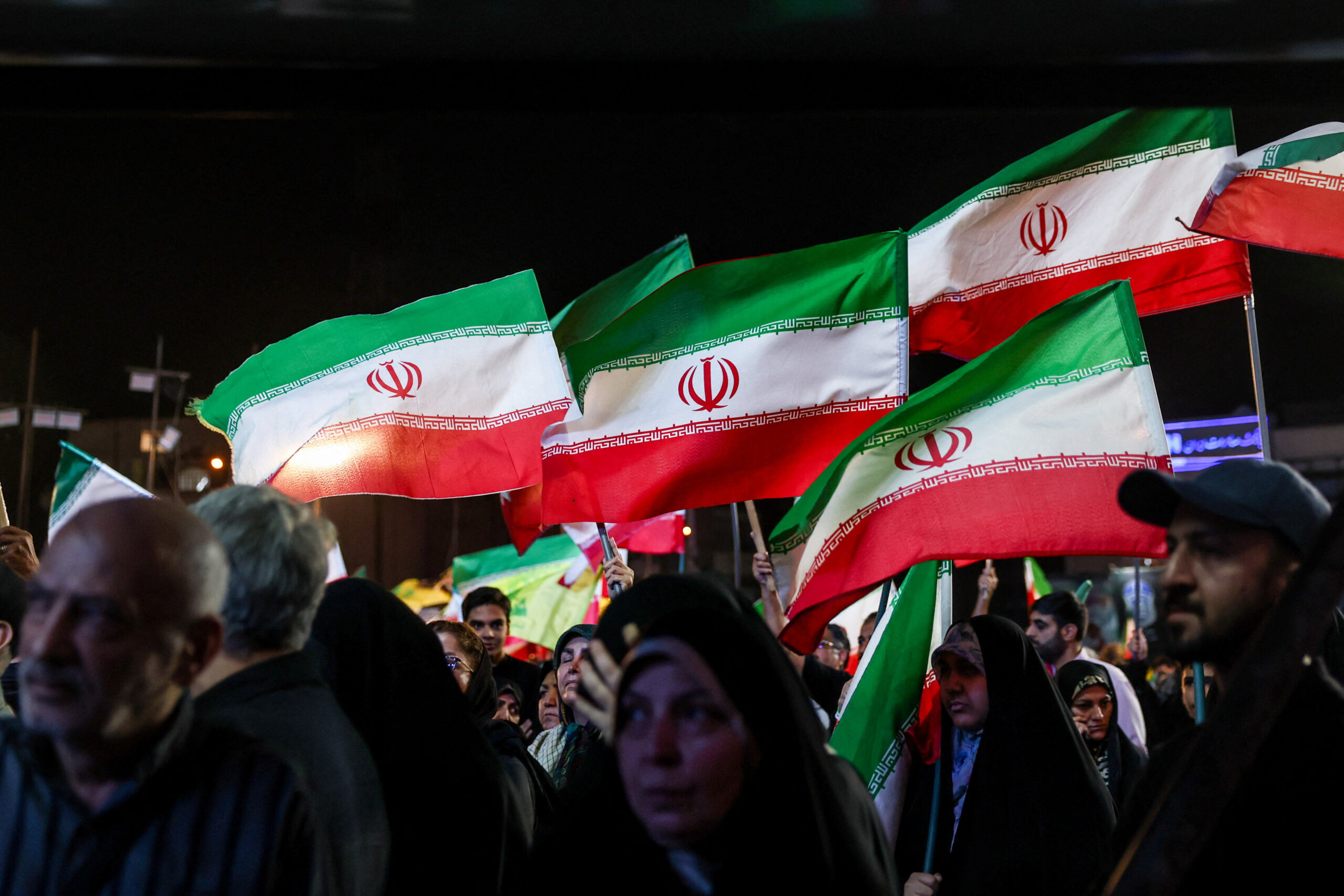
The conflict with Iran has entered a new phase that will be decided less by battlefield gains than by which side can outlast the other politically and economically, according to Andrew Latham, senior Washington fellow at the Institute for Peace and Diplomacy and a professor of international relations and political theory at Macalester College in St. Paul, Minnesota, who joined Dan Proft on Chicago’s Morning Answer.
The conversation opened with Proft pressing Latham on comments from Connecticut Senator Chris Murphy, who said over the weekend that he is prepared to support what he called a bad deal to end the Iran war, arguing that Trump has lost. Proft characterized the remark as despicable rooting against the country’s interests for political gain, and asked Latham whether accepting whatever terms Iran is willing to offer would actually serve America’s national security interests.
Latham said the core American interest at stake is free transit through the Strait of Hormuz and other regional choke points, and that yielding to Iran now would badly undermine that goal. He acknowledged the war has not gone especially well for the United States in the short to medium term, which means the fight has shifted into a longer contest of endurance between an Iranian regime beset by economic and internal political strain and a Trump administration facing its own domestic pressures, complicated further by the approach of the midterms. Neither side’s staying power is fully visible from the outside, he said, and the outcome will hinge on who is left standing.
Proft noted that oil prices have held around eighty dollars a barrel even as the United States reportedly moves roughly eight million barrels a day out of the strait, and asked whether that relative price stability, combined with the administration’s portrayal of Iran’s financial distress, argues for more patience. Latham agreed that the standoff is fundamentally a test of political patience on both sides. He pointed out that Iran’s troubles go beyond economics, noting the mass movement against the regime that preceded the war has been suppressed during the current crackdown. The Trump administration is betting it can outlast Tehran, he said, though that remains far from certain, in part because the Iranian regime does not face the same electoral and media pressures bearing down on Washington. Latham also flagged long-term pipeline projects that could eventually route regional oil to the Mediterranean or Red Sea, bypassing Hormuz entirely and, over time, chipping away at the leverage Iran currently holds over the strait, though he cautioned those projects are years from completion.
Asked about reports of a near deal referenced by Iran’s foreign minister over the weekend, potentially involving a temporary reopening of the Iran-Oman corridor, Latham was skeptical. He recounted a pattern in which mediators including Oman, Pakistan and Turkey have repeatedly brought the two sides close to an agreement only for Iran to shift its terms at the last moment, most recently by demanding war reparations, a demand Trump has answered by insisting Iran owes reparations of its own to the families of those killed by the regime over the past five decades. Latham described the negotiations as largely theater, with both sides trying to look reasonable while introducing last-minute complications that scuttle any deal, and said he sees no genuine partner for a real agreement on the Iranian side, even on something as limited as temporary commercial passage.
He attributed that posture to a shift in the internal balance of power in Tehran, where the Islamic Revolutionary Guard Corps has recently consolidated control over more moderate civilian and political factions. The Ayatollah has not been seen publicly since the first day of the war, Latham said, and it remains unclear whether he is dead or simply unable to carry out his duties, a vacuum that has intensified the competition for control. The IRGC, he said, has just this week folded the regular Iranian military more firmly under its own command structure, further cementing its dominance. That faction, in Latham’s assessment, has little interest in a deal and is willing to sacrifice large numbers of Iranians to hold onto control of the strait, both as a source of toll revenue and as leverage over the rest of the world. From the outside, he said, the regime looks more consolidated now than it did before the war, when street protests raised real questions about its survival, even as he cautioned that such consolidation can look stable right up until it suddenly is not.
Turning to the Gulf states, Proft cited a Wall Street Journal report suggesting they are accepting a new normal of Iranian control over the strait, and asked whether American allies in the region are losing confidence in how the campaign is being run. Latham said the Gulf states are hedging. Saudi Arabia, he noted, appears to be mobilizing forces against the Iranian-backed Houthis in Yemen, who control another chokepoint on the Red Sea, a move that supports the American effort. At the same time, he said, the Saudis have to plan for a scenario in which Iran ultimately prevails and they are still forced to pay tolls to export their oil, which is pushing them toward a more cautious, bet-hedging posture.
The conversation closed on Eastern Europe, with Proft raising intelligence suggesting Vladimir Putin may be weighing an attack on a NATO member even as Turkey moves to supply American-made weaponry to Ukraine and the relationship between Trump and Volodymyr Zelensky has largely been repaired. Latham said the odds of a conventional invasion, tanks crossing borders in the style of the Ukraine war, are close to nil. He argued NATO is already under sustained Russian attack in the gray zone, through cyberattacks, disinformation and the severing of undersea data and oil cables, deniable measures that test alliance defenses, impose real economic costs and sow discord as member states respond in different ways. American intelligence estimates suggest that calculus could shift somewhat by 2029, Latham said, potentially opening the door to limited armed incursions around areas like the Russian exclave of Kaliningrad, but he said that still falls well short of a full-scale invasion, which he does not believe serves Putin’s interests even accounting for the Russian leader’s history of miscalculation.