




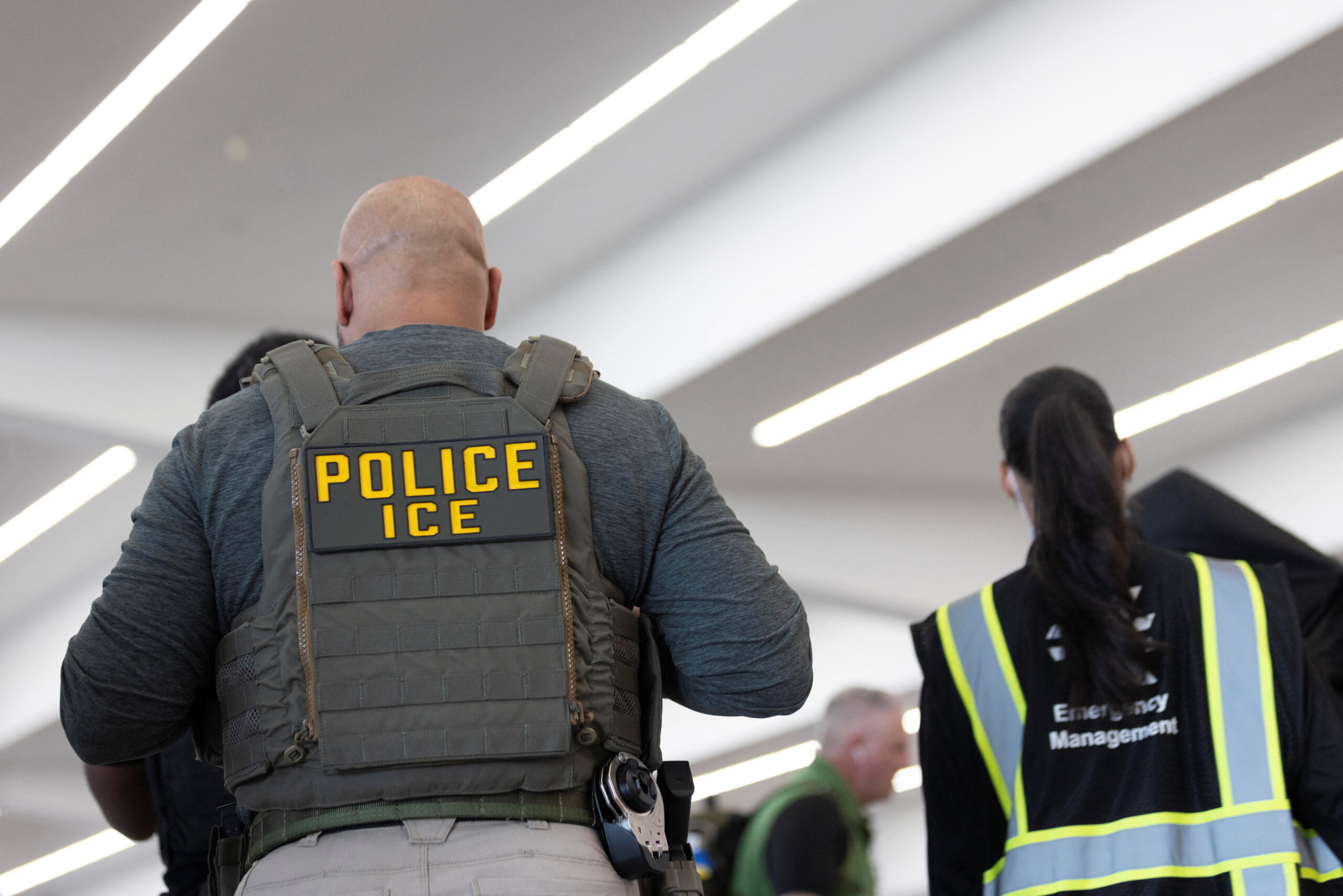
Federal immigration authorities are escalating pressure on sanctuary jurisdictions even as July marked a record month for apprehensions of people in the country illegally, according to the Department of Homeland Security, Dan Proft said on Chicago’s Morning Answer, before turning to Brian Lonergan, director of strategic communications and content at the Federation for American Immigration Reform and co-host of the No Border, No Country podcast, for analysis.
Proft noted that federal authorities have sent Cook County Sheriff Tom Dart subpoenas for inmates wanted on civil immigration violations, accompanied by letters warning of potential criminal charges if his office fails to turn the individuals over, an approach also being used against other sheriffs in jurisdictions such as Hennepin County, Minnesota. Proft framed the move as a way of putting local officials on notice that ICE intends to keep enforcing the law regardless of local resistance, pointing to the case of a Milwaukee County judge as an example of what can happen to officials who cross that line. Lonergan said sanctuary-minded politicians have consistently resisted enforcement efforts and worked to demonize officers carrying out the law, even pushing to have agents’ identities exposed publicly. Asked whether pressuring local compliance through subpoenas is worthwhile even if it ultimately proves difficult to enforce, Lonergan said the arrangement inverts how the system is supposed to work, since federal agents operating under the Constitution’s supremacy clause should not need to be brought to heel by state and local governments in the first place. He argued sanctuary jurisdictions protect people in the country illegally in part because they represent a future voting bloc, treating the interests of that population as more important than those of citizens in the same communities.
The conversation turned to a separate DHS proposal affecting H-1B visa holders, which would eliminate the current 60-day grace period foreign workers have to find new employment after a job loss, reducing it to zero. Lonergan said the debate over H-1B visas, which bring in roughly 120,000 new workers a year, mostly through large corporations, has clarified in recent months. He argued that the original justification for the program, that there simply were not enough qualified American workers, does not hold up given the number of graduates American colleges produce annually in relevant fields, and said companies relying on the program have simply grown reliant on cheaper foreign labor. Proft added that the broader debate, including disagreements among conservatives such as Vivek Ramaswamy and Elon Musk who have defended the program, has revealed a lack of real oversight, with the government largely relying on companies to police their own compliance with the program’s intent. Lonergan agreed that self-policing by the visa program’s corporate beneficiaries has allowed gaming of the system and said tighter enforcement is needed.
Proft connected that argument to the debate over voter identification requirements, framing both as examples of an outdated honor system the country can no longer afford to rely on. Lonergan criticized opponents of voter ID laws, including the SAVE Act, for casting such requirements as a threat to the voting rights of minorities and women, arguing the policy enjoys support well above eighty percent, including among the very groups critics claim would be harmed, and that opponents have relied on accusations of discrimination rather than substantive arguments against it. He contrasted that dynamic with a Democratic Party willing to pursue policies with only narrow public support, arguing Republicans have struggled to push through popular measures even when they hold legislative majorities.
Asked about the administration’s rescission of Temporary Protected Status for certain populations, including Haitians, a move that has drawn criticism from figures including Ohio Governor Mike DeWine over its potential impact on that state’s healthcare industry, Lonergan characterized TPS as a program that has been stretched by opponents of immigration enforcement into a de facto amnesty, pointing to individuals who arrived in the United States after natural disasters, such as an earthquake, more than a decade ago and have continued relying on that original justification for their presence since.