




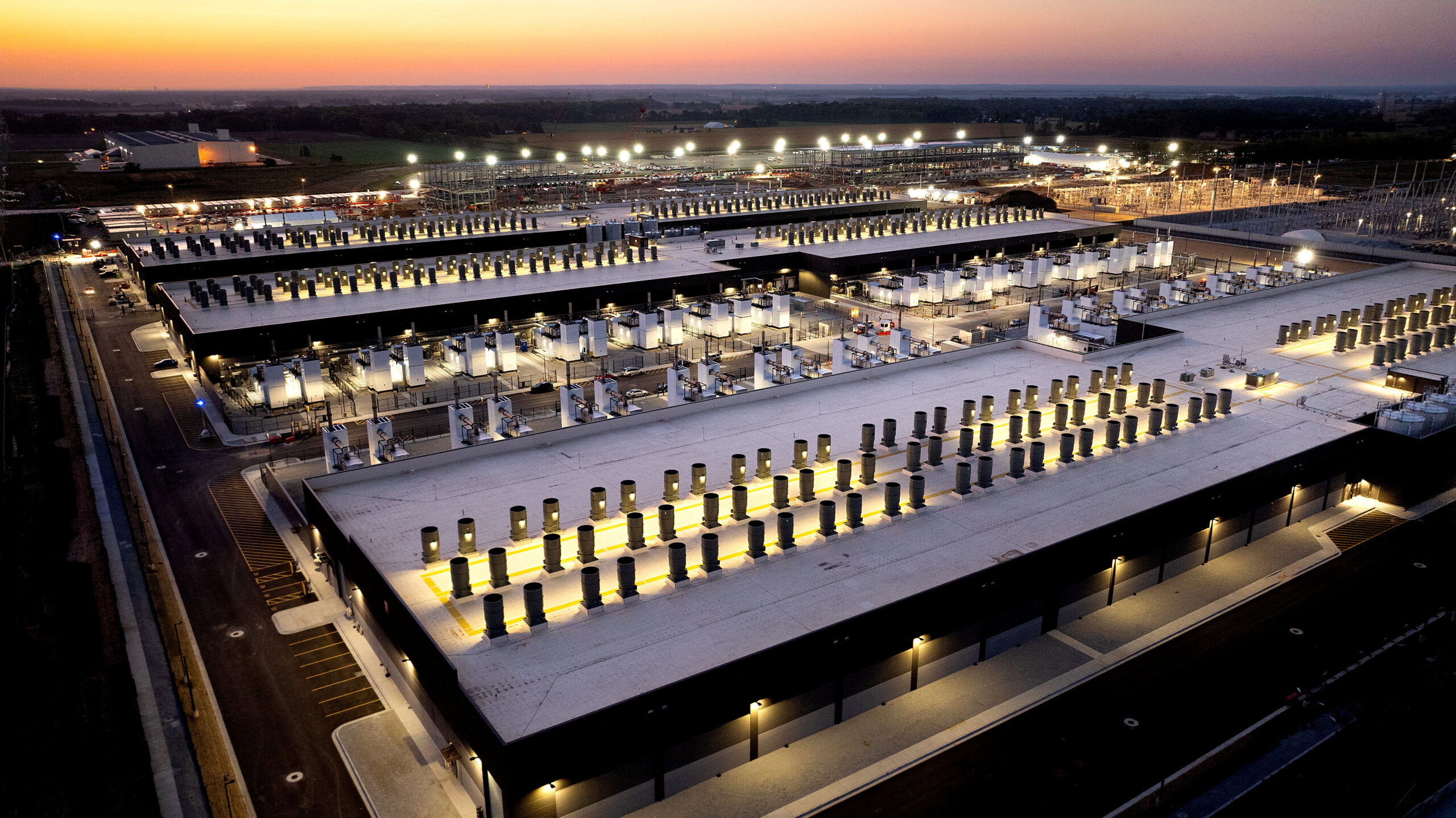
Mike Koolidge, filling in for Dan Proft on Chicago’s Morning Answer, spoke with Judge Glock, director of research at the Manhattan Institute and author of The Dead Pledge: The Origins of the Mortgage Market and Federal Bailouts, about the ongoing debate over data center construction across the country, including in rural parts of Illinois.
Glock said he remains broadly supportive of data center development, arguing the facilities function as a local economic development tool similar to factories or power plants, generating substantial tax revenue while requiring minimal city services and producing little pollution or traffic. He said some communities have seen roughly half of their local tax base shift to data centers, allowing officials to cut property taxes and invest in schools, roads and public safety without the negative byproducts associated with heavier industry.
Koolidge pushed back on several fronts, including concerns from his own rural northern Illinois community about farmland loss. Glock said data centers are a minor contributor to that trend compared with residential and suburban sprawl, noting most data centers occupy only a few dozen acres because computing equipment is packed tightly together, making them far smaller land users than something like an auto plant. On the visual impact of the buildings, Glock compared them to large, unremarkable concrete structures already common across the American landscape, such as warehouses and fulfillment centers, and suggested communities concerned about their footprint push development farther from residential areas rather than opposing it outright, since digging facilities underground would add significant cost.
Koolidge raised frustration among some rural residents who feel they have been repeatedly asked to accept large infrastructure projects, drawing a comparison to earlier disputes over wind turbines. Glock said concerns about the energy and water demands of data centers are often overstated, and argued that renewable energy installations like wind and solar actually require far more land per unit of energy produced than traditional oil and gas extraction. He said many rural counties, citing examples in Louisiana and Loudoun County, Virginia, have weighed the trade-offs and found the jobs, tax revenue and infrastructure improvements worth the drawbacks, though he acknowledged some communities may reasonably decide the trade-off isn’t right for them.
On the broader economic picture, Glock said data centers now account for roughly one and a half percent of the U.S. economy and have driven a significant share of recent economic growth, along with a substantial number of blue-collar construction jobs. He described data centers broadly as networks of computer chips working together to process information, including the artificial intelligence systems behind tools people use daily to answer questions and connect online.