




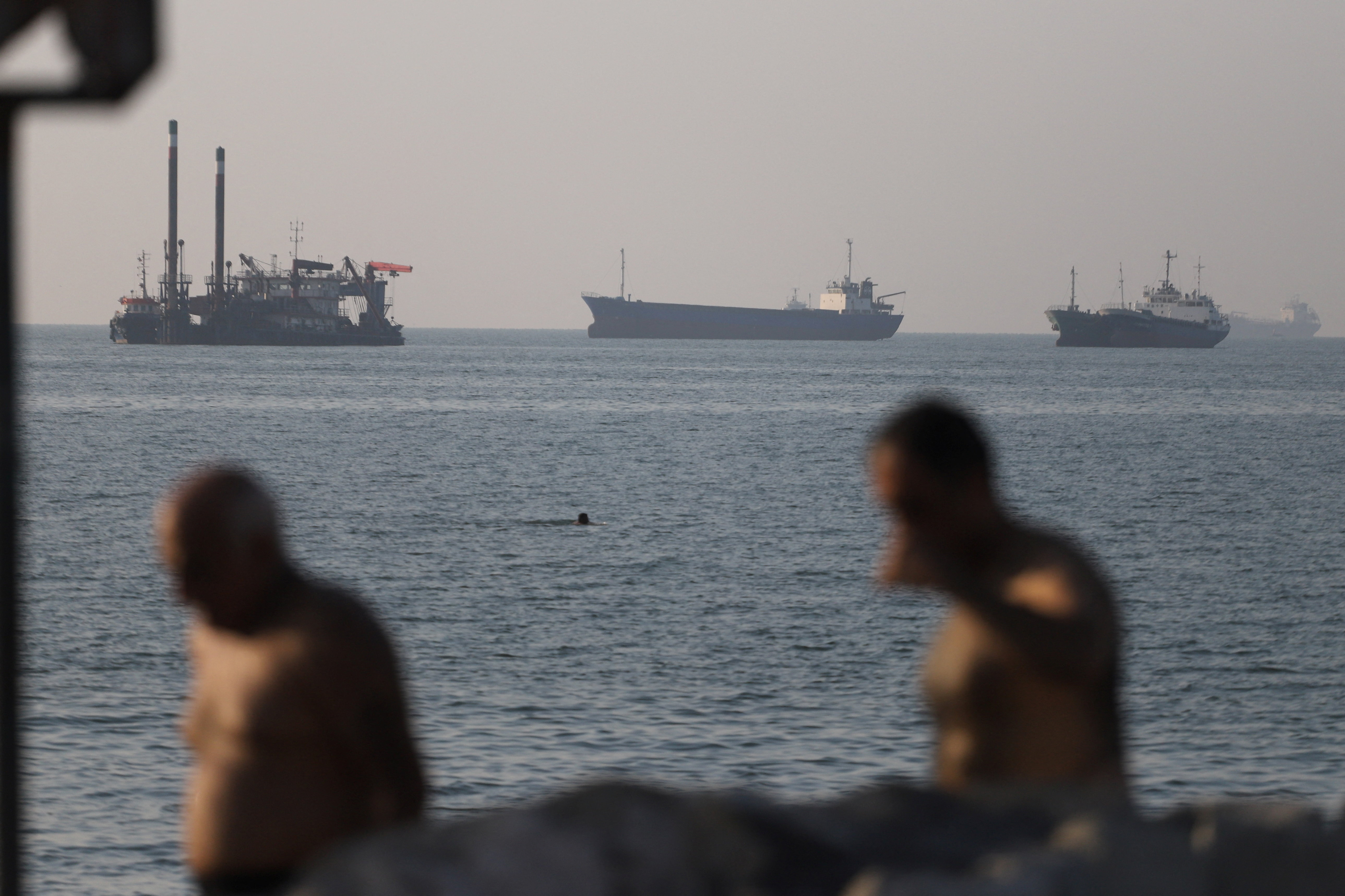
Operation Economic Outcast, the sanctions campaign the Trump administration has aimed at Iran is having an impact. Iranian President Masoud Pezeshkian has publicly acknowledged the war must end at some point and that the parliament speaker has warned that military strength means little if the country cannot feed itself or sustain economic growth. There are reports of gas shortages inside Iran, along with word that the U.S. Navy has cleared all mines from the Strait of Hormuz and that President Trump has warned any new mine-laying will be met with immediate retaliation, with oil tanker traffic through the strait reportedly nearing pre-war levels.
Dan Proft turned to Daniel DePetris, a fellow at Defense Priorities and a syndicated foreign affairs columnist for the Chicago Tribune and Newsweek, to assess whether those signals should be taken at face value. DePetris said there is a real divide within the Iranian political system between relative pragmatists, including Pezeshkian and parliamentary speaker Mohammad Bagher Ghalibaf, who are focused on the toll the war has taken on ordinary Iranians, and the Islamic Revolutionary Guard Corps, which he said has effectively captured the state and controls the actual decisions on escalation and negotiation. He said the public daylight between Iranian officials will likely be read in Washington as confirmation that the pressure campaign is working, even if the country’s ultimate decision-making still runs through the IRGC.
DePetris pointed to Treasury Secretary Scott Bessent’s rollout of an expanded round of sanctions targeting Iran’s oil industry, its banking sector and any country doing business with Tehran, along with the Gulf states that have signed on to Operation Economic Outcast, as evidence the administration is leaning into economic rather than military pressure for now. Asked whether the U.S. can meaningfully punish countries quietly helping Iran evade sanctions, DePetris singled out China, which he said bought roughly ninety percent of Iran’s crude oil before the war despite existing U.S. penalties. He said Washington has the tools to target Chinese financial institutions but has used them sparingly, largely because Trump is balancing that leverage against a planned summit with Xi Jinping next month and his desire to preserve the trade truce the two leaders struck last November, framing the decision as one of competing priorities rather than capability.
The conversation shifted to Cuba, where DePetris has argued that Trump should avoid repeating the mistakes of the Iran standoff. He said Cuba poses no real military threat and is barely able to keep its own power grid running, with blackouts hitting the country multiple times a week, so the administration has instead leaned on the same economic pressure and open-dialogue approach used by past presidents, hoping to nudge Havana toward economic if not political liberalization. DePetris was skeptical that sanctioning GAESA, the military-run conglomerate that he said controls roughly half of Cuba’s economy, will be enough on its own to force serious concessions, noting that the entity is already blacklisted under an executive order Trump signed early in his second term. He said the real obstacle remains Cuban leadership’s decades-long resistance to negotiating on U.S. terms.
Asked whether Cuba is in its weakest position since the revolution, DePetris agreed, pointing to the loss of subsidized Venezuelan oil shipments that once ran around 100,000 barrels a day under Hugo Chavez and Nicolas Maduro, arrangements that dried up as Venezuela’s Delcy Rodriguez government has aligned more closely with Washington. He noted Mexico has also stopped sending oil to Cuba and that Russia has sent only a single tanker in the past seven months, leaving Havana with little choice but to wait out American pressure or eventually give ground.
On North Korea, DePetris said he has no clear read on whether Trump’s renewed interest in meeting with Kim Jong Un reflects a serious diplomatic push or is simply another symbolic gesture, but said he has no objection to the two sitting down again given that decades of conventional U.S. policy toward Pyongyang have failed to produce results.