




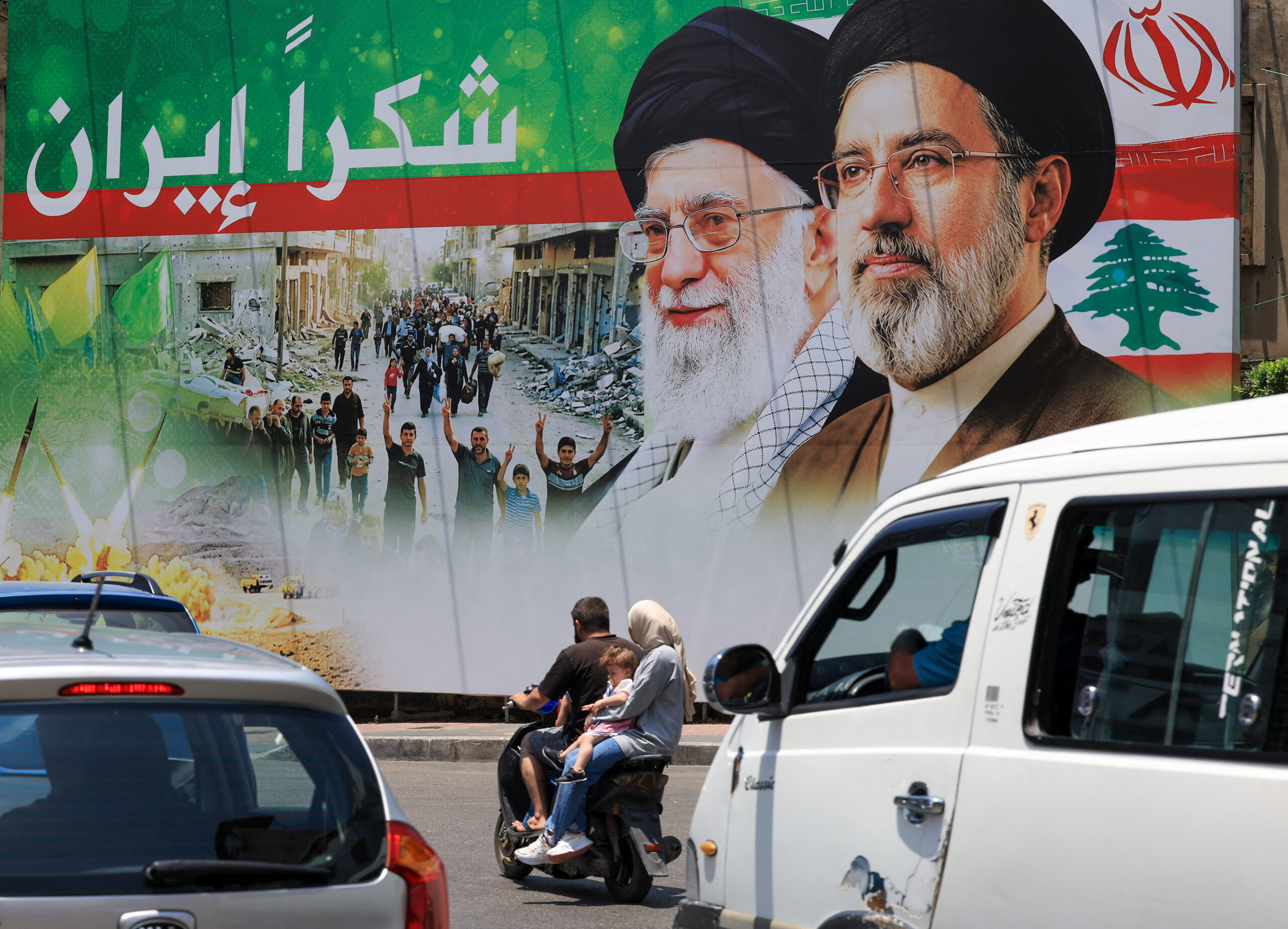
Vice President Vance announced Tuesday that a settlement has been reached with Iran, to be formally signed in Switzerland on Friday while President Trump attends the G7 in France. Vance described three core elements: immediate opening of the Strait of Hormuz and lifting of the naval blockade, a commitment that Iran will never pursue, procure, or buy a nuclear weapon, and a verify-and-reward framework under which Iran receives economic benefits contingent on performance. Defense Secretary Hegseth told Face the Nation that a sixty-day clock has been set for Iran’s enriched uranium to be downgraded, destroyed, or removed, and that the administration has compel options available if Iran does not comply.
Doug Bandow, senior fellow at the Cato Institute, former special assistant to President Reagan, and author of Foreign Follys: America’s New Global Empire, joined Dan Proft on Chicago’s Morning Answer to offer a more measured assessment of what has actually been achieved.
Bandow said his most direct observation is that the memorandum of understanding, which is not a treaty and not yet even a formal agreement, primarily addresses a problem that did not exist before the war started. The Strait of Hormuz was open before the campaign began. Getting it open again with a commitment of no tolls is good news, but it returns the situation to the pre-war baseline rather than advancing beyond it. He said if you can negotiate a solution, it is reasonable to ask whether the solution could have been negotiated before thousands of missiles were fired and billions of dollars in damage was inflicted on both sides.
He was more pointed on the enriched uranium question. He said the uranium exists in the quantities it does precisely because Trump walked away from the JCPOA in his first term without putting any replacement restraints in place. Iran responded to the sanctions reimposition by resuming enrichment. He also pushed back on the administration’s varying characterizations of how close Iran was to a nuclear weapon, noting that Trump said he obliterated the program earlier in the campaign, then said they were almost there, then suggested during the difficult middle weeks that obtaining the uranium dust was not necessarily essential. He said the Iranians are not inches away from a deployable weapon, as there are multiple additional steps between enriched uranium and a functional bomb, and that the exact status of their program remains genuinely unclear given the conflicting official statements.
His more consequential concern is what the campaign revealed about Iranian deterrent capability that neither side fully appreciated going in. He said Iran demonstrated a real capacity to damage American military infrastructure, wrecking billion-dollar radar systems on American bases, threatening desalination plants across the Gulf that could bring Gulf societies to their knees if destroyed, and closing the strait in ways that made the entire global energy marketplace desperate for resolution. He said the Iranians discovered they have considerably more deterrence than they may have realized, and that this discovery will complicate the remaining negotiations rather than making them easier.
On the leadership question, Bandow said calling the new Iranian power structure moderates is wrong but pragmatists is defensible. There are factions within the Iranian system willing to make deals because they recognize that economic growth matters and that ongoing bombardment serves no one’s long-term interest. The problem is that those pragmatists are contending with a younger, more nationalistic, more ideologically radical cohort concentrated in the Revolutionary Guard that has grown in influence since the deaths of the senior leadership. He said the old Supreme Leader, whatever his other crimes, did not pursue an actual nuclear weapons program, apparently against the wishes of some more radical elements. The leadership now is younger and the evidence suggests those more radical elements have gained ground.
On the sixty-day clock for the enriched uranium, Bandow said he is hopeful but not confident. The memo does not contain terms on that specific question, and the administration will still need to negotiate what downgrading, destroying, or removing actually means in practice, with whom they are negotiating on the Iranian side, and what Iran receives in exchange. He said there is no guarantee that two months from now there is an agreement on the nuclear issue that the administration will accept.
On the proxy problem, he said Iran views Hezbollah, the Houthis, and its other proxy forces as integral to its national security architecture, not as expendable tools. As long as Hezbollah fires on Israel, Israel will respond, and Iran could use Israeli retaliation as a pretext to declare the ceasefire violated and the deal voided. He said Israel has its own understandable reasons for not simply absorbing rocket attacks, and the question of whether some face-saving arrangement can be constructed that allows Iran to make a token response while returning to the diplomatic track is a great uncertainty that could go very badly over the coming months. He said the broad outlines of the settlement announced Tuesday are genuinely good news on the strait and potentially significant on the nuclear commitment, but the distance between a memorandum of understanding and a durable resolution of the underlying conflicts remains very large.