




Colorado congressional candidate Melissa Cruz, a Democratic Socialists of America member who unseated a longtime incumbent in a recent primary, discussed her views on immigration and representation for communities with ties to the Global South. Dan Proft characterized her remarks, which touched on the need for greater immigrant representation in elected office to address what she described as America’s exploitative role on the world stage, as echoing themes he associated with birthright citizenship debates recently before the Supreme Court.
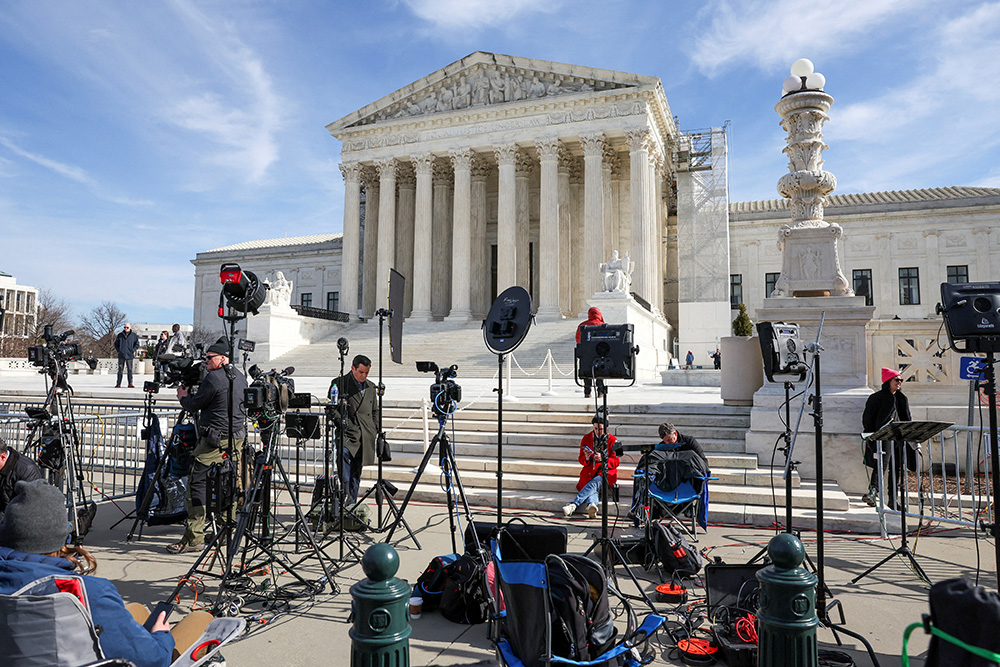
Proft welcomed Rachel Bovard, vice president of programs at the Conservative Partnership Institute, to discuss a recent piece she wrote for The Federalist arguing that conservatives need to fundamentally rethink how they vet judicial nominees. Bovard said that for years, the theoretical threat of a Senate filibuster pushed Republicans to nominate judges capable of attracting some bipartisan support, and that the rise of the Federalist Society helped shift legal thinking away from freewheeling judicial philosophy toward textualism and originalism. However, she argued that with the judicial filibuster eliminated and judges now confirmed by simple majority, adherence to textualism alone has become an insufficient screening standard, particularly as the Supreme Court increasingly confronts fundamental questions of sovereignty, citizenship, and self-governance.
Bovard pointed to Justice Amy Coney Barrett as an example of the limits of current vetting practices, noting that while Barrett has ruled favorably on cases involving qualified immunity, Chevron deference, and presidential immunity, her position in the recent birthright citizenship case left many conservatives surprised. Bovard argued that nominees should be evaluated not only on legal credentials and temperament, but on demonstrated instances of professional courage, such as taking unpopular positions that could not be easily attributed to simply representing a client’s interests. She said this shift would represent a significant departure from the traditional approach of favoring nominees with minimal public paper trails to avoid controversy during confirmation.
Bovard suggested that sitting U.S. senators with extensive judicial clerkship backgrounds, citing Ted Cruz, Josh Hawley, and Mike Lee as examples, might represent a more predictable category of potential nominees given their extensive public voting records and documented positions on constitutional questions. She argued the same standard for vetting should extend beyond the Supreme Court to district and appellate court nominations, given that lower court judges often serve as a pipeline for future Supreme Court appointments.
Bovard also addressed recent Supreme Court security hearings, expressing support for increased funding to protect justices following past threats, including an attempted attack targeting Justice Brett Kavanaugh, while criticizing what she described as inconsistent Democratic support for such funding in the past. She was critical of Justice Elena Kagan’s recent public comments, which she characterized as reflecting standard progressive talking points rather than substantive legal reasoning.
Closing the interview, Bovard elaborated on her view of originalism as it pertains to the Fourteenth Amendment and birthright citizenship, arguing that framers of the amendment could not reasonably have intended for children born to individuals in the country illegally, including those involved in criminal enterprises, to automatically receive full citizenship rights. She also referenced reports of American hospitals marketing so-called birth tourism packages to foreign nationals as evidence of exploitation she believes falls outside any reasonable historical understanding of the amendment’s purpose, arguing that originalist judges reaching such conclusions have effectively misapplied the interpretive framework they claim to follow.