




President Trump told the New York Post’s Miranda Devine this week that he would like to meet the Supreme Leader of Iran, that mine sweepers are already operating underwater in the Strait of Hormuz and have cleared most of the mines, and that immediately upon signing a memorandum of understanding the strait will open. He also offered his updated working definition of ceasefire as it applies to that part of the world: shooting in a more moderate manner.
Rich Goldberg, former National Security Council official and Senate aide, currently a senior adviser at the Foundation for Defense of Democracies, joined Dan Proft on Chicago’s Morning Answer to assess the state of play and offer a below-the-fold development that explains some of the recent escalations in the Gulf.
Goldberg said Trump is continuing to manage two things simultaneously: talking to the market to try to keep oil prices stable while pursuing what he called strategic patience backed by the economic blockade. He said he does not love the term strategic patience because Obama used it for North Korea and it simply meant doing nothing, but in this case the patience is accompanied by action, specifically the blockade that is strangling the Iranian economy, and by something else that has not been publicly emphasized.
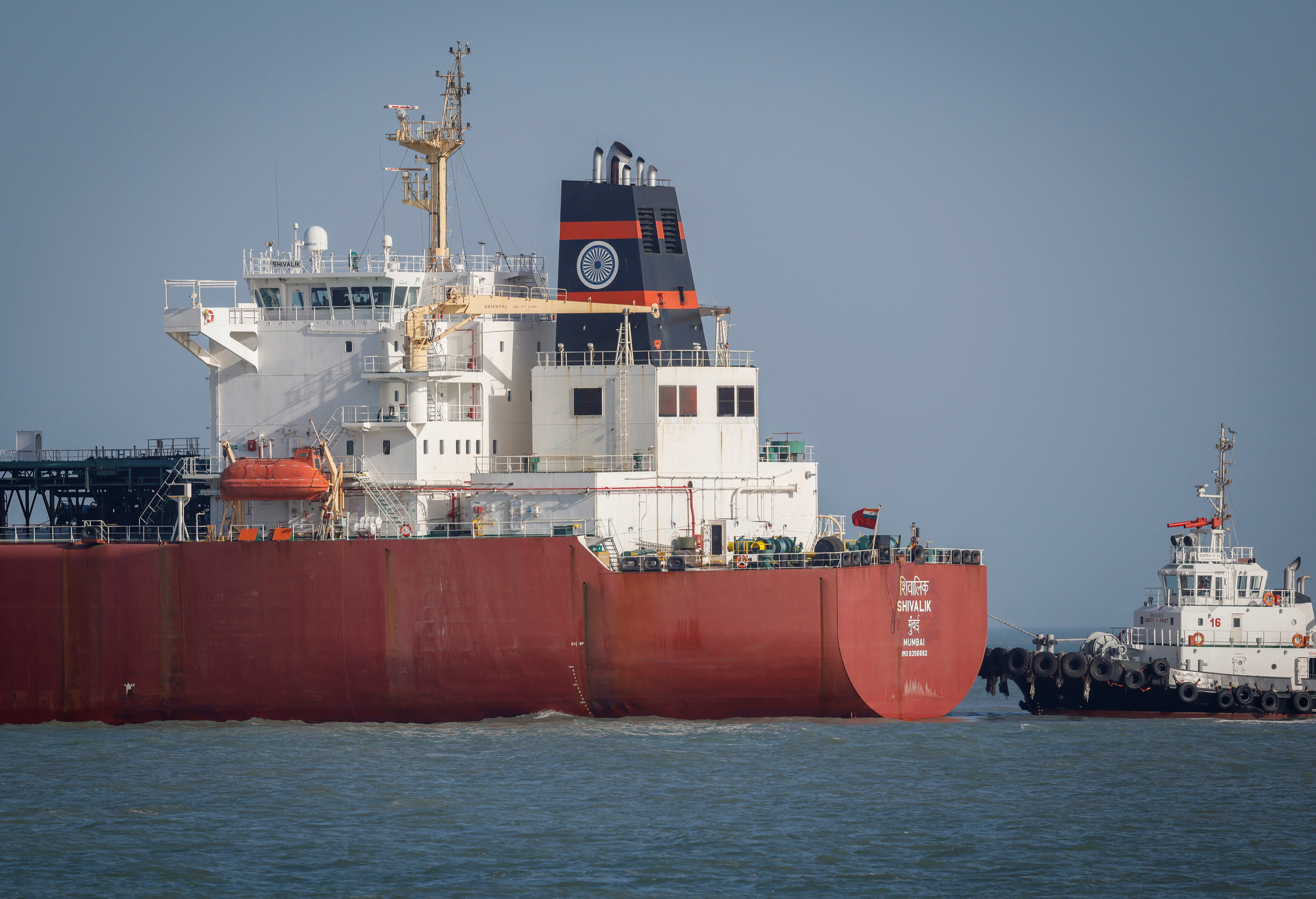
He said he identified a shadow version of Project Freedom operating quietly below the radar, with ships being guided through the strait with their transponders off, a trickle of cargo moving out without a public announcement that would put Saudi Arabia and the UAE in the politically difficult position of appearing to help break Iran’s blockade. He said the reason he noticed it was that he was watching Iranian behavior and wondering why they were suddenly firing missiles at the US Navy, what they were acting out against, and concluded they were seeing something they did not like. The US has been striking their coastal defense and island defense positions around the strait in response, targets that CENTCOM Commander Admiral Brad Cooper had already wanted to degrade as part of a strait-opening mission. If that degradation continues and the ships-with-transponders-off approach can scale, even a few very large crude carriers per day can move substantial volumes, with a single VLCC carrying 1.5 to 2 million barrels. Combined with Chinese demand destruction of approximately six million barrels per day, Saudi and UAE pipeline capacity, and record American production, the actual supply gap is considerably smaller than the alarming presentations from oil company executives would suggest.
On those presentations, in which Chevron and Exxon executives warned last week of approaching inventory levels that could drive dated Brent crude to one hundred and fifty to one hundred and sixty dollars per barrel, Goldberg was skeptical. He said if those companies genuinely believed a sustained price spike to those levels was imminent, they would be opening new drill lines and racing to increase production rather than expressing concern at conferences. They are not doing that. The futures market, which is the real-time indicator of whether supply shock is imminent, is not pricing as if the world is on the verge of running out of oil. And if the president had intelligence from his Department of Energy and Energy Information Administration showing a true cliff was approaching in June, he would be acting with far more urgency either militarily or diplomatically. The relative patience of the administration’s posture is itself evidence that the actual supply situation is more manageable than the headlines suggest.
On the Trump-Netanyahu tension, including Trump’s reported frustration that Netanyahu launched strikes on Hezbollah in Lebanon and Trump’s apparent satisfaction when Netanyahu complied with his request to pull back, Goldberg said he is strategically sour on the Lebanon ceasefire arrangement. He said the terms essentially reflect Hezbollah’s conditions: Israeli withdrawal, reliance on the Lebanese Armed Forces to somehow constrain Hezbollah when they have never done so in their history, and an end to hostilities without any offer of normalization from Lebanon toward Israel. Hezbollah remains in southern Lebanon and will rebuild with Iranian support, meaning the threat of an October 7th-style attack from the north remains a live possibility. He said on a tactical level the president’s logic is coherent: keep the focus entirely on Iran, deny the Iranians any pretext to blame Israel or Lebanese conflict for their economic collapse, and keep the IRGC in a box where they either give Trump what he wants or they continue to face a population that increasingly understands the regime is the source of their suffering. But the strategic cost of that approach is a Lebanon arrangement that leaves Hezbollah intact and capable of reconstituting.
On the war powers resolution passed by the House that would theoretically limit Trump’s flexibility on Iran, Goldberg noted it is almost certainly dead in the Senate and subject to veto regardless, but said it represents a meaningful political signal about the patience of competitive-district Republicans who are watching gas prices and want the situation resolved.