




Chicago’s Morning Answer hosts Amy Jacobson and Jim Iuorio, filling in for Dan Proft, welcomed Scott McKay, publisher of The Hayride and senior editor at The American Spectator, ahead of a planned presidential address expected to focus on the ongoing conflict with Iran following renewed American airstrikes on Iranian military targets and reports of a White House situation room meeting weighing further escalation. McKay said he doubted the speech would meaningfully change the trajectory of the conflict, arguing that Americans tend to measure victory against the unconditional surrenders of World War Two, a standard he said rarely applies to modern conflicts that typically end through negotiated settlements rather than total capitulation.
McKay argued that negotiating with Iran’s government is fundamentally difficult given what he described as the regime’s theological worldview, and said the current standoff echoes previous moments where deadlines and red lines have repeatedly shifted without resolution. Asked whether there is credible evidence Iran was approaching nuclear weapons capability, McKay said Iranian officials themselves claimed during negotiations to possess enough nuclear material for multiple weapons, effectively forcing the administration’s hand. He noted that earlier efforts to destabilize the regime from within, including reported plans involving Israeli-backed opposition figures and attempts to arm Kurdish forces, failed to produce the intended results, and argued that lasting regime change in Iran can likely only come from an internal uprising rather than direct American military intervention.
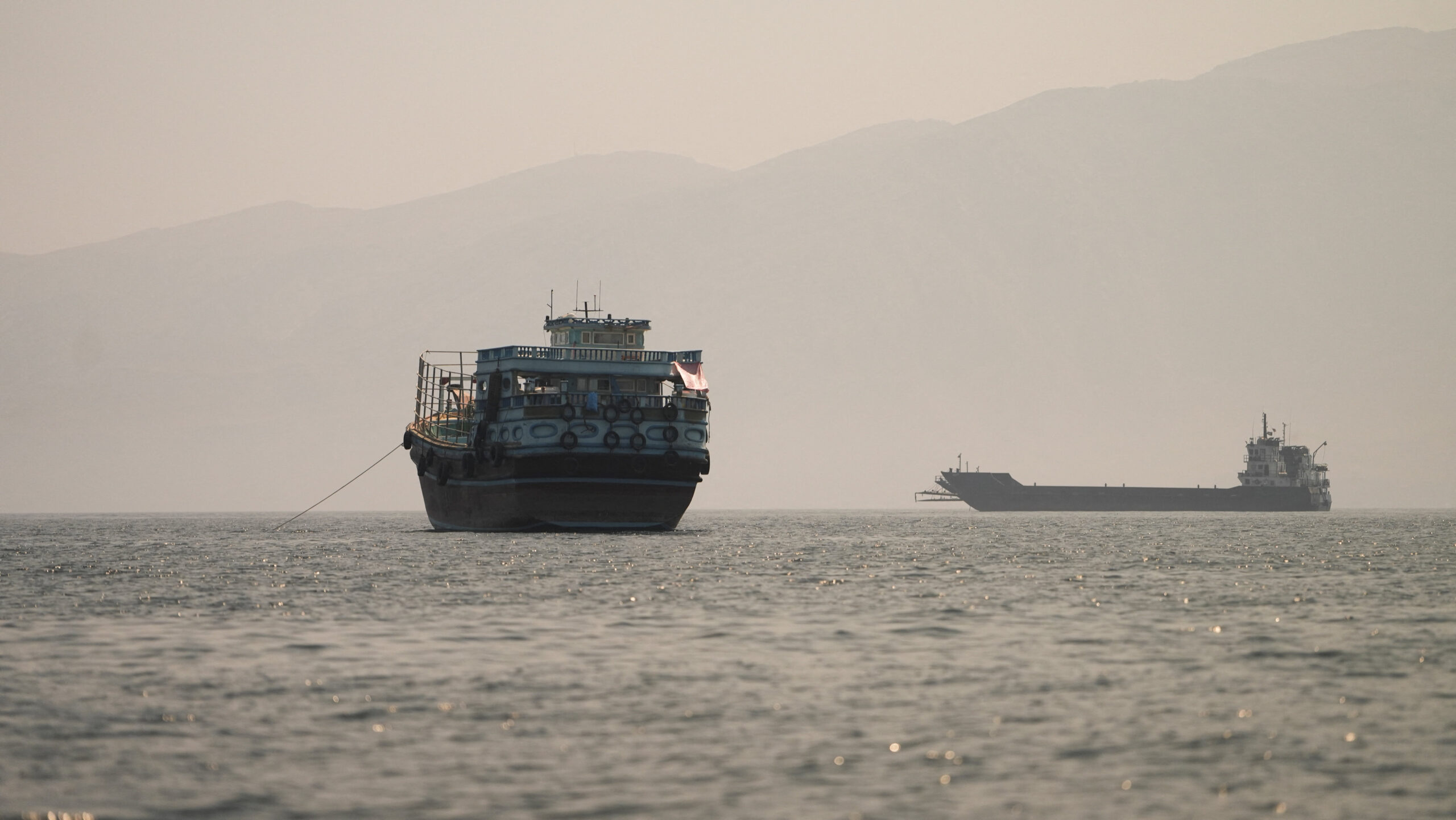
McKay referenced Vice President JD Vance’s past comments ruling out a large-scale ground deployment absent a genuine popular uprising within Iran, and said arming internal opposition groups, while imperfect, remains a less costly option than direct American involvement, though he suggested such efforts would be better handled by Israel. He also described the concept of periodic strikes to degrade Iranian military capability without pursuing full regime change, a strategy sometimes referred to as mowing the lawn, as a likely template for how the conflict continues in the near term. He noted parallel efforts by Gulf states to build pipeline infrastructure that would allow oil exports to bypass the Strait of Hormuz entirely, reducing Iran’s leverage over global energy markets, and said reports of expanded American and Gulf state military presence on islands near the strait could factor into the president’s remarks.
The conversation shifted to a newly publicized political platform from the Democratic Socialists of America calling for the abolition of the U.S. Senate, the presidency, and the Supreme Court in favor of alternative governing structures. McKay was sharply critical of the platform, arguing that historical examples of socialist movements consistently escalate into authoritarian outcomes, and suggested that many current activists advocating for such positions would not fare well under the systems they claim to support. He and Iuorio also discussed generational economic dynamics following the pandemic-era recovery, with McKay acknowledging that uneven asset appreciation has fueled some of the frustration behind these movements, while arguing that the deeper problem lies in university and cultural institutions shaping younger generations’ views of the country. Jacobson added that similar messaging has filtered down to Chicago Public Schools curricula referencing historical police misconduct cases.
McKay closed by previewing his upcoming novel, Necessary Men, the fourth installment in his political satire series following a recurring character through a fictionalized, largely bloodless American-assisted collapse of Cuba’s communist government. He said the book will be serialized starting next month at The American Spectator, joking that he hopes to finish writing it before real-world events in Cuba potentially overtake the plot.