




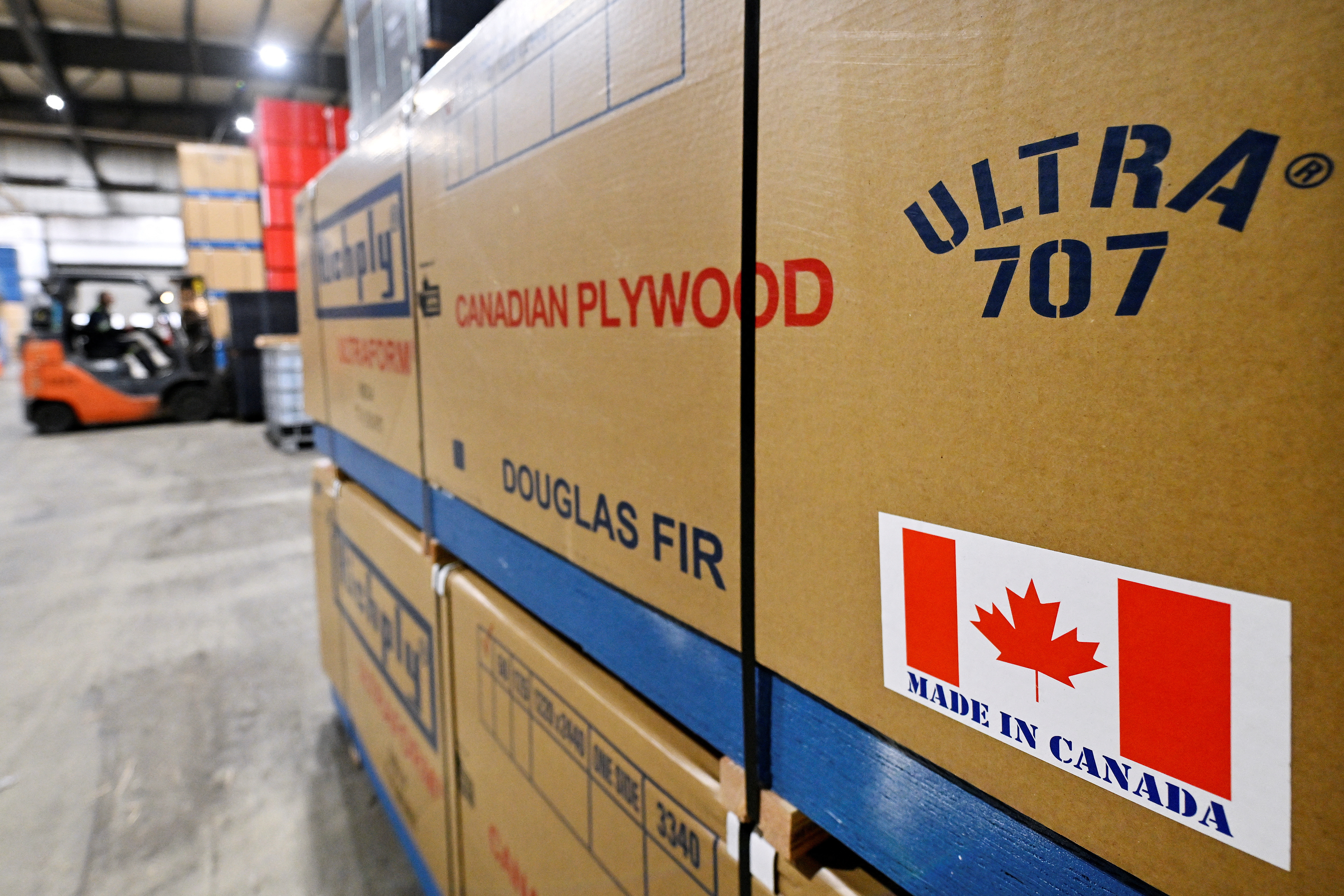
Dan Proft examined President Trump’s escalating trade dispute with Canada, playing remarks in which the president described Canada as the most difficult trading partner the United States deals with and argued that ending trade with both Canada and Mexico would cost the U.S. little given how much each country depends on American markets. Canada has responded with tariffs of 15 to 50 percent on roughly $20 billion of U.S. imports, concentrated in northern states with outsized relevance to this year’s midterms, including Maine, where 47 percent of exports go to Canada, Michigan, at 39 percent, and Iowa, where both the governor’s race and a Senate contest remain competitive.
Proft also played a 2019 exchange between former Treasury Secretary Larry Summers and Canadian Prime Minister Mark Carney, then serving as a central banker, in which Summers needled Carney over the clubby loyalty central bankers show one another regardless of their home countries’ politics, using the example of a widely liked but corrupt Russian central bank governor from the 1990s as illustration. Proft suggested the exchange captured something true about Carney as a “global citizen” more comfortable among fellow central bankers than as a national leader, and argued Carney is now overplaying his hand in the standoff with Washington.
For more, Proft turned to economist Stephen Moore, co-founder of the Committee to Unleash Prosperity, who said he remains a Trump supporter but does not understand the logic of a trade fight with Canada, which along with Mexico ranks as America’s largest trading partner, ahead of Europe, China and Japan.
Moore said he would prefer to see the kind of North American free-trade zone envisioned under Ronald Reagan and pushed back on Trump’s claim that avoiding trade with Canada would save the U.S. tens of billions of dollars, arguing that framing misunderstands how trade deficits work. He explained that the United States runs a trade deficit in part because it runs an investment surplus, since foreign entities that want to invest in the U.S. must first earn dollars by selling more to Americans than they buy, meaning the deficit is a byproduct of the country’s continued appeal as an investment destination rather than a sign of economic weakness.
Moore agreed with Proft that the more legitimate grievance against Canada is its use as a channel for Chinese goods to reach the American market while circumventing tariffs, along with Canadian tariffs on U.S. agricultural and manufactured goods that Moore said violate existing trade agreements. He contrasted that behavior with Mexico’s, which he said has largely honored its trade commitments, and argued the top U.S. foreign policy priority in the region should be ensuring Mexico’s economy remains stable rather than following the path of Cuba under Fidel Castro. The two also touched on a recent U.S. agreement in principle with Colombia’s government over critical minerals and on a broader rightward economic shift across Latin America, citing Argentina’s rapid growth under President Javier Milei’s budget-cutting approach.
On domestic economic news, Moore noted that the federal civilian workforce has fallen to roughly 2.67 million, its lowest level in 60 years, following a reduction of about 350,000 federal jobs, and said more than 90 percent of job growth under the Trump administration has come from the private sector, a reversal he contrasted with the Biden years when he said a substantial share of reported job gains came from government hiring. Ahead of Trump’s keynote address at the GOP’s midterm convention in Dallas, Moore said he would advise the president to highlight recent economic gains, including a roughly $2,000 rise in inflation-adjusted average incomes and a pace of roughly 1,000 new millionaires created daily, while acknowledging that persistently high grocery and gasoline prices continue to weigh on public sentiment. Moore said he expects inflation to ease further once Middle East oil production increases and said he believes the Federal Reserve should hold interest rates steady rather than raise them.