




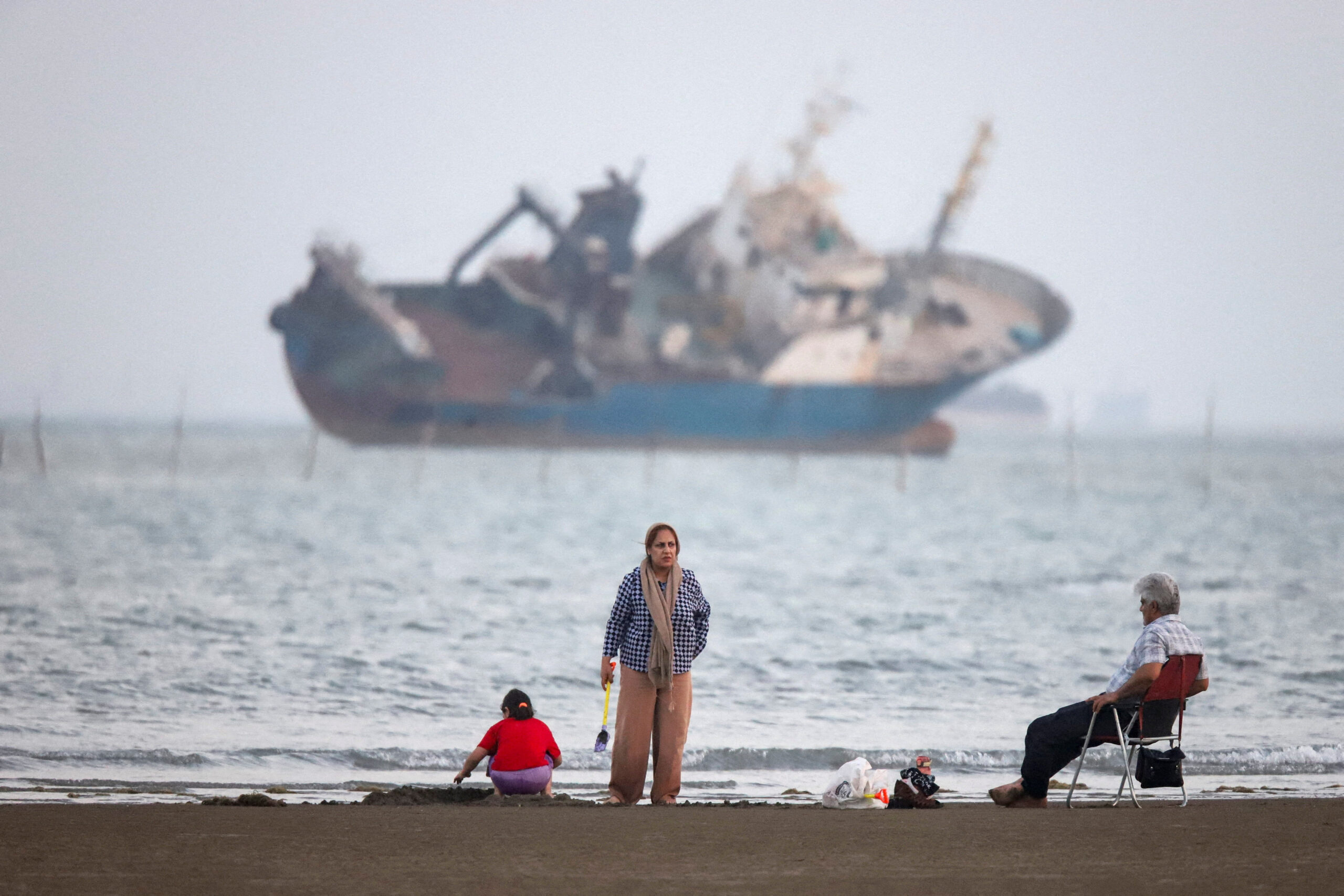
The IRGC struck two separate commercial tankers over the weekend in violation of the ceasefire agreement, drawing retaliatory strikes from the United States against approximately ten military targets including drone storage sites, command and control positions, and coastal radar installations. President Trump posted on Truth Social that if Iran continues violating the agreement, the United States will be forced to militarily complete the job it very successfully started and the Islamic Republic of Iran will no longer exist. A senior Iranian military leader named Mohsin Razai simultaneously declared that Iran intends to collect fees from ships transiting the Strait of Hormuz, framing them as service costs for security and environmental protection. The White House responded that there are no tolls, insurance costs, or charges of any kind being sought or received by Iran.
Steven Bucci, who served three decades as an Army Special Forces officer and senior Pentagon official and is now a visiting fellow at the Heritage Foundation’s Allison Center for Foreign Policy Studies, joined Dan Proft on Chicago’s Morning Answer to assess the strikes, the strait situation, and Defense Secretary Hegseth’s military reforms.
On the weekend strikes, Bucci positioned himself between those who dismissed them as performative and those who characterized them as a shrewd predicate for a larger operation. He said the targets were good ones, drone storage sites and command and control positions that you would want to hit whether this was the last strike you ever conducted or the preparation for something larger. He rejected the characterization that the strikes were merely performative, calling that a position favored by people on either the political left or the conspiratorial fringe of the right who are more interested in attacking Trump than conducting honest analysis. Iran struck ships it was not supposed to strike under the agreement. Iran was told repeatedly it would not be permitted to collect tolls. It got slapped back down. Whether the slap was hard enough is a separate question.
He acknowledged frankly that he is getting tired of the tit-for-tat pattern and would have preferred a more decisive response, but said the president and his advisors are making the call, not Steve Bucci, and he is okay with that for now. He said the United States has all the pieces in place for a substantially more punitive strike and does not need a massive new deployment to execute one, but he does not believe the administration is at that point yet.
On the question of whether internal Iranian factional conflict could work to American advantage, with reports that pragmatists around President Pezeshkian and Foreign Minister Araghchi who want a deal have been outmaneuvering hardliners who oppose one, Bucci said the dissension is clearly real. No single faction has gained complete control of the multi-headed governing structure that includes the IRGC, the clerical establishment, and the civilian political apparatus. The challenge is that different factions have signed onto different things, and the public statements coming from Iran are contradictory depending on which faction is speaking. He said hopefully American intelligence and policy leadership have a better handle on the internal dynamics than outside analysts do, and expressed particular hope that the administration is still communicating with Israeli intelligence, which has human sources inside the regime that the United States may not.
On Iran’s tolling claims, Bucci noted that the alignment against Iran on this issue is unusually broad: 143 nations at the United Nations, China, Oman, and the Gulf Arab states have all said Iran cannot charge for passage through an international waterway. Oman, which Iran apparently expected to partner with on the tolling infrastructure, rejected the idea. He said allowing Iran to slide past this and emerge with any version of strait control would be an unacceptable outcome that cannot be permitted regardless of how the broader negotiations develop.
On Defense Secretary Hegseth’s reforms and the criticism they have drawn from retired generals including William McRaven and Barry McCaffrey, Bucci offered differentiated assessments. He said McCaffrey can be dismissed immediately as one of the most politicized general officers in American military history who is not as well regarded within the military as he believes himself to be. McRaven is a different case, a brilliant leader with a strong reputation during his active service who is now making his first real foray into political commentary and is wrong on this particular issue. Bucci said what Hegseth is doing is massively approved of by people actually wearing uniforms.
On the chaplain corps controversy specifically, where Hegseth replaced rank insignia on chaplains’ daily uniforms with chaplain corps insignia, Bucci called the criticism stupid. He said chaplains retain their rank, their officer status, and their authority. A soldier who receives a correction from a chaplain in the hallway knows perfectly well that person is a commissioned officer. What the change does is emphasize the chaplain’s religious and counseling role, which is what chaplains themselves have always wanted. He said the retired generals and admirals screaming about politicization of the military are overwhelmingly the same ones who presided over or supported the DEI-driven politicization of the previous era and somehow cannot recognize that what they championed was politicization while what Hegseth is doing to reverse it is depoliticization.
He closed by predicting that history will look favorably on Hegseth’s tenure at the Pentagon, and that while the Iran situation remains wide open with no certainty about which direction it will ultimately go, the administration retains the capability to escalate decisively at any moment should the decision be made. He characterized Iran as the ultimate petulant child and Trump as trending toward being the overindulgent parent who has not yet administered the spanking that the situation has long warranted.